 Save
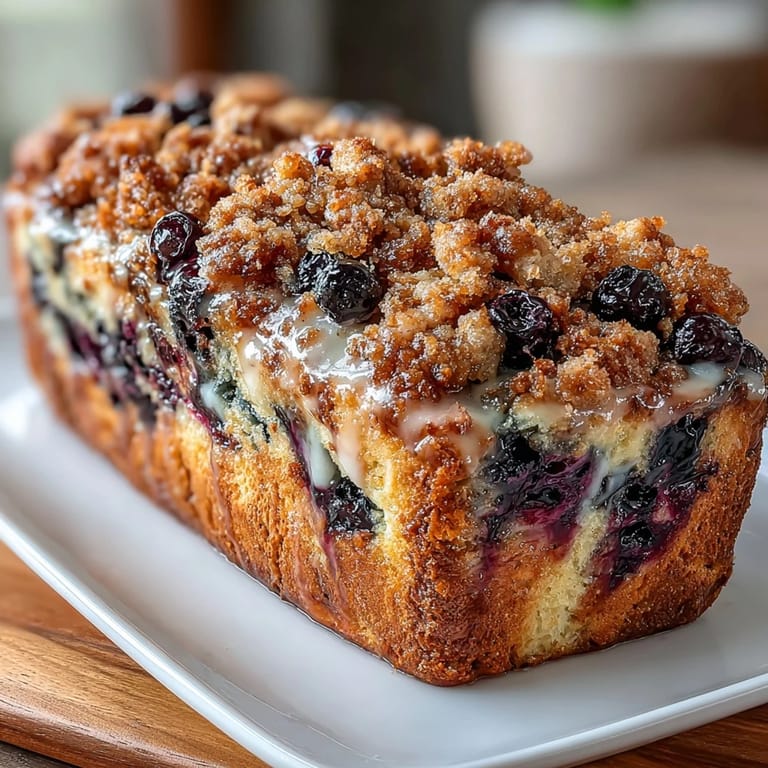
Save My kitchen flooded with the smell of fermented dough and bright lemon one Saturday morning when I decided to stop overthinking sourdough and actually have fun with it. I'd been hoarding a jar of blueberries that refused to last another day, so I threw them into a pan with lemon juice and watched them burst into this gorgeous, jammy swirl. That loaf taught me that the best baking happens when you stop following rules so strictly and let your starter, your berries, and your mood do the talking together.
I made this for my book club last spring, and someone actually asked for the recipe before they even finished their first slice, which never happens. The combination of that tart sourdough tang, the burst of fresh lemon, and the way the blueberries stained everything a beautiful purple made it feel like breakfast and dessert in one bite, and that's exactly what I wanted people to experience.
Ingredients
- Bread flour (350 g): This gives your loaf structure and a slight chew; all-purpose flour will work but won't develop quite the same strength and open crumb.
- Active sourdough starter (75 g): Use the bubbly, fed kind that's been sitting on your counter for at least 4-5 hours; cold or sluggish starter will drag out your timeline and muddy the flavor.
- Granulated sugar (60 g for dough): Feeds your starter and gives the crumb subtle sweetness without overwhelming the sourdough's tang.
- Large egg: Enriches the dough and adds structure so the crumb stays tender and moist.
- Whole milk, lukewarm (120 ml): Warm milk wakes up your starter and keeps the dough from getting tough; if it's cold, your rise will take forever.
- Unsalted butter, softened (60 g for dough): Softened butter incorporates smoothly into the dough without overworking it, keeping the crumb tender and giving it richness.
- Fine sea salt (1 tsp): Strengthens gluten development and balances the sweetness; don't skip or reduce it.
- Lemon zest (from 1 large lemon): Adds brightness throughout the loaf without making it sour or one-note acidic.
- Fresh or frozen blueberries (200 g): Fresh berries give cleaner flavor, but frozen work just as well if you don't thaw them (which keeps them from disintegrating into the dough).
- Granulated sugar (50 g for swirl): Sweetens the blueberry compote and helps it thicken into a proper swirl instead of pooling watery at the bottom.
- Lemon juice (1 tbsp): Brightens the blueberry flavor and keeps the swirl from tasting one-note sweet.
- Cornstarch (1 tbsp): Thickens the blueberry mixture so it stays where you spread it instead of leaking everywhere during baking.
- All-purpose flour (50 g for crumble): Creates the crumble's sandy texture; bread flour is too strong here.
- Unsalted butter, cold and cubed (30 g for crumble): Cold butter creates distinct crumbles; warm butter will turn everything greasy and paste-like.
- Light brown sugar (30 g): Adds a gentle molasses note and moisture to the crumble without making it heavy.
- Pinch of salt: Sharpens the crumble's flavor so it doesn't taste one-dimensionally sweet.
Tired of Takeout? 🥡
Get 10 meals you can make faster than delivery arrives. Seriously.
One email. No spam. Unsubscribe anytime.
Instructions
- Build your dough foundation:
- In your stand mixer bowl, combine bread flour, sugar, salt, and lemon zest and give them a dry mix so the zest gets distributed evenly. Add your active sourdough starter, egg, and lukewarm milk and mix on low until everything comes together into a shaggy, rough dough with no dry pockets.
- Develop the dough:
- With the mixer still on low, add your softened butter in small pieces, letting each addition mostly incorporate before adding the next; this slow approach keeps you from overworking the dough. Once all the butter is in, crank the mixer to medium and let it go for about 8 to 10 minutes until the dough becomes smooth, elastic, and slightly sticky to the touch.
- Let it rise and develop flavor:
- Transfer your dough to a lightly greased bowl, cover it with a damp kitchen towel or plastic wrap, and let it sit in a warm corner of your kitchen until it's roughly doubled in size, about 2 hours. This is where your sourdough's character really develops, so don't rush this step.
- Make your blueberry swirl while dough rises:
- In a small saucepan, combine your fresh or frozen blueberries, sugar, and lemon juice over medium heat and let them warm gently until the berries burst and release their juice, about 5 minutes. Once they're bubbling and broken down, stir in your cornstarch and let the mixture simmer for another 2 to 3 minutes until it thickens into a loose jam; it should coat the back of a spoon but still flow slightly.
- Prepare your crumble topping:
- In a small bowl, whisk together all-purpose flour, brown sugar, and a pinch of salt. Cut in your cold, cubed butter using a pastry cutter or your fingertips until the mixture resembles coarse breadcrumbs with pea-sized pieces of butter still visible; chill this mixture in the fridge until you're ready to use it.
- Shape and fill:
- Once your dough has doubled, punch it down gently to release some gas, then turn it out onto a lightly floured surface and roll it into a rectangle roughly 10 by 14 inches. Spread your completely cooled blueberry mixture over the dough, leaving about a 1-inch border so it doesn't squeeze out when you roll.
- Roll and rest:
- Starting from one short side, roll the dough up tightly into a log, then place it seam-side down into a greased 9 by 5-inch loaf pan. Cover loosely with a damp towel and let it rise again until it's puffy and reaches near the top of the pan, about 1 hour.
- Prep and bake:
- Preheat your oven to 350°F and gently brush the top of your loaf with a thin layer of milk or beaten egg if you want a slight sheen. Sprinkle your chilled crumble topping evenly over the whole surface, breaking up any large clumps with your fingertips.
- Bake with attention:
- Slide your loaf into the oven and bake for 50 to 55 minutes, checking around the 30-minute mark; if the top and crumble are browning too fast, loosely tent the loaf with foil to protect it while the inside finishes cooking. The loaf is done when a skewer inserted into the center comes out with just a few moist crumbs clinging to it.
- Cool properly:
- Let the loaf cool in its pan for 15 minutes so it firms up enough to turn out, then transfer it to a wire rack to cool completely before you even think about slicing. This patience pays off because the crumb sets properly and slices cleanly instead of tearing.
 Save
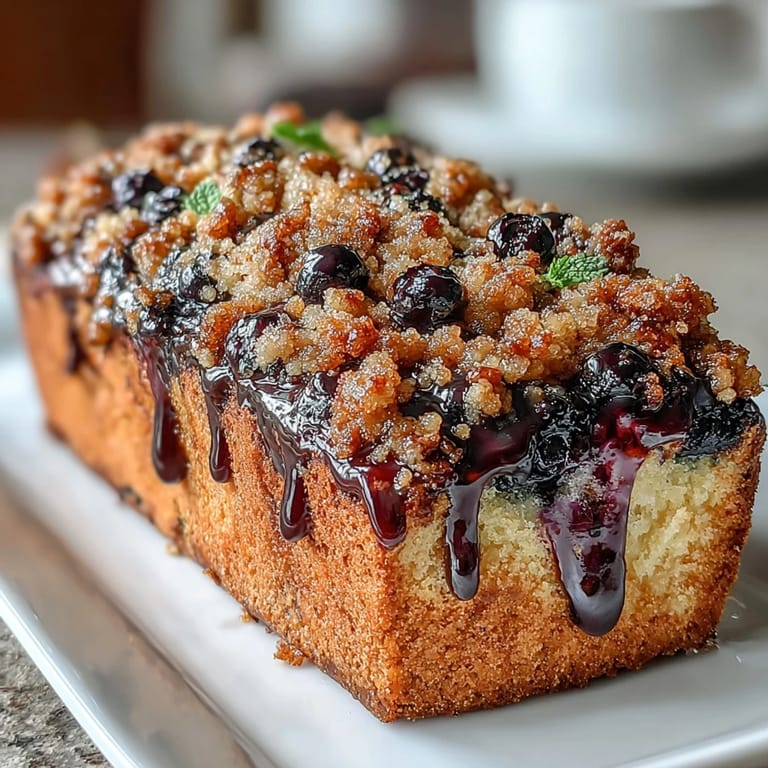
Save I realized this loaf had become something special when my partner started slicing it for breakfast before I'd even finished my coffee, and suddenly we were both standing in the kitchen in our pajamas just eating it plain, no toaster, no spread, just bread and butter and that moment of quiet agreement that something turned out right. That's when I knew this recipe wasn't just a technique to master but a reason to bake again.
Why Sourdough Starter Changes Everything
Using a sourdough starter instead of commercial yeast gives this loaf a flavor depth that regular bread simply can't match. The long fermentation creates complexity and a slight tang that makes every bite interesting, and honestly, once you taste the difference, going back to instant yeast feels flat. Your starter is also more forgiving with timing because it works slower, so you don't have to watch the clock obsessively.
The Science Behind the Swirl
That cornstarch in your blueberry filling isn't just thickening agent theater; it's the difference between a beautiful swirl and a watery mess that pools at the bottom of your pan. When blueberries cook down, they release tons of liquid, and cornstarch traps that moisture so your swirl stays visible and distinct instead of disappearing into the crumb. I learned this the hard way after my first attempt looked more like purple porridge inside.
Crumble Magic and Why Cold Butter Matters
That golden, buttery crumble on top happens because you're using cold butter that stays in small, distinct pieces as it bakes instead of melting into a dense cake. The cold butter creates steam pockets as it bakes, which gives you those irregular, crispy chunks that make people keep reaching for more. Never let that crumble topping sit at room temperature, and if your kitchen is warm, pop it back in the fridge while your loaf is doing its second rise.
- Mash or press the crumble gently with your fingers as you're sprinkling to create varied sizes from dust to pea-sized pieces.
- If your crumble starts to soften before you sprinkle it, that's your sign to chill the whole mixture for another 10 minutes.
- Watch the crumble color during the last 15 minutes of baking because it can go from golden to bitter-tasting burnt in about 3 minutes flat.
 Save
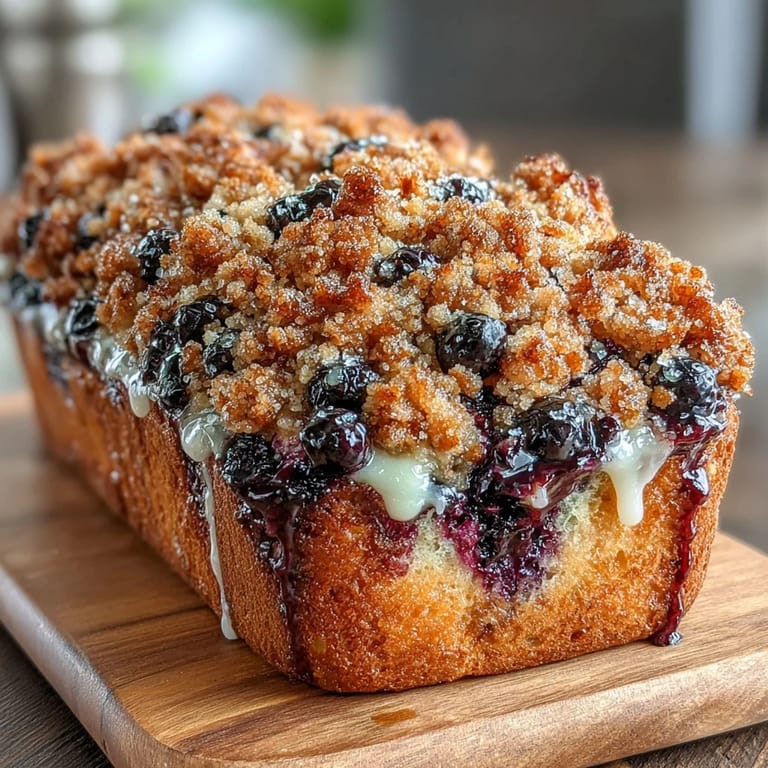
Save This loaf has become my answer to the question of what to bring when you want people to know you care but don't want to overthink it. It's substantial enough to feel like real bread but bright and tender enough to taste like something special, and that balance is exactly what keeps me coming back to the kitchen.