 Save
Save There's something about the moment pistachios hit a hot pan that stops you cold—that unmistakable green-tinged aroma fills your kitchen and suddenly you're transported. Years ago, I wandered into a gelateria in Rome on a sweltering afternoon, exhausted from walking cobblestone streets, and ordered a small cup of pistachio gelato that tasted like pure silk and nutty dreams. The vendor told me the secret was patience and respect for the ingredient, nothing more. That cone changed how I think about frozen desserts entirely, and I've been chasing that exact flavor ever since.
My friend Marco visited from Naples last spring and I knew I had to make this for him. When he took that first spoonful, he closed his eyes and got quiet in a way that made me nervous—then he smiled and said it reminded him of his grandmother's kitchen. That's when I understood this recipe wasn't just about technique; it was about capturing something real and generous in a bowl.
Ingredients
- Shelled unsalted pistachios (120 g): The heart of this whole thing—choose quality ones with good color, and roasting them yourself makes an enormous difference in depth of flavor compared to pre-roasted versions.
- Granulated sugar (2 tbsp for pistachios, 120 g for custard): The smaller amount helps draw out pistachio oils and creates that paste texture, while the larger amount stabilizes the custard and balances the richness.
- Whole milk (500 ml): Full-fat is essential here; it carries the pistachio flavor and contributes to that luxurious mouthfeel you're after.
- Heavy cream (200 ml): This is what transforms ice cream into gelato—it adds body and creaminess without making things too heavy or icy.
- Egg yolks (4 large): The backbone of the custard; they emulsify everything and create that silky structure that makes gelato different from regular ice cream.
- Pure vanilla extract (1 tsp): A whisper of vanilla doesn't fight the pistachios; it deepens and rounds out their flavor in unexpected ways.
- Fine sea salt (pinch): This tiny amount brightens everything and keeps the sweetness from becoming cloying.
Tired of Takeout? 🥡
Get 10 meals you can make faster than delivery arrives. Seriously.
One email. No spam. Unsubscribe anytime.
Instructions
- Roast and skin the pistachios:
- Spread them on a tray and roast at 170°C for 8–10 minutes until the kitchen fills with that intoxicating green-nut smell. Let them cool just enough to handle, then rub them gently in a clean towel to remove the papery skins—don't worry if some cling stubbornly, it adds character.
- Make the pistachio paste:
- Pulse the roasted pistachios with 2 tablespoons of sugar in a food processor until they go from crumbly to finely ground to almost-paste. This takes patience; rushing it means you'll end up with oil separation and texture issues.
- Heat the dairy base:
- Combine milk and cream in a saucepan and warm it slowly until just below a boil—you'll see little bubbles forming at the edges. This step matters because cold dairy shocked into hot eggs causes scrambling.
- Create the egg custard:
- Whisk egg yolks with 120 grams of sugar and salt in a bowl until the mixture turns pale and falls from the whisk in ribbons. This whisking aerates the yolks and helps them hold the heat without scrambling.
- Temper the eggs carefully:
- Pour the hot milk mixture into the egg yolks in a slow, steady stream while whisking constantly—this gradual addition prevents scrambled eggs and ensures a smooth custard. Think of it as a conversation between hot and cold; you're introducing them gently.
- Cook the custard to perfection:
- Return everything to the saucepan and stir constantly with a wooden spoon over low heat until the mixture coats the back of the spoon and reaches 77–80°C. If you don't have a thermometer, the spoon test works: when you run your finger across the spoon and it leaves a clean trail, you're done—rushing this step results in thin, icy gelato.
- Incorporate the pistachio paste:
- Remove from heat and stir in the pistachio paste and vanilla extract until completely smooth and evenly colored. This is when the custard transforms into something actually worth the effort.
- Strain for silky texture:
- Pour the mixture through a fine-mesh sieve into a clean bowl to catch any cooked egg bits or lumps. This extra step means no grittiness, just pure silk.
- Chill thoroughly:
- Cover and refrigerate for at least 4 hours, ideally overnight—the cold base churns more smoothly and creates better texture. Cold custard also allows flavors to meld and deepen.
- Churn until creamy:
- Follow your ice cream maker's instructions, churning until the mixture is thick and creamy like soft-serve. Transfer to a container and freeze for at least 2 hours before serving so it sets into proper gelato texture.
 Save
Save The afternoon I first served this to family, my nephew asked for seconds before finishing his first bite, and my mother—who grew up on real Italian gelato—said it tasted like home. Those moments remind me why cooking from scratch matters; it's not about impressing anyone, it's about connecting through flavor and care.
Why Homemade Tastes Incomparably Better
Commercial pistachio gelato often relies on artificial flavoring and coloring because real pistachios are expensive and their flavor fades quickly. When you make this yourself, you control every element—the roast level, the cream quality, the exact balance of sugar. The result tastes alive in a way that frozen desserts rarely do, and it stays that way for about a week in your freezer before the flavors begin to fade, which is a good reminder that homemade food is meant to be eaten and shared, not stored indefinitely.
The Science of Silky Texture
What separates gelato from ice cream is less air incorporation and the specific ratio of fat to milk—gelato is denser and warmer when served, which is why the flavor hits harder on your palate. The egg yolks do double duty here: they emulsify the cream and milk into one smooth suspension while also adding richness that you simply can't achieve with just cream alone. Understanding this transforms how you think about the recipe; it's not arbitrary steps, it's deliberate chemistry designed to create a specific, glorious texture.
Storage, Serving, and Smart Variations
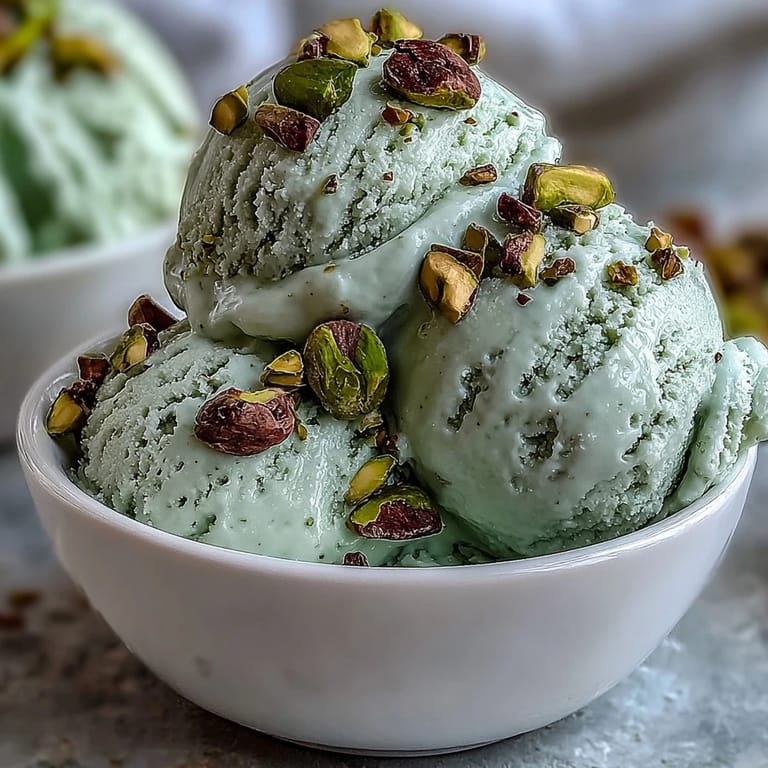
Gelato is best served at a slightly warmer temperature than ice cream—let it sit on the counter for 5 minutes before scooping for the silkiest texture and most intense flavor. It keeps for about a week before oxidation dulls the pistachio flavor, so this is a recipe meant for immediate enjoyment rather than long-term storage. For gatherings, consider making it a day ahead so the flavors deepen, but serve it within 48 hours for peak quality.
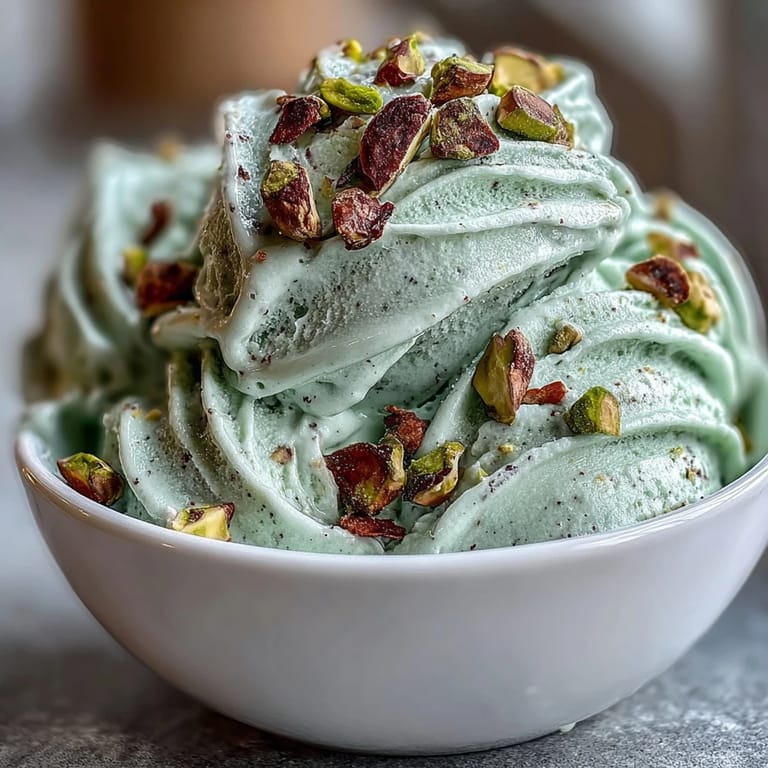
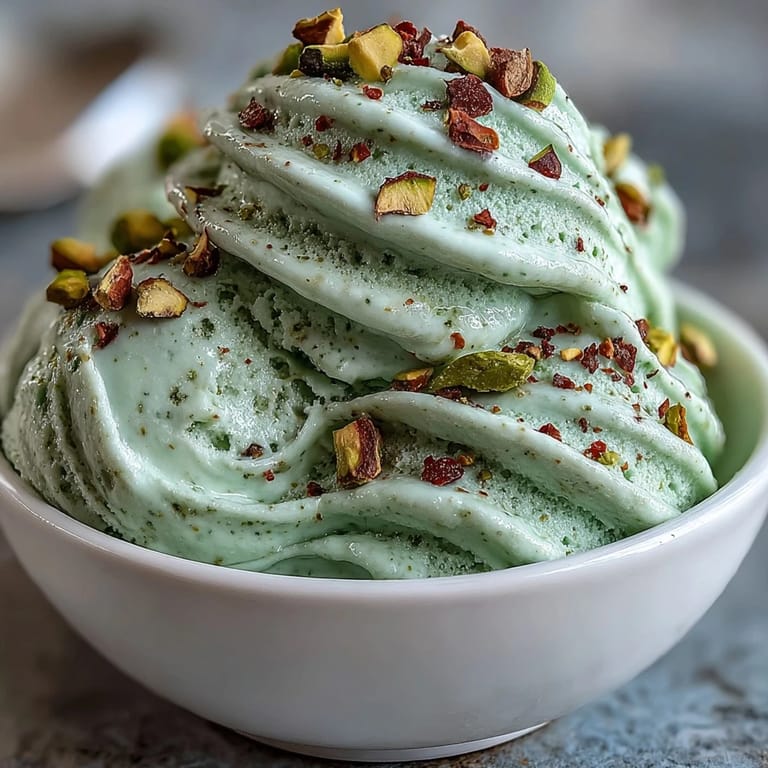
- Garnish with roughly chopped pistachios when serving to add texture and remind people exactly what they're eating.
- If you lack an ice cream maker, freeze the mixture in a shallow container and stir vigorously every 30 minutes for 3–4 hours, breaking up ice crystals each time until it reaches soft-serve consistency.
- Add a drop of almond extract alongside the vanilla if you want deeper nuttiness, but taste as you go because extracts are powerful and unforgiving.
 Save
Save Making pistachio gelato is an investment of time and attention, but the moment you taste what you've created—that silky, intensely flavored spoonful—you'll understand it's absolutely worth it. This is the kind of recipe that reminds us why we cook.
Recipe FAQ
- → How do I prepare the pistachios for the gelato?
Roast shelled pistachios at 170°C for 8–10 minutes until fragrant, then rub off loose skins before blending into a paste.
- → Why is the custard cooked slowly over low heat?
Cooking slowly prevents curdling and ensures the custard thickens perfectly to coat a spoon without boiling.
- → Can I skip the sieving step after combining ingredients?
Sieving removes lumps and ensures a smooth, creamy texture essential for a silky gelato.
- → How long should the mixture chill before churning?
Chill the mixture at least 4 hours, preferably overnight, to develop flavors and proper texture.
- → What alternatives exist if I don't have an ice cream maker?
Freeze in a shallow container and stir vigorously every 30 minutes for 3–4 hours to mimic churning.