 Save
Save There's something quietly exciting about the sizzle of salmon as it hits a hot pan and the scent of ginger and garlic blooming in a sweet soy glaze. Even on those evenings when my mind is elsewhere, making a salmon teriyaki bowl seems to gently bring me back into focus. Somehow, the rhythm of preparing each bowl—layering rice, arranging crisp cucumbers, and spooning glaze—feels like a good sort of ritual. Once, a late autumn rain pattered on the kitchen window as this dish simmered, and the aroma instantly brightened the mood indoors.
One rainy weeknight, I cooked this for a friend who dropped by unexpectedly—her laughter filled the kitchen as I admitted I always eat a few edamame as a chef’s tax. We ended up assembling our bowls right at the counter, swapping stories about our longest days and deciding that extra sesame seeds are always a good idea.
Ingredients
- Salmon fillets: Seek out fresh, skinless fillets; patting them dry before seasoning gives a perfectly seared surface.
- Vegetable oil: Neutral in flavor, it gets the pan hot enough to crisp the fish without overpowering the sauce.
- Soy sauce: This is the foundation of teriyaki’s deep savoriness—opt for low sodium if you prefer a lighter touch.
- Mirin: A splash adds subtle sweetness and the unmistakable tang you taste in restaurant sauces.
- Honey or brown sugar: Either will thicken and caramelize the sauce beautifully; I love the gentle warmth honey brings.
- Rice vinegar: Brightens the sauce with an acidity that balances the sweetness.
- Garlic and fresh ginger: Mince and grate right before you cook for fresher, bolder flavor.
- Jasmine or sushi rice: Fluffy, slightly sticky grains make a soft bed for all the toppings—rinse well for best texture.
- Frozen shelled edamame: They add a pop of color and a bit of protein; quick to prepare while the rice cooks.
- Cucumber: Fresh and crisp, it cuts through the richness of the salmon and glaze.
- Green onion: Optional, but that hit of sharpness and color is always welcome.
- Toasted sesame seeds: Sprinkle at the end for a tiny crunch and nutty finish.
Tired of Takeout? 🥡
Get 10 meals you can make faster than delivery arrives. Seriously.
One email. No spam. Unsubscribe anytime.
Instructions
- Prepare the rice:
- We’ll start by rinsing your chosen rice under cold water until it runs clear—your hands might get chilly, but the fluffy grains will be worth it. Cook rice according to package instructions and let it steam gently while you work on everything else.
- Blanch the edamame:
- Bring a small pot of water to a gentle boil, toss in the frozen edamame, and let them bubble for 3 to 4 minutes until just tender. Drain and set aside—they’ll stay green and vibrant.
- Make the teriyaki sauce:
- In a small saucepan, combine the soy sauce, mirin, honey, rice vinegar, garlic, and ginger; as it simmers, the kitchen fills with a sweet-salty perfume. Stir gently until it thickens just enough to coat the back of a spoon, then remove from heat.
- Season and sear the salmon:
- Pat salmon fillets dry, sprinkle with salt and pepper, then place in a hot, oiled skillet. Sear each side for 2 to 3 minutes—you’ll hear the edges crackle and turn tempting golden.
- Glaze the salmon:
- Lower the heat and pour half the teriyaki sauce over the fish, spooning it continuously as it bubbles and clings; after a minute, the glaze will be shiny and luscious. Remove from the pan and resist the urge to pick at the crispy corners.
- Build your bowl:
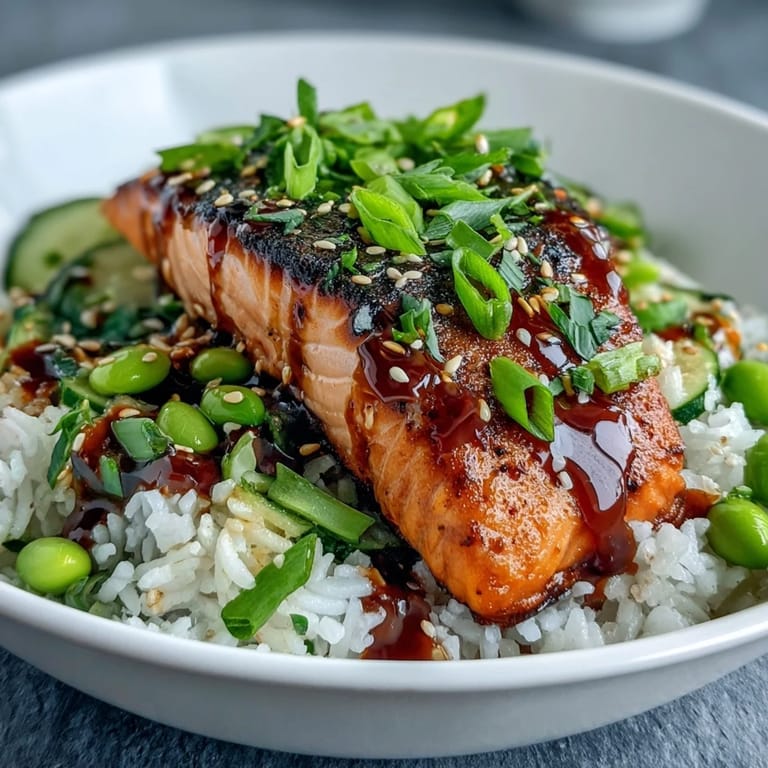
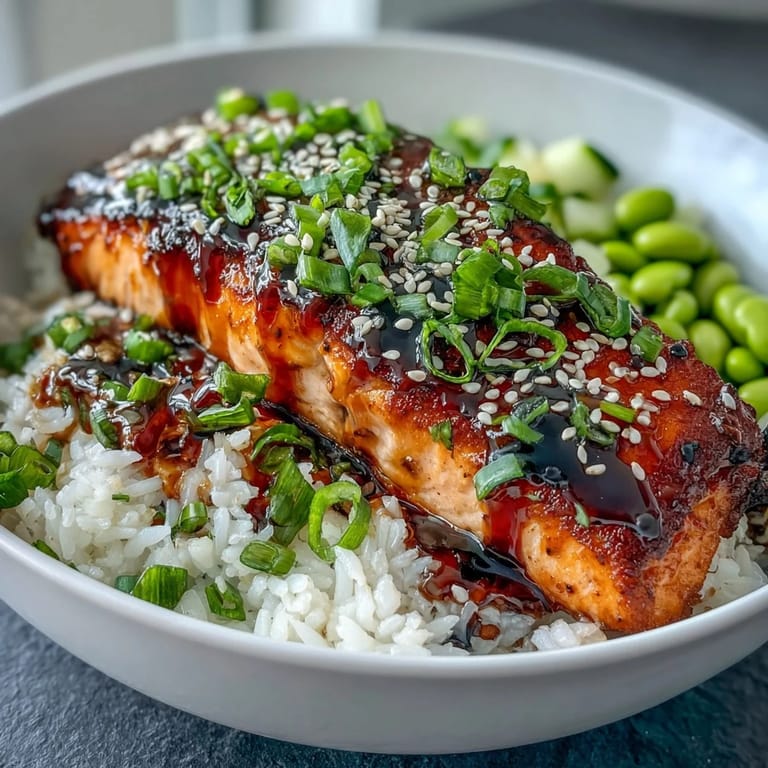
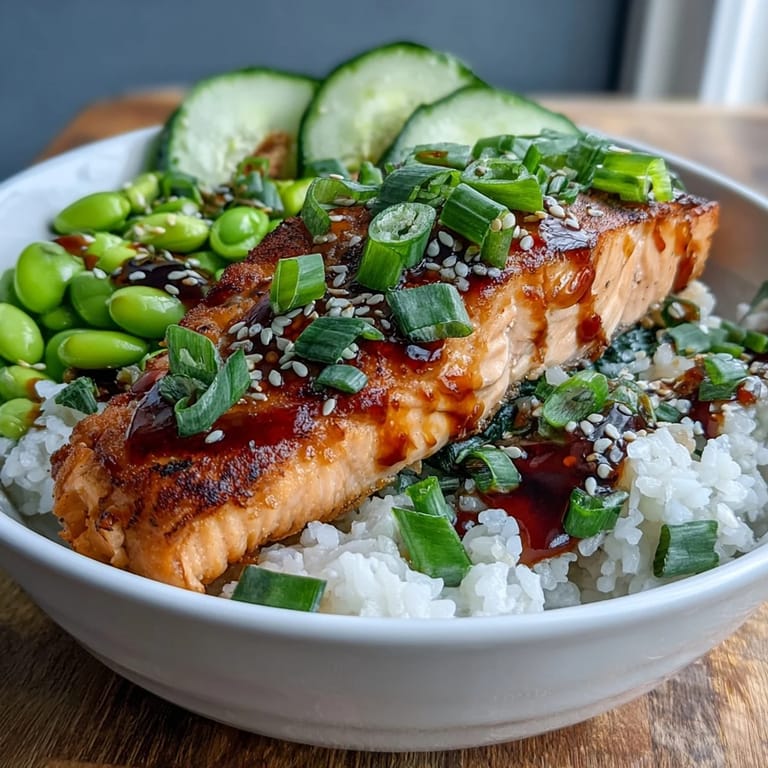
- Spoon rice into bowls, arrange the salmon, tuck in edamame and cucumber slices, and scatter green onion on top. Drizzle the rest of the sauce and finish with a dusting of sesame seeds—admire your handiwork for a second before diving in.
 Save
Save 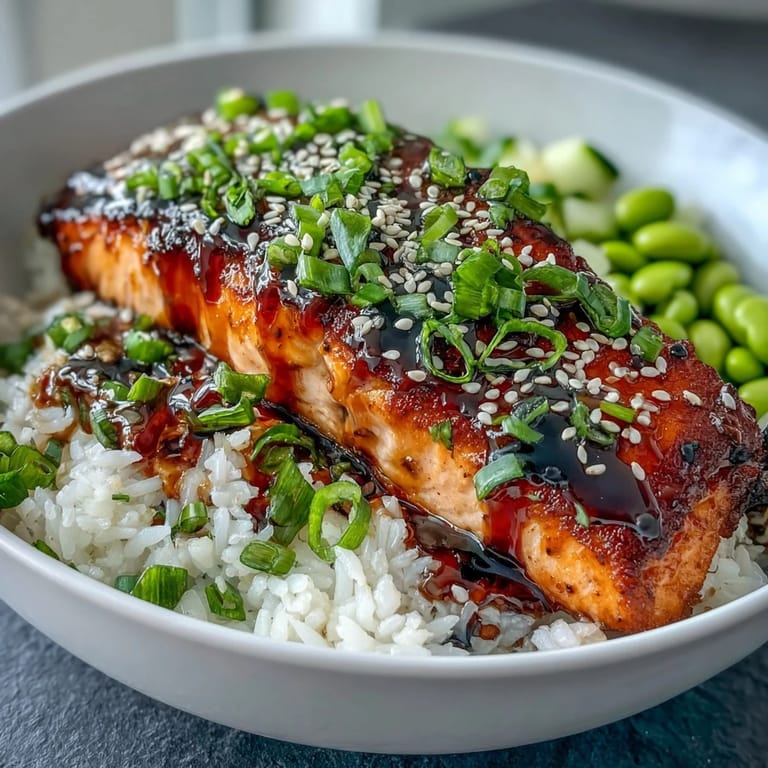 Save
Save I remember the first time someone tried this bowl and said it felt like a mini celebration, right in the middle of an ordinary Thursday. Sharing it feels a little like inviting someone into your cozy routine, with a generous dash of flavor.
How to Pick the Best Salmon at the Market
If I have time, I ask the fishmonger when the salmon came in—there’s no substitute for glossy, moist fillets. Choosing a piece with no fishy odor and that natural pink-orange hue sets up everything else in this dish for success.
Making the Sauce Your Signature
Tweaking the teriyaki sauce can make this recipe your own—I’ve swapped mirin for sake, even slipped in a dash of yuzu or orange zest for a lift. When cooking with friends, everyone seems to tweak the sweetness or ginger to their liking, and it always turns out just right.
Assembly Tricks for Picture-Worthy Bowls
Stacking the bowl is oddly satisfying: I like to start with the rice, nestle the salmon so it looks inviting, then fan out the cucumbers and scatter edamame around like little emerald gems. Prep everything in advance and you’ll be able to build bowls in minutes.
- Let everything cool just a touch before assembling for neater presentation.
- Give the salmon an extra brush of sauce for a glossy shine.
- Toss a few bits of nori on top if you have it for added flavor.
 Save
Save 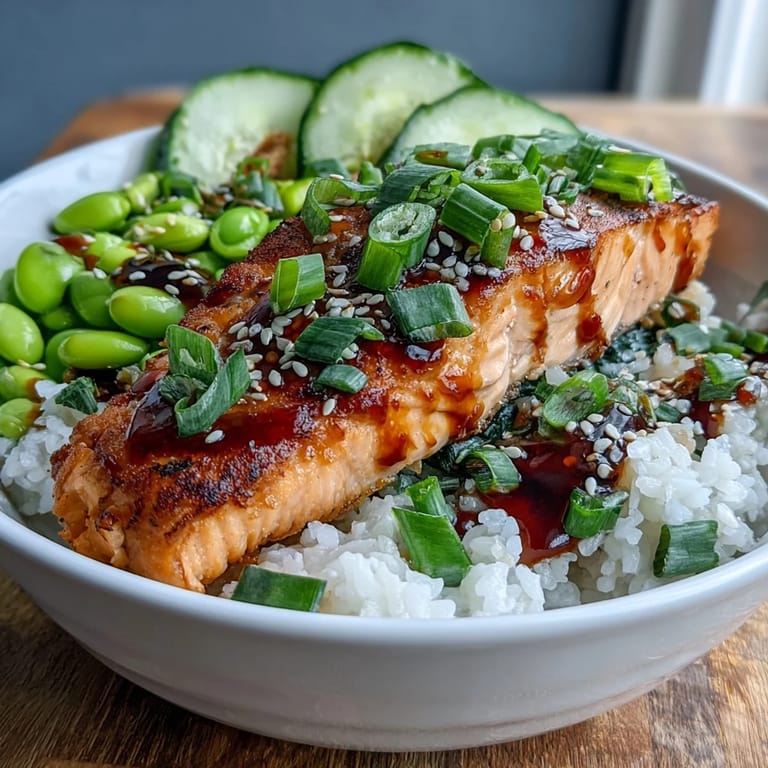 Save
Save However you build your Salmon Teriyaki Bowl, I hope it brings you a little brightness and balance, just when you need it most. Here’s to many more bowls and even better stories around the table.
Recipe FAQ
- → How do I prevent the salmon from sticking to the pan?
Pat fillets dry and heat the skillet until hot before adding oil. Place the salmon skin-side down (or presentation-side down if skinless) and avoid moving it for the first 2-3 minutes so a natural crust forms, then flip gently.
- → How can I thicken the teriyaki glaze without cornstarch?
Simmer the sauce a bit longer to reduce and concentrate sugars for a glossy glaze. Alternatively, whisk a small amount of honey or brown sugar into the sauce while simmering to help it coat the fish.
- → Which rice works best for this bowl?
Jasmine or short-grain sushi rice gives a slightly sticky, fragrant base that pairs well with teriyaki. For nuttier texture, use brown jasmine rice but expect a longer cook time.
- → Can I make the dish gluten-free?
Yes—substitute tamari or a gluten-free soy sauce and check labels on mirin or use a gluten-free rice wine. Ensure any added condiments or packaged ingredients are marked gluten-free.
- → What are quick vegetable swaps or additions?
Quick options include thinly sliced radish, steamed broccoli florets, blanched snap peas, or pickled ginger for acidity. Add them at assembly to keep crisp textures.
- → How should I reheat leftovers without drying the salmon?
Gently reheat in a low oven (about 275-300°F) for 8–10 minutes covered with foil, or briefly in a skillet over low heat with a splash of water and reserved sauce to retain moisture.