 Save
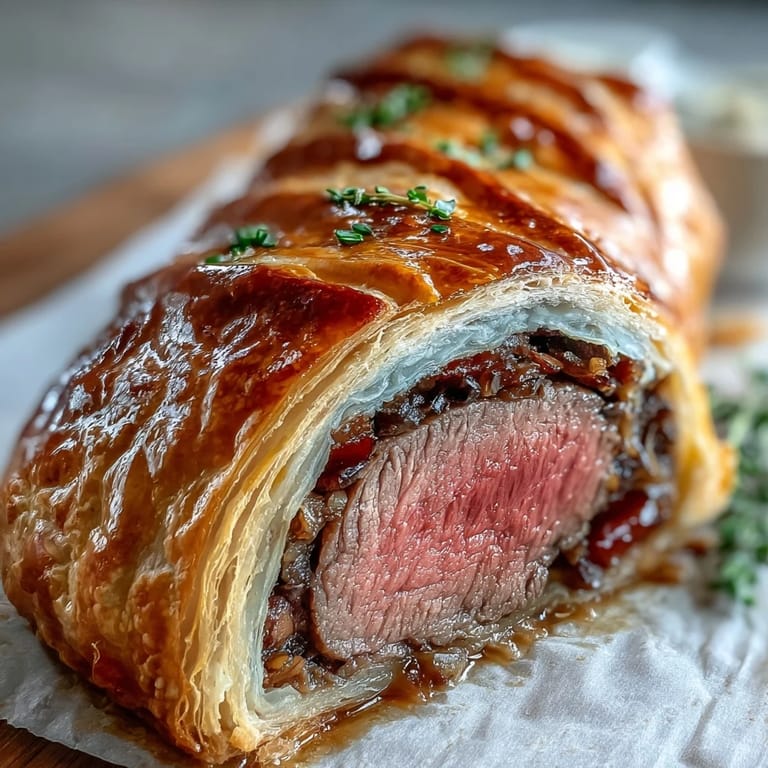
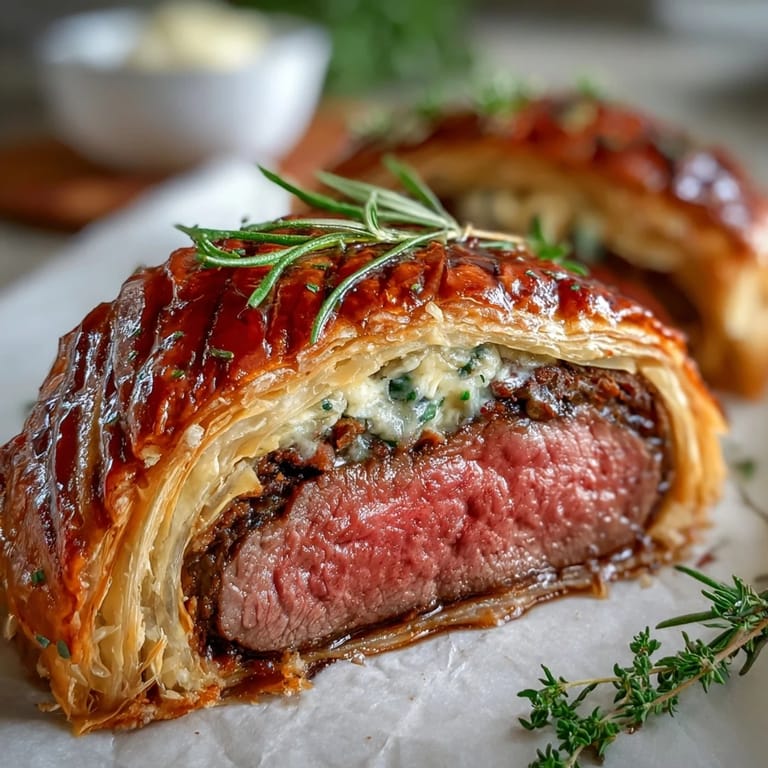
Save My first Beef Wellington came together almost by accident at a dinner party I was desperately underprepared for. A friend had cancelled last-minute, leaving me with an elegant tenderloin I'd already purchased and a nagging sense that I needed to do something spectacular. That evening, as mushrooms softened in my pan and prosciutto lay draped across plastic wrap like rose petals, I realized this dish wasn't actually as complicated as its reputation suggested—just theatrical. The reveal when I sliced into that golden pastry and watched everyone's faces light up made me understand why this British classic has endured for generations.
I'll never forget cooking this for my partner's promotion dinner, how the kitchen filled with the aroma of caramelizing mushrooms and toasted pastry while guests lingered in the doorway, drawn by the smell. When I brought the beautiful golden package to the table and made the first slice, there was this collective moment of silence before the room erupted—not just because it looked beautiful, but because everyone could taste that I'd actually cared enough to do it right.
Ingredients
- Beef tenderloin (2 lb / 900 g), trimmed: This is the star, so choose quality beef from a trusted butcher and let it sit at room temperature for an hour before searing—it'll cook more evenly.
- Salt and freshly ground black pepper: Season generously after searing; this is your only seasoning on the beef itself, so don't be shy.
- Vegetable oil (2 tbsp): High smoke point oil is essential for getting that proper crust on the meat without burning.
- Cremini or button mushrooms (1 lb / 450 g), finely chopped: The duxelles is where the earthiness comes from, and finely chopping ensures it becomes that luxurious paste-like consistency.
- Shallots (2), minced: Their sweetness mellows during cooking and becomes the backbone of the duxelles flavor.
- Garlic (2 cloves), minced: Just enough to add depth without overpowering the delicate mushroom layer.
- Unsalted butter (2 tbsp): Unsalted gives you control over the salt levels in the duxelles.
- Fresh thyme leaves (2 tbsp), chopped: This herb choice matters—thyme's subtle earthiness complements mushrooms in a way that feels almost inevitable.
- Prosciutto (10 slices): The paper-thin Italian cured ham creates a savory seal between beef and pastry while adding textural contrast.
- Dijon mustard (2 tbsp): A thin layer acts as flavor insurance, preventing the beef from tasting flat under all those layers.
- Puff pastry (1 sheet, about 14 oz / 400 g): Quality puff pastry makes an enormous difference—look for all-butter versions if you can find them.
- Egg (1 large), beaten: The egg wash is what creates that burnished, golden exterior everyone expects.
- Flour, for dusting: Keep this nearby when rolling pastry; it prevents sticking without toughening the dough.
Tired of Takeout? 🥡
Get 10 meals you can make faster than delivery arrives. Seriously.
One email. No spam. Unsubscribe anytime.
Instructions
- Get your mise en place ready and heat the oven:
- Preheat to 425°F (220°C) while you gather everything—this dish moves faster once you start, so having ingredients prepped prevents scrambling later.
- Sear the beef until it's deeply browned:
- Season the tenderloin generously, then sear it on all sides in a smoking hot skillet for about 2 minutes per side until you've built a beautiful crust. This isn't about cooking the beef through; it's about creating flavor and sealing in the juices.
- Build the mushroom duxelles in the same pan:
- Melt butter and cook shallots and garlic briefly, then add mushrooms and thyme, stirring occasionally until all the moisture has evaporated and you have a concentrated, paste-like mixture—this takes patience, usually around 10 minutes. The duxelles should be almost dry; any excess moisture will make the pastry soggy later.
- Arrange your prosciutto foundation:
- Lay plastic wrap on your work surface and arrange prosciutto slices in slightly overlapping rows to form a rectangle just slightly larger than your beef. Think of it as building a edible wrapper.
- Layer the mushroom duxelles:
- Spread the cooled duxelles evenly across the prosciutto in a thin, even layer.
- Apply the mustard and position the beef:
- Brush the completely cooled beef with Dijon mustard, then place it at the center of your mushroom-and-prosciutto setup.
- Roll and wrap tightly:
- Using the plastic wrap as your guide, roll the prosciutto and mushroom layer around the beef into a tight log, then twist the plastic ends to seal everything securely. Chill for 20 minutes—this rest lets everything set and makes the next steps easier.
- Encase in pastry:
- Roll out puff pastry on a lightly floured surface into a rectangle large enough to completely wrap around your beef cylinder. Remove the plastic wrap from the beef and position it in the center of the pastry.
- Seal the pastry package:
- Fold the pastry over the beef, trim any excess, and seal the edges—you can use a little water on your fingers to help the pastry stick to itself. Place it seam-side down on a parchment-lined baking sheet for a cleaner presentation.
- Final egg wash and chill:
- Brush the entire pastry surface with beaten egg wash and chill for 10 minutes—this helps the pastry puff up beautifully and encourages that golden color.
- Bake until golden and perfectly cooked:
- Bake for 40–45 minutes until the pastry is deeply golden and an instant-read thermometer inserted into the beef reads 120°F (49°C) for rare or 130°F (54°C) for medium-rare. The thermometer is non-negotiable here—it's the only way to guarantee the beef cooks perfectly without opening the pastry and losing the presentation.
- Rest before slicing:
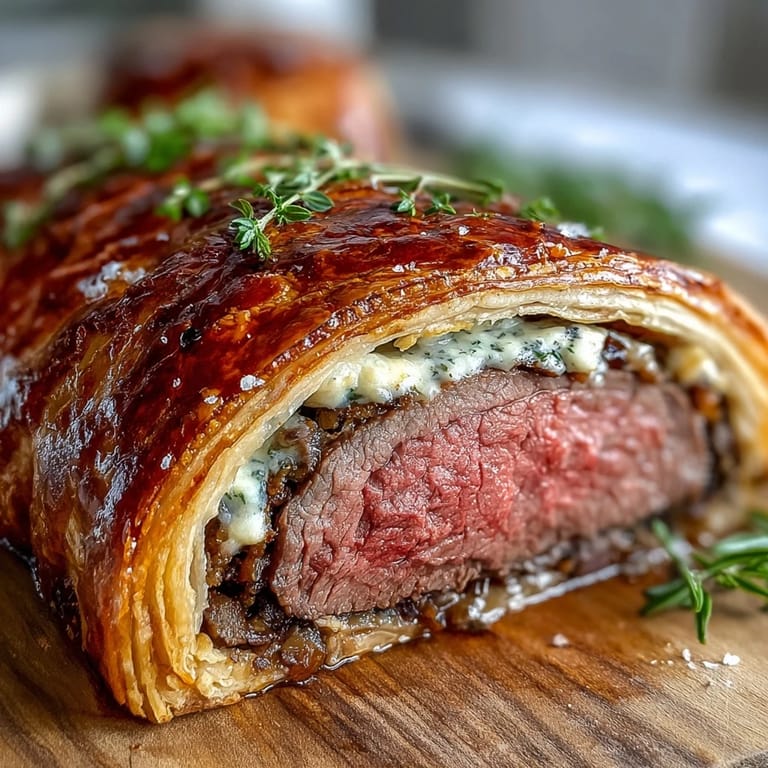
- Let the Wellington rest for 10–15 minutes on a cutting board—this allows the meat fibers to relax and the juices to redistribute, ensuring each slice stays tender and juicy.
 Save
Save There's something magical about the moment you realize you've pulled off a dish that seems restaurant-quality, that friends will describe to others as something they ate at your table. This Wellington stopped being just food the night my mother tried it and asked for the recipe in that quiet, sincere way that means something genuinely touched her.
The Secret Layer: Why Prosciutto Matters
The prosciutto isn't just flavor—it's a protective barrier that keeps the mushroom duxelles from making direct contact with the beef, which would create a dense, muddy layer. It also adds a subtle salty, umami undertone that makes people wonder what they're tasting but can't quite identify. I discovered this when I once tried skipping it to cut prep time, and the result felt flatter, less layered, less interesting, which is when I understood that every element in this dish has a reason for existing.
Temperature and Timing: The Real Difference
This dish taught me that temperature control is the difference between triumph and disappointment, especially with pastry. If your oven runs even 25 degrees hot, your pastry will brown too quickly while the inside remains underdone; too cool and you'll have pale pastry with overcooked beef. I now rotate my baking sheet halfway through baking if I notice uneven browning, and I've started checking the internal temperature at 38 minutes rather than assuming 45 will be perfect.
Serving and Wine Pairing Wisdom
This dish absolutely deserves a red wine sauce or pan jus, something that complements rather than competes with all those layers. A simple jus made from beef stock and the pan drippings is often all you need, though some cooks swear by a red wine reduction with shallots. The pastry can feel rich on its own, so offering something acidic and elegant on the side keeps the meal from feeling heavy.
- A Cabernet Sauvignon or Bordeaux blend pairs beautifully because the wine's structure matches the dish's complexity.
- If you want to serve pâté under the duxelles as suggested in the notes, it transforms this into an even more luxurious experience but requires slightly less duxelles to avoid overwhelming the palate.
- Make your sauce or jus ahead of time and gently reheat it just before serving so you're not scrambling while the Wellington rests.
 Save
Save Beef Wellington is less about mastering complicated techniques and more about respecting each component enough to prepare it with intention. Once you've made it once and felt that confidence, you'll find yourself planning dinner parties just for an excuse to make it again.
Recipe FAQ
- → What cut of beef works best for Wellington?
A center-cut beef tenderloin (filet mignon) is ideal because it's uniformly thick, tender, and cooks evenly. Trim any silverskin and ensure it weighs around 2 pounds for 6 servings.
- → Can I prepare Beef Wellington ahead of time?
Yes, you can assemble it completely up to 24 hours in advance. Wrap tightly and refrigerate, then brush with egg wash and bake when ready. Add 5-10 minutes to the cooking time if baking from cold.
- → How do I prevent a soggy bottom on the pastry?
Ensure the mushroom duxelles is completely dry with no moisture remaining. Let the seared beef cool completely before wrapping, and chill the prosciutto-wrapped beef before encasing in pastry to prevent condensation.
- → What internal temperature should I aim for?
For medium-rare, target 130°F (54°C) in the center. The beef will continue cooking slightly while resting. Use an instant-read thermometer inserted through the pastry into the thickest part of the meat.
- → What can I serve alongside Wellington?
Traditional accompaniments include roasted vegetables, creamy mashed potatoes, green beans, and a rich red wine reduction or Madeira sauce. Keep sides simple to let the Wellington shine.
- → Can I use a different type of mushroom?
Absolutely. While cremini or button mushrooms are traditional, you can use shiitake, portobello, or a mix for deeper, more complex earthy flavors in the duxelles.