 Save
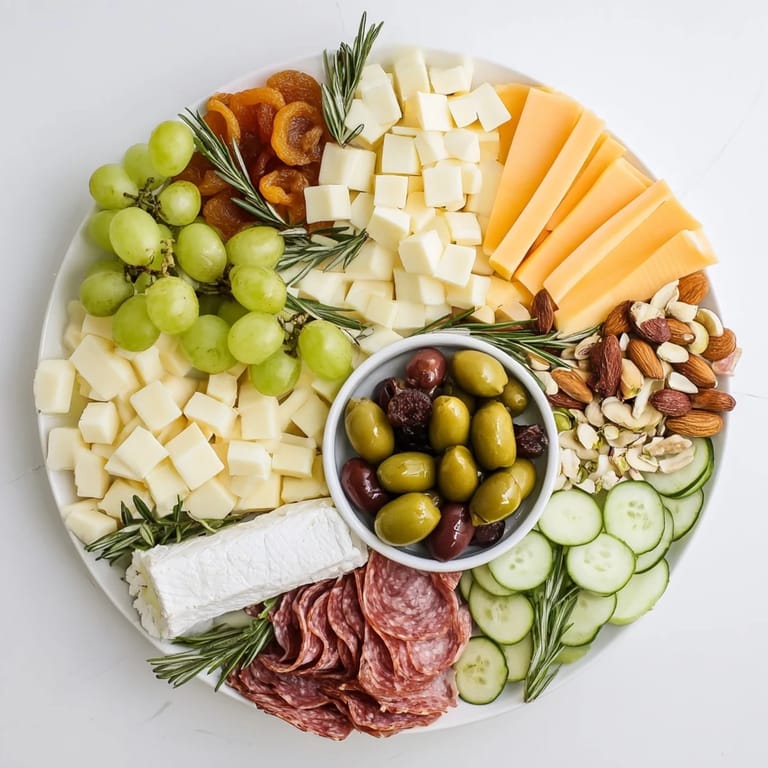
Save I still remember the evening I first assembled a wine-pairing platter for my book club. We were diving into a novel set in the French countryside, and I thought, why not bring that world to the table? I spent an afternoon hunting through specialty shops for just the right cheeses and cured meats, arranging them with the kind of care usually reserved for gallery openings. When everyone arrived and saw the board—sectioned neatly by fragrant rosemary sprigs, each part designed to complement a different wine—something magical happened. The conversation flowed as freely as the wine, and suddenly we weren't just reading about connection; we were tasting it. That platter became the heart of the evening, proof that food is really just an excuse to gather.
My sister brought her new boyfriend to our last gathering, and he was initially skeptical about the whole wine-pairing concept. But as he worked through the board—first trying the creamy brie with chardonnay, then moving to the aged cheddar with pinot noir—I watched his face change. By the time he reached the sparkling wine section with the goat cheese and apricots, he was genuinely amazed at how each combination felt like a conversation between flavors. He's now the one suggesting wine pairings at dinner parties, and it all started with this platter.
Ingredients
- Triple-cream brie, sliced (100 g): This is the luxury ingredient that feels indulgent but melts on your tongue. Always buy it a day or two before serving and keep it at cool room temperature just before plating—it spreads like butter when it's perfect.
- Gruyère cheese, cubed (100 g): The nutty depth here is what makes the chardonnay pairing sing. It's a cheese that works harder than it looks, adding complexity without showiness.
- Green grapes (1 small bunch): These are your palate cleanser, your moment of sweetness and freshness. Buy them on the day of serving if you can—they're better when they still have that crisp snap.
- Crisp apple, sliced (1): A Honeycrisp or Granny Smith works beautifully here. The tannins in the apple echo the wine, which is why this pairing feels so natural. Slice it just before serving and toss lightly with lemon juice to keep it bright.
- Marcona almonds (50 g): These aren't regular almonds—they're buttery and almost creamy, which is exactly why they belong in this section. They're the bridge between the fruit and the cheese.
- Aged cheddar, cubed (100 g): Sharp and intense, this is what the pinot noir is waiting for. The red wine softens the cheddar's boldness, and the cheddar makes the wine taste richer. It's a real partnership.
- Smoked gouda, sliced (100 g): The smoke here adds a layer that makes red wine taste even more complex. It's a subtle trick that guests will taste but won't be able to name.
- Prosciutto, thinly sliced (70 g): This is salt and air made edible. Don't skimp on quality—good prosciutto is as delicate as tissue paper and tastes like the cure has been going on for years, because it has.
- Salami, sliced (70 g): Choose a variety that speaks to you—spicy, herbed, whatever calls to you. The cured fat is what makes the red wine feel velvety on your tongue.
- Cherry tomatoes (1 cup): These should be as red and ripe as you can find them. They add brightness and acidity that the pinot noir absolutely needs to feel balanced against all that richness.
- Herbed goat cheese, formed into a log (100 g): Tangy and elegant, goat cheese is the sparkling wine section's anchor. The herbs make it feel special without being fussy. If you can find goat cheese with chives or lavender already mixed in, even better.
- Dried apricots (70 g): These are concentrated sweetness and tartness all at once. With sparkling wine, they're absolutely magical—the bubbles lift the apricot's honeyed notes and make everything feel celebratory.
- Roasted pistachios (50 g): Their slight saltiness and that beautiful green color make them the visual anchor of the sparkling section. They taste brighter and more refined than other nuts, which is exactly the energy you need here.
- Mixed olives (1/2 cup): Choose a mix of colors and brines—Castelvetrano, Kalamata, maybe something with herbs. They're the wild card that makes the section feel alive and prevents it from being too sweet.
- Cucumber, sliced (1/2): Fresh, clean, and cooling. These slices are like a little reset button between bites, which is especially welcome with sparkling wine's brightness.
- Baguette, sliced (1): This is the canvas, the vehicle for everything else. A day-old baguette is actually better than super fresh—it has enough structure not to shatter when you load it up.
- Assorted crackers (1 box): Variety is your friend here. Water crackers, whole grain, seeds—different textures keep the eating experience interesting and let each cheese shine differently.
- Fresh rosemary sprigs (3–4): These do double duty as visual dividers and as an aromatic experience. As guests pick items from around the sprigs, they'll catch whiffs of rosemary that deepen the whole sensory moment. Sometimes I rub them gently as people arrive so the scent fills the room.
- Honey or fig jam (optional): These are your secret weapons for turning simple items into something transcendent. A drizzle of fig jam next to the goat cheese, or a small spoonful of honey with the brie—these are the moments that make people say, 'This is why I come to your gatherings.'
Tired of Takeout? 🥡
Get 10 meals you can make faster than delivery arrives. Seriously.
One email. No spam. Unsubscribe anytime.
Instructions
- Set Your Stage:
- Choose a large platter or board—something substantial that can breathe a little. Marble, wood, slate, ceramic—whatever feels right to you. This is the foundation, so make sure it's clean and at room temperature. If it's a bit dull, wipe it gently with a barely damp cloth and let it dry; this brings out the natural colors.
- Create Your Divisions:
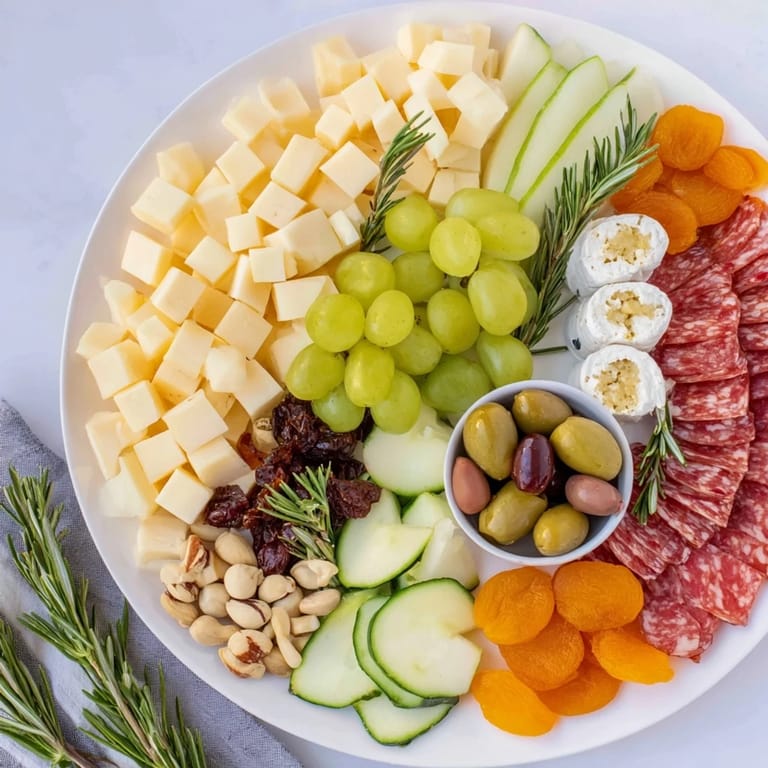
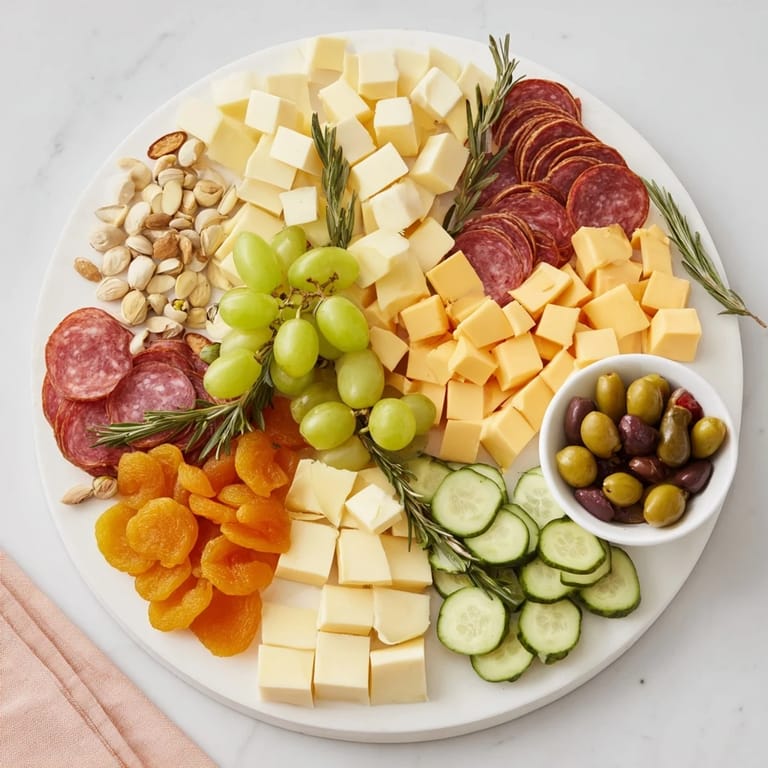
- Take your fresh rosemary sprigs and arrange them to divide your board into three distinct sections. This isn't about being perfectly geometric; it's about creating visual boundaries that feel intentional. Lay them diagonally, in curves, however feels right. They should separate the sections enough that flavors don't mingle, but also invite eyes to wander from one section to the next.
- Build the White Wine Section:
- This is your Chardonnay territory, so think creamy, bright, and elegant. Arrange the brie and Gruyère so they're accessible but also look intentional—not scattered, but not rigid either. Group the green grapes, apple slices, and almonds in little clusters that look like they belong together. Vary the heights slightly by propping some items against others. This section should feel like a gentle introduction to the board.
- Establish the Red Wine Section:
- This is where things get a bit more robust. The aged cheddar and smoked gouda should be generous and present. Drape the prosciutto loosely—let it have volume and movement. Scatter the salami so people can see the colors and patterns. Distribute the cherry tomatoes so they peek through like little jewels. This section should feel a bit more decadent and textured than the first.
- Complete the Sparkling Section:
- Goat cheese gets its moment to shine here—position it prominently, maybe toward the middle of its section. Arrange the dried apricots and pistachios in ways that create visual interest through color contrast. Scatter the olives with intention; you want pockets of briny depth. The cucumber slices should feel fresh and light, like they're floating through the section rather than weighing it down.
- Fill the Spaces:
- Now comes the part where the board comes alive. Break or slice your baguette and lean pieces against the cheese and cured meats so they're easy to grab but also part of the composition. Scatter crackers throughout, mixing textures and colors. Leave some negative space—empty board visible between elements—so the whole thing doesn't feel crowded. You want it to look abundant, not desperate.
- Add the Final Touches:
- If you're using honey or fig jam, place small bowls at strategic points on the board where people will naturally reach. Position them so they feel integrated, not like an afterthought. If you want to drizzle a tiny bit directly on certain cheeses, do that now, but be gentle—you're highlighting, not drowning.
- Take a Breath and Review:
- Step back and look at the whole thing. Does it feel balanced? Are there any gaps that need filling? Any section that looks lonely compared to the others? Make small adjustments. Move things an inch this way or that. This is where the magic happens—it's not about perfection; it's about creating an experience that invites people to eat, explore, and connect.
- Serve with Intention:
- Bring the platter to the table just before your guests arrive, or have it waiting as they sit down. The moment they see it, they'll know something thoughtful has happened here. Let them know the pairing logic if they're interested, but also let them explore. Some of the best moments come when someone makes an unexpected pairing and discovers something new.
 Save
Save I remember one evening when my neighbor—someone I'd only waved to a few times—came to one of these gatherings. She was quiet at first, but somewhere around the second glass of wine, as she was working through the cheeses, she started telling stories. Stories about growing up in Italy, about her grandmother making fresh pasta, about flavors she'd been chasing for decades in American grocery stores. The platter had somehow given her permission to be vulnerable, to share. By the end of the night, she wasn't just a neighbor; she was a friend. That's when I realized the real magic of this platter—it's not about the wine or the cheese. It's about creating a moment where people feel welcomed enough to become themselves.
The Science of Wine Pairing Made Simple
Wine pairing isn't actually mysterious once you understand the basic logic. Chardonnay is a full-bodied white wine with butter and oak notes, so it loves rich, creamy cheeses that echo those same qualities—hence the brie and Gruyère. Pinot Noir is elegant but has enough tannins to stand up to aged, sharp cheeses and the salt of cured meats; the wine's acidity cuts through the richness. Sparkling wine's bubbles and brightness are the perfect counterpoint to tangy goat cheese and sweet dried fruits—the bubbles actually enhance sweetness, which is why champagne and dessert can be magical together. This isn't superstition; it's just flavor chemistry. Once you understand this, you can build platters for any wines you love, any cheeses you find, any guests who arrive at your door.
The Rosemary Ritual
There's something almost ceremonial about using fresh rosemary as dividers instead of just pushing food around on a board. The herb is doing functional work—it's keeping flavors from mingling, making sure the pinot noir section doesn't smell like apricots—but it's also setting a tone. When guests lean in to reach for an olive, they brush against the rosemary and that piney, almost medicinal scent hits them. It makes the whole experience feel intentional, like you've thought about every sense, not just taste. I've started keeping extra sprigs on the table in small glasses of water, so people can touch them, smell them, remember that this gathering is about being present.
Variations and Ways to Make It Yours
The beautiful thing about this platter is that it's a framework, not a formula. Love a different wine? Build a section around it. Have a cheese that speaks to you? Find its perfect partner and make that the star. Working with a vegan or dairy-free guest? The sparkling wine section can be completely reimagined with nuts, dried fruits, olives, and quality crackers. Have access to something special—maybe a local cheese, a particular cured meat from a maker you trust—put it front and center. The wine pairing logic stays the same; only the cast of characters changes.
- Try swapping out the Gruyère for aged Comté if you find it—it's nuttier and even more luxurious
- If you have access to burrata instead of triple-cream brie, use it for dramatic presentation and creamy richness
- Experiment with different types of olives; a briny green olives next to sweet dried apricots creates a beautiful taste contrast
 Save
Save Every time I set one of these platters on the table, I'm reminded that the best gatherings aren't about complicated cooking or perfection. They're about creating a space where people feel seen, where flavors tell stories, and where conversation flows as naturally as wine. This platter does that better than anything I've learned to make.
Recipe FAQ
- → How should the platter be arranged?
Divide the platter into three sections using fresh rosemary sprigs, then arrange cheeses, fruits, nuts, and meats in each section as outlined.
- → Can this platter be adapted for vegetarians?
Yes, omit the meat selections and add extra nuts or roasted vegetables to maintain variety and texture.
- → What wines pair best with each section?
Section one pairs with Chardonnay or other crisp whites, section two with Pinot Noir or light reds, and section three with sparkling wine or rosé.
- → How to add flavor and aroma to the platter?
Use fresh rosemary sprigs as dividers between sections to enhance fragrance and presentation.
- → What can be served alongside for added texture?
Slices of baguette and assorted crackers complement the cheeses and fruits beautifully, providing a crisp texture.