 Save
Save The first time I threw buffalo sauce at ramen, my kitchen smelled like chaos in the best way possible. A friend had challenged me to make something spicy that wouldn't taste like I was just dumping hot sauce everywhere, and I stared at my pantry thinking: cauliflower, coconut milk, and that jar of buffalo sauce that had been sitting there for months. What came together that night surprised both of us—crispy, tangy bites swimming in a creamy, umami-rich broth that somehow made perfect sense. Now when I make this, I think about how the worst recipe ideas sometimes turn into the ones people ask for again and again.
I made this for my brother during one of those nights when everyone showed up hungry and unannounced, and he actually asked if I'd been secretly taking cooking classes. The combination of creamy and crispy, spicy and balanced, felt like it hit every mood at the table that evening. Since then, it's become the dish I make when I want to show off without actually stressing about it.
Ingredients
- Cauliflower, cut into bite-sized florets: You want pieces big enough to get crispy edges but small enough to coat easily—roughly the size of your thumb.
- All-purpose flour: This creates the base of the batter that crisps up beautifully in the oven.
- Water: Keeps the batter light and helps it adhere evenly to each floret.
- Garlic powder and paprika: These add savory depth before the buffalo sauce hits, so nothing tastes one-dimensional.
- Buffalo hot sauce: The soul of this dish—choose one you actually like drinking straight, because that's what you're tasting here.
- Unsalted butter, melted: This balances the heat and helps the sauce cling to the crispy coating without sliding off.
- Vegetable oil: Medium heat is best, just enough to wake up the garlic and ginger without burning them.
- Fresh garlic and ginger: These two create the aromatic base that makes the broth feel intentional rather than like hot liquid.
- Vegetable broth: Use good quality here—it's the foundation everything else floats on.
- Coconut milk: The secret ingredient that transforms buffalo into something velvety and complex instead of just spicy.
- White miso paste: A spoonful dissolves into something that deepens the whole bowl, adding umami that keeps people reaching for more.
- Soy sauce, rice vinegar, and sriracha: These three balance heat with acidity and saltiness so the broth tastes alive.
- Ramen noodles: Fresh noodles are ideal if you can find them, but dried work perfectly fine—just don't overcook them.
- Green onions, carrots, and red cabbage: The freshness and crunch here cut through the richness and make each spoonful feel different.
- Toasted sesame seeds: A handful scattered on top adds texture and a whisper of nuttiness.
- Fresh cilantro and lime wedges: Optional but honestly, they complete the picture.
Tired of Takeout? 🥡
Get 10 meals you can make faster than delivery arrives. Seriously.
One email. No spam. Unsubscribe anytime.
Instructions
- Get your oven ready and prep the cauliflower:
- Preheat to 425°F and line your baking sheet with parchment paper. In a bowl, whisk flour, water, garlic powder, paprika, and salt until it's smooth and pourable like pancake batter. Toss your cauliflower florets until every surface is coated—this creates the crispy shell everything depends on.
- First bake—build the foundation:
- Spread the coated florets in a single layer on your sheet and bake for 20 minutes, flipping halfway through. This stage transforms them from raw to partially cooked, ready to take on flavor.
- Add the buffalo coating:
- Mix buffalo sauce with melted butter in a small bowl. Pull the cauliflower from the oven, brush generously with this mixture, and return it for another 10 minutes until the edges are golden and the coating clings tightly.
- Build the broth while cauliflower finishes:
- Heat oil in a pot over medium heat, sauté minced garlic and ginger for a minute or two until your kitchen smells incredible. The key is not letting them brown—you want that fresh, bright aroma.
- Layer in the creamy, complex base:
- Pour in broth and coconut milk, then whisk in miso paste so it dissolves completely rather than sitting in lumps. Add soy sauce, rice vinegar, and sriracha if you want extra heat, then let it simmer gently for 10 minutes. This time lets all the flavors get to know each other and deepen.
- Cook the noodles to perfect texture:
- Follow the package directions but taste them before draining—you want them tender but with just a tiny bit of resistance when you bite. Overcooked noodles disappear into the broth instead of holding their own.
- Bring it all together in the bowl:
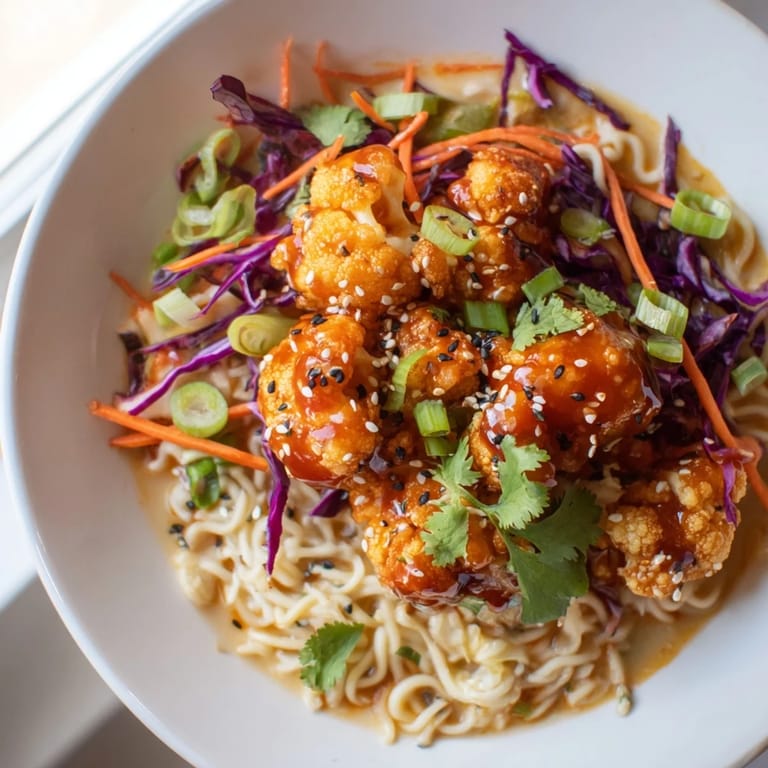
- Divide noodles among four bowls, ladle hot broth over them, then crown each bowl with a generous handful of crispy cauliflower. Top with carrots, cabbage, green onions, sesame seeds, and cilantro, then serve immediately with lime wedges on the side for anyone who wants to brighten their bowl at the last second.
 Save
Save There's this moment when someone takes their first spoonful and pauses—that second where they're trying to figure out what they're actually tasting, because it's bold and creamy and crispy all at once. That pause is when I know the dish worked.
The Buffalo Sauce Decision
Not all buffalo sauces are created equal, and this matters more than you'd think. Some are thin and vinegary, others are thick and buttery, and a few are so intensely hot they overshadow everything else. I've learned to taste whatever sauce I'm using before committing it to the dish. If it's something you'd hesitate to eat straight from a spoon, it'll be too harsh mixed into that creamy broth. Look for a sauce with decent body and a flavor profile that includes more than just heat—you want a little tang, a little richness, something that feels intentional.
Playing with Heat and Flavor Balance
The magic here is that you're not actually making a spicy dish pretending to be comforting—you're making a comforting dish that happens to have heat. The coconut milk and miso paste soothe the fire, the lime and cilantro brighten it, and the sesame seeds ground everything into something you want to keep eating. If you want it spicier, add more sriracha to the broth rather than loading up on more buffalo sauce, because the sauce's job is flavor, not just heat. If you want it milder, pull back on the buffalo coating or skip the sriracha entirely—the broth is already delicious without it.
Timing and Technique Shortcuts
The beautiful part about this dish is that everything happens at the same time without actually being complicated. While the cauliflower is baking, you're building broth. While the broth simmers, you're cooking noodles. It all comes together in under an hour and feels much more involved than it actually is.
- Use pre-minced garlic and ginger if you're pressed for time—it's one of the few shortcuts that honestly doesn't hurt the final result.
- Have your vegetables prepped and measured before you start cooking so you're not scrambling when the cauliflower comes out of the oven.
- If you make this ahead, store the cauliflower and broth separately and reheat them just before assembling so the cauliflower stays crispy.
 Save
Save This dish proves that fusion isn't about being clever—it's about trusting your instincts when two completely different things seem like they might belong together. Make this when you want something bold and comforting at the same time.
Recipe FAQ
- → How do I make buffalo cauliflower crispy?
Coat cauliflower florets evenly with a flour-based batter, bake at a high temperature, brush with buffalo sauce and butter, then bake again for a crispy finish.
- → What gives the ramen broth its creamy texture?
The creamy texture comes from unsweetened coconut milk combined with vegetable broth and white miso paste, creating a rich, savory base.
- → Can I adjust the spice level in this dish?
Yes, reduce or omit the buffalo sauce and sriracha for milder flavor or add more for extra heat.
- → What noodles work best for this dish?
Fresh or dried wheat-based ramen noodles work well, providing the ideal texture to soak up the creamy broth and complement the toppings.
- → Are there vegetarian or vegan options for the sauce?
Use vegan butter in the buffalo sauce to keep it vegan-friendly without sacrificing richness.
- → What toppings enhance this fusion bowl?
Shredded carrots, red cabbage, green onions, toasted sesame seeds, fresh cilantro, and lime wedges add freshness and crunch.