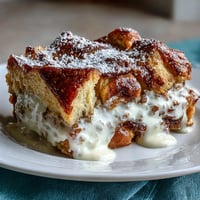
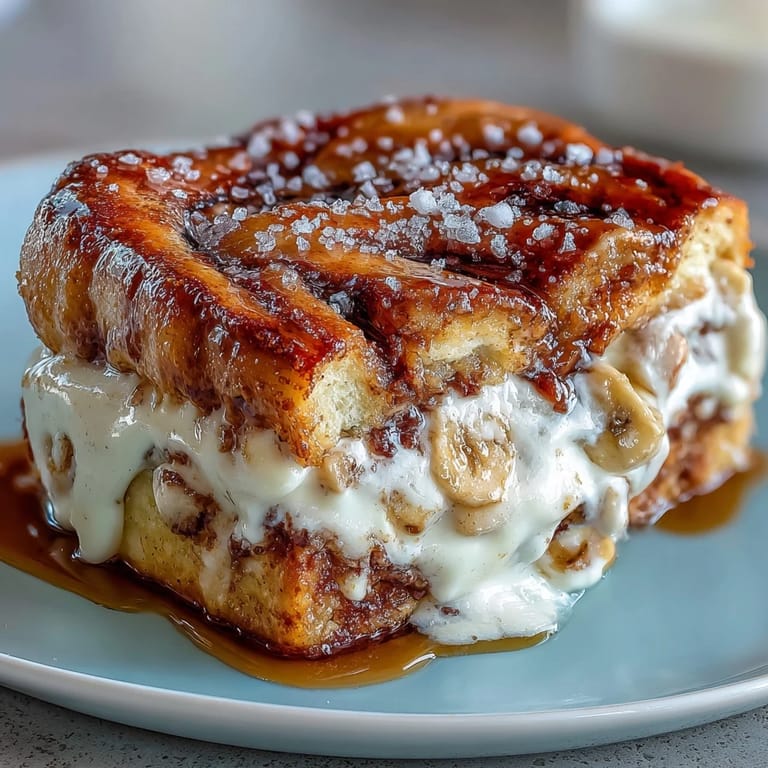
 Save
Save Sunday morning, my kitchen smelled like a bakery collided with a cinnamon roll stand, and I realized I'd stumbled onto something magical. I was trying to use up a loaf of brioche and some overripe bananas when the idea hit—what if French toast casserole borrowed from cinnamon rolls instead of playing it safe? The result was this cream cheese swirl situation that's now the reason people actually show up to my brunches on time.
I made this for my sister's birthday brunch last fall, and watching eight people silently eat their first bites told me everything. Someone's fork paused mid-air, another person closed their eyes, and my mom immediately asked for the recipe before she'd even finished chewing. That's when I knew this wasn't just breakfast—it was the kind of dish that makes people feel cared for.
Ingredients
- Brioche or challah bread, 1 large loaf cut into 1-inch cubes: These breads are soft enough to soak up custard without falling apart, unlike regular sandwich bread which turns to mush.
- Ripe bananas, 2 medium, mashed: Use bananas that are heavily speckled or even mostly brown—they're sweeter and blend seamlessly into the custard without visible chunks.
- Eggs, 6 large: These create the custard structure; don't skip or reduce them or you'll end up with bread soup instead of a set casserole.
- Whole milk, 1 1/2 cups: The fat content matters here; skim milk won't give you that rich, custardy texture you're after.
- Heavy cream, 1/2 cup: This is the secret to making it feel luxurious and preventing it from drying out during the long bake.
- Brown sugar and granulated sugar, 1/2 cup plus 1/4 cup: The combination of both gives depth; brown sugar adds molasses notes while granulated keeps it from being too dense.
- Vanilla extract, 2 tsp plus 1 tsp: Real vanilla makes a noticeable difference, and don't skip the extra teaspoon in the cream cheese layer.
- Ground cinnamon, 2 tsp plus 1 tbsp: That generous topping ratio is intentional—cinnamon is what makes this feel like a cinnamon roll, so don't hold back.
- Ground nutmeg, 1/4 tsp: A whisper of nutmeg elevates the banana bread element without announcing itself too loudly.
- Sea salt, 1/4 tsp: Salt in custards isn't optional; it balances sweetness and makes everything taste more like itself.
- Cream cheese, 8 oz, softened: Leave it on the counter for at least an hour; cold cream cheese won't blend smoothly and you'll end up with lumps in your swirl.
- Unsalted butter, 2 tbsp, melted: The butter helps the cinnamon sugar topping adhere and prevents it from sinking into the casserole during baking.
Tired of Takeout? 🥡
Get 10 meals you can make faster than delivery arrives. Seriously.
One email. No spam. Unsubscribe anytime.
Instructions
- Set your stage:
- Grease your 9x13-inch baking dish thoroughly with butter or nonstick spray, getting into the corners where bread edges like to stick. This step takes thirty seconds and saves you from a scraped casserole situation later.
- Build the first bread layer:
- Spread exactly half your cubed bread across the bottom of the dish in a single layer, filling gaps without crushing pieces. Think of it like a puzzle where loose fit is actually better than tight packing.
- Create the custard base:
- In a large bowl, whisk together mashed bananas, eggs, milk, cream, both sugars, vanilla, cinnamon, nutmeg, and salt until the mixture looks smooth and homogeneous with no banana lumps visible. The banana should dissolve almost completely into the liquid, creating a pale tan custard that smells like breakfast heaven.
- First custard pour:
- Pour exactly half your custard over the bread layer, then press down gently with the back of a spoon so the bread absorbs liquid without falling apart. You want the bread to soak but still hold its shape; this isn't soup.
- Swirl the cream cheese magic:
- Beat softened cream cheese with sugar, egg yolk, and vanilla until completely smooth and creamy with no lumps, then dollop spoonfuls randomly across the soaked bread layer. Don't stir it in; let it stay in distinct pockets so you get surprise bites of pure cream cheese throughout the final bake.
- Top with remaining bread:
- Scatter the second half of bread cubes over the cream cheese layer, then pour the remaining custard slowly over everything, pressing gently to ensure all bread is moistened and no dry corners remain. Listen for the gentle sound of bread absorbing liquid rather than custard running off.
- Add the cinnamon sugar crown:
- Whisk melted butter with brown sugar and cinnamon until it looks like wet sand, then drizzle or dot it evenly across the top. This topping will caramelize slightly during baking and give you textural contrast against the soft custard underneath.
- The overnight rest:
- Cover tightly with plastic wrap or foil and refrigerate for at least 6 hours, ideally 8 hours or overnight. This resting time lets the bread fully hydrate and allows flavors to meld into something greater than their individual parts.
- Prepare to bake:
- Remove the casserole from the refrigerator about 15 minutes before baking and preheat your oven to 350°F (175°C). Bringing it to room temperature slightly speeds up cooking and ensures even baking.
- Bake until golden:
- Bake uncovered for 40 to 45 minutes, until the top is puffed and golden brown and a knife inserted in the center comes out mostly clean with maybe a few cream cheese smudges. The center should jiggle just slightly when you shake the dish; it firms up as it cools.
- Rest before serving:
- Let the casserole cool for 10 to 15 minutes on the counter before cutting and serving warm. This resting period lets the structure set so each portion holds together rather than collapsing into custardy chaos.
 Save
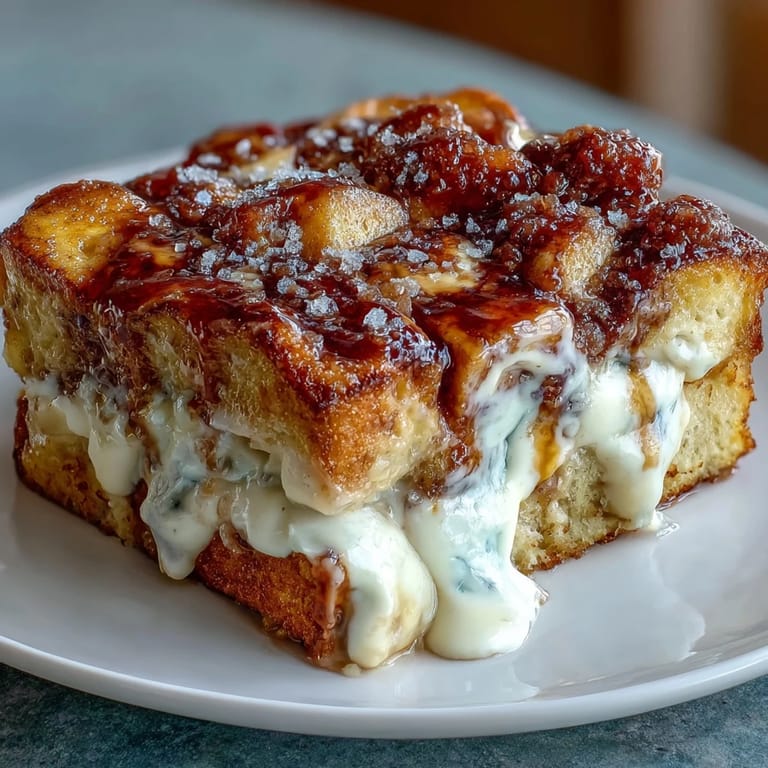
Save I brought this to a holiday potluck where I barely knew anyone, and by the end of the meal, three people had followed me to my car asking if I'd make it for their upcoming events. Food has a way of breaking down awkwardness, and this dish seemed to unlock something—maybe it was the cream cheese surprise, or maybe it was the fact that someone showed up with something homemade that tasted like actual care.
Make-Ahead Magic
The beauty of this recipe lives in its flexibility—assemble everything the night before, cover it, and forget about it until morning. I've also frozen unbaked casseroles wrapped tightly in plastic wrap and foil, then thawed them overnight in the refrigerator before baking as directed. You could theoretically assemble this on a Tuesday, freeze it, and bake it the following Sunday, which transforms breakfast from a morning scramble into something actually manageable.
Optional Add-Ins and Flavor Shifts
The cream cheese swirl and banana base are solid, but this casserole welcomes experiments. Chopped pecans or walnuts sprinkled over the top add crunch and nuttiness, while a touch of maple extract in the custard leans into that breakfast vibe. I once added a tablespoon of pumpkin puree to the banana mixture in fall, and nobody could pinpoint the flavor shift—they just kept saying it tasted like autumn on a plate.
Serving and Pairing Suggestions
Serve warm, optionally with a drizzle of maple syrup, a dusting of powdered sugar, or a dollop of whipped cream if you're feeling indulgent. Pair this with strong coffee—the bitterness cuts through the sweetness beautifully—or chai tea if you want to lean into the warm spice element. This dish feeds eight comfortably, though I've seen people go back for second slices before everyone's had firsts, so maybe plan for six actual servings if your crowd is enthusiastic.
- A pitcher of cold milk balances the richness for lighter eaters.
- Fresh berries on the side add brightness and textural contrast.
- Breakfast sausage or crispy bacon pairs perfectly if you want savory elements.
 Save
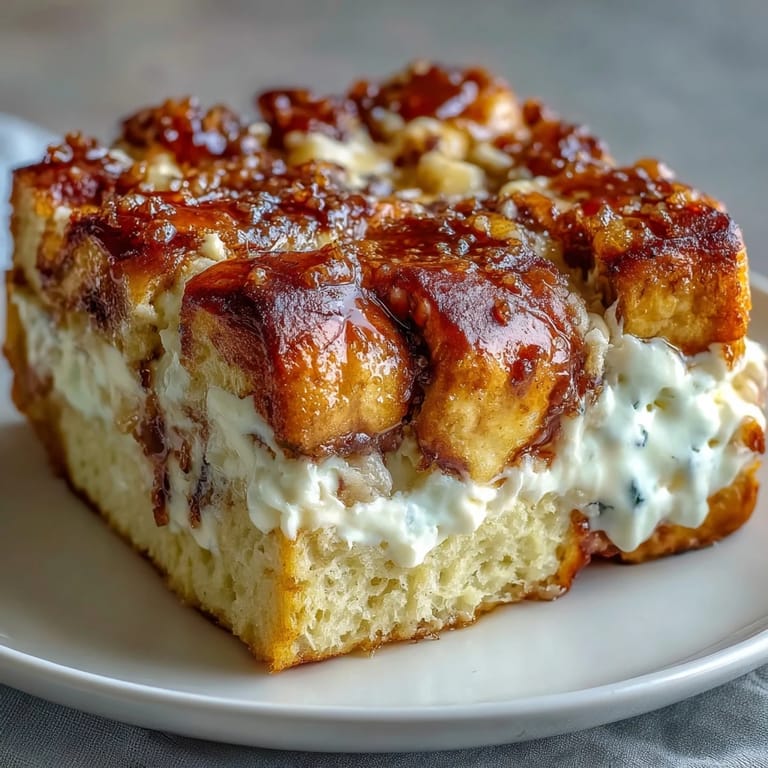
Save This casserole has become my go-to for mornings that need to feel special without actually requiring special effort. Make it once, and you'll understand why people keep asking for the recipe.
Recipe FAQ
- → Can I use different bread instead of brioche or challah?
Yes, though brioche and challah work best due to their rich, eggy structure and ability to absorb custard without becoming mushy. French bread, sourdough, or even a sturdy white bread can be substituted. Avoid very soft sandwich bread as it may disintegrate during the overnight soaking period.
- → How long should I refrigerate the casserole before baking?
Minimum 6 hours, but 8 hours (overnight) is ideal for the best texture. This allows the bread to fully absorb the custard and the flavors to meld. You can refrigerate up to 24 hours before baking—any longer and the bread may become too saturated.
- → Can I freeze this casserole unbaked?
Absolutely. Assemble the dish completely, wrap tightly with plastic wrap and foil, and freeze for up to 1 month. Thaw overnight in the refrigerator before baking as directed. The texture remains excellent after freezing.
- → How do I know when it's fully baked?
The casserole is done when it's puffed and golden brown on top, usually after 40–45 minutes at 350°F. A knife inserted in the center should come out clean, not wet or eggy. If the top browns too quickly, tent loosely with foil for the last 10 minutes.
- → What can I serve with this French toast bake?
Warm maple syrup or a dusting of powdered sugar are classic finishing touches. Fresh berries, sliced bananas, or a dollop of whipped cream complement the rich flavors. For a complete brunch spread, pair with crispy bacon, fresh fruit salad, or a simple green salad to balance the sweetness.
- → Can I make this without the bananas?
Yes, simply omit the mashed bananas from the custard mixture. You may want to increase the milk by about ¼ cup to maintain the same liquid ratio. The bake will still be delicious without the banana flavor, though you'll lose some of the natural sweetness and moisture they provide.