 Save
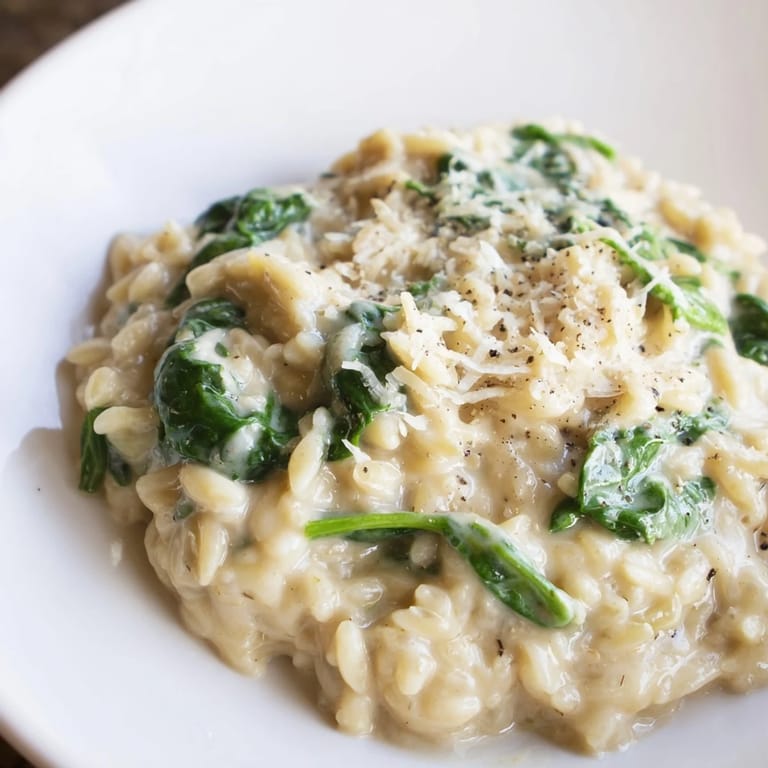
Save There's something about a weeknight when you open the fridge and find yourself staring at a half-empty bag of spinach, knowing something good needs to happen fast. That's when I discovered orzo—a pasta so small and tender it practically drinks up cream like it was made for it. One lazy Thursday, I threw together butter, garlic, and that spinach with a handful of Parmesan, and suddenly the kitchen smelled like a cozy Italian trattoria. My roommate followed the aroma from three rooms away, and before I knew it, we were both hovering over a single pan of this creamy, emerald-streaked goodness. It became our emergency dinner ever since.
I made this for my sister when she had just moved into her first apartment, completely bare except for a hot plate and one skillet. She sat on a cardboard box eating straight from the pan, not even bothering with a bowl, and I remember her saying this tasted like actual food, not survival meals. That moment stuck with me—how something so simple could feel like genuine comfort.
Ingredients
- Orzo pasta (1 cup): This tiny rice-shaped pasta cooks faster than regular pasta and absorbs the creamy sauce beautifully—it's the secret weapon here.
- Unsalted butter and olive oil (2 tablespoons and 1 tablespoon): Butter alone burns too easily; the oil keeps things calm and gives better flavor depth.
- Garlic and onion (2 cloves and 1 small onion): Minced fine so they practically dissolve into the sauce and become pure savory backbone.
- Vegetable broth (2 cups): Use the good kind if you can—it's the foundation of everything that follows.
- Whole milk or half-and-half (1 cup): Half-and-half gives richer results, but milk works if that's what you have.
- Parmesan cheese, freshly grated (1/2 cup): Pre-grated stuff has anti-caking agents that make the sauce grainy; shred it yourself if possible.
- Cream cheese, softened (1/3 cup): This is what transforms a simple broth into something luxurious and clinging to every grain of orzo.
- Baby spinach (4 cups): It wilts down to almost nothing, so don't be shy with the volume.
- Salt, pepper, and nutmeg: That pinch of nutmeg is optional but changes everything—it whispers rather than shouts.
Tired of Takeout? 🥡
Get 10 meals you can make faster than delivery arrives. Seriously.
One email. No spam. Unsubscribe anytime.
Instructions
- Melt and soften the aromatics:
- Heat butter and olive oil in your skillet until the butter foams. Toss in the onion and let it go golden and soft—this takes about 3 minutes, and you'll smell when it's right.
- Toast the orzo:
- Add the dry pasta and stir for 2 minutes. You want it to turn slightly golden and smell nutty; this step sounds small but it deepens everything.
- Build the liquid foundation:
- Pour in broth and milk, stirring constantly so nothing sticks to the bottom. Bring it to a gentle simmer, then turn the heat down to medium-low.
- Cook the orzo to tenderness:
- Stir often—every 2 minutes or so—and watch as the pasta swells and the liquid reduces. It should take 10 to 12 minutes and look creamy rather than soupy when it's nearly done.
- Introduce the cream:
- Stir in the cream cheese and Parmesan until they're completely melted and the sauce coats the back of your spoon. If it looks too thick, add a splash of milk.
- Wilt the spinach:
- Dump in the chopped spinach and stir for about a minute until it disappears into the sauce. Taste it now and add salt, pepper, and nutmeg to your preference.
- Serve while hot:
- Transfer to bowls or plates immediately, then shower each serving with extra Parmesan and a crack of fresh black pepper.
 Save
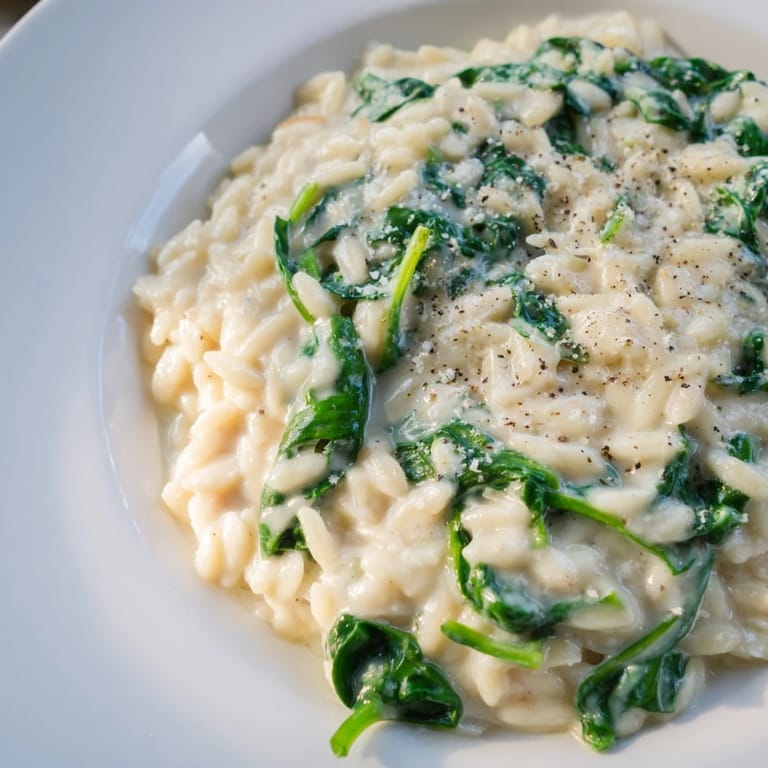
Save The magic moment always comes when someone takes their first bite and their eyes go a little wide, surprised that something this creamy and restaurant-quality came from a single pan in their own kitchen. That's when you know you've made something worth repeating forever.
Timing and Temperature Matter
Keep the heat at medium-low once you add the liquids—high heat will scorch the cream and make the sauce split. The gentle simmer means small, lazy bubbles breaking the surface, not an aggressive boil. If you rush this, the orzo will be chalky in the middle and the sauce will break into separated, greasy puddles. One Sunday afternoon, I got impatient and turned up the heat, and the whole thing separated into grainy cream and broken pasta—it taught me that 30 minutes slow beats 15 minutes ruined every single time.
Cream Cheese Is Non-Negotiable
I used to think cream cheese was just a bagel thing until I realized it's the secret ingredient in every creamy pasta sauce that tastes effortless. It melts so smoothly and creates a sauce that clings to each tiny orzo kernel, whereas regular cheese would just clump. Soften it first by letting it sit out for 10 minutes—cold cream cheese will seize and become grainy no matter how much you stir.
Variations and Upgrades
This dish is a blank canvas that welcomes additions with open arms. A handful of crispy pancetta crumbled over top adds salt and smoke. A cup of sautéed mushrooms stirred in just before the spinach makes it feel more substantial. Even a pile of tender roasted broccoli works beautifully if you're looking for more vegetables. Some nights I'll stir in a pinch of lemon zest right at the end, and it brightens everything without making it taste lemony.
- Try heavy cream instead of milk for an even more luxurious, restaurant-quality richness.
- A handful of fresh dill or basil stirred in at the very end adds brightness and complexity.
- Swap half the spinach for arugula if you want something peppery and more assertive.
 Save
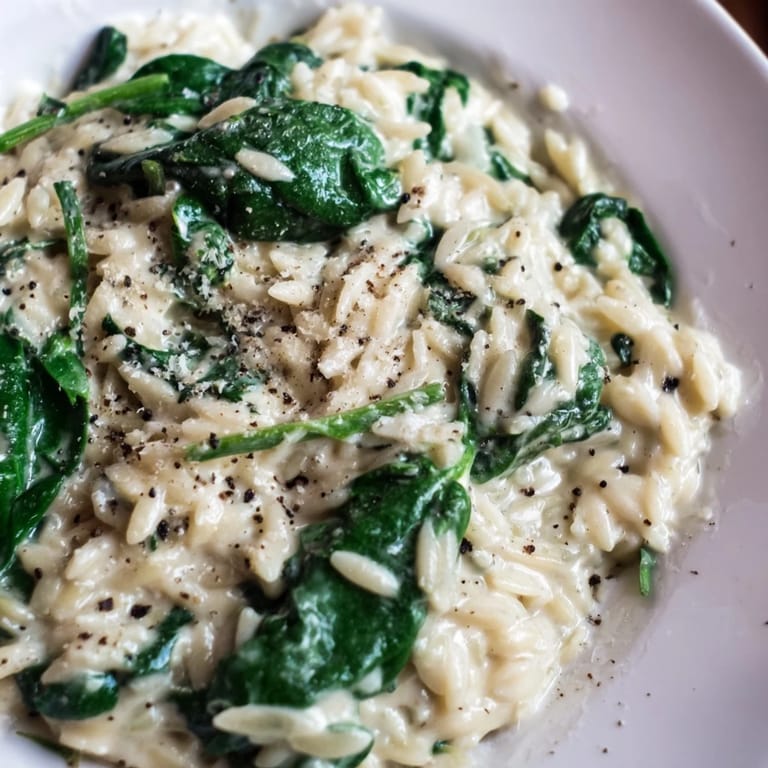
Save This creamy spinach orzo has become my answer to almost every dinner question—fast enough for a weeknight, elegant enough to serve to guests, and so forgiving that even a small mistake becomes a happy accident. Make it once, and you'll find yourself reaching for it whenever you need something that tastes like comfort tastes like home.
Recipe FAQ
- → Can I use a different pasta instead of orzo?
Yes, small pasta shapes like couscous or tiny shells work well but adjust cooking times accordingly.
- → How do I keep the spinach vibrant and not overcooked?
Add the chopped spinach at the end of cooking and stir just until wilted to preserve its color and nutrients.
- → What can I substitute for cream cheese in the sauce?
Soft ricotta or mascarpone can be used for a similar creamy texture and mild flavor.
- → Is it possible to make this dish gluten-free?
Use gluten-free orzo pasta available at most stores to maintain the same texture without gluten.
- → How can I add more protein to this dish?
Incorporate cooked chicken, sautéed mushrooms, or your favorite protein while finishing the sauce.