 Save
Save There's something about spring that makes you want to bake something delicate and surprising. I discovered dandelion honey quite by accident at a farmer's market—the vendor was practically giving it away, insisting it paired beautifully with lemon. That conversation sparked this cake, which has since become my go-to when I need something that feels both comforting and a little bit wild. The floral sweetness of the honey against bright citrus creates this unexpected magic that gets people talking before they even taste it.
I made this cake for my neighbor's spring luncheon last year, and watching her face light up when she took the first bite reminded me why baking matters. She kept asking what made it taste so floral and bright, and I loved explaining about the dandelion honey like I was sharing a secret. That day, the cake became less about impressing and more about connecting—and somehow it tasted even better for that.
Ingredients
- All-purpose flour (2 cups): The foundation that needs to be whisked with the dry ingredients so everything distributes evenly and the cake rises properly.
- Baking powder and baking soda (1 1/2 tsp and 1/2 tsp): This combination creates a tender crumb—too much soda and you'll taste bitterness, so measure carefully.
- Fine sea salt (1/2 tsp): Even if it seems tiny, it brightens all the flavors and keeps the sweetness from becoming cloying.
- Unsalted butter (1/2 cup): Room temperature is non-negotiable here; cold butter won't cream properly with the honey and sugar.
- Dandelion honey (1/2 cup): This is the star ingredient with its gentle floral notes—regular honey works, but dandelion brings something that feels like spring in a spoonful.
- Granulated sugar (1/2 cup): Paired with the honey, it creates the right crumb structure while the honey adds moisture and complexity.
- Large eggs (3): Room temperature eggs emulsify better with the butter and honey, creating a lighter, more luxurious batter.
- Pure vanilla extract (1 tsp): It's the quiet backbone that makes all the other flavors sing without announcing itself.
- Whole milk (1/2 cup): Also room temperature—the alternating method with flour keeps the batter from becoming tough.
- Lemon zest and juice (2 tbsp each): Fresh lemon is what cuts through the honey's sweetness and prevents the cake from feeling one-dimensional.
- Powdered sugar (1 cup for glaze): Sift it even if you think you don't need to; lumps will show in the final glaze.
- Dandelion honey (1 tbsp for glaze): A touch in the glaze echoes the cake itself and adds a subtle sophistication to the finish.
Tired of Takeout? 🥡
Get 10 meals you can make faster than delivery arrives. Seriously.
One email. No spam. Unsubscribe anytime.
Instructions
- Set the stage:
- Preheat your oven to 350°F and prepare a 9-inch cake pan—I prefer parchment paper because it peels away cleanly and you know nothing's sticking. Have all your ingredients measured and at room temperature; this is not the moment to rush.
- Mix the dry team:
- Whisk flour, baking powder, baking soda, and salt together in a medium bowl, making sure there are no streaks of baking soda hiding in the corners. Set this aside and don't touch it until you need it.
- Cream the foundation:
- In a large bowl, beat the butter with the dandelion honey and sugar until the mixture is pale, fluffy, and looks almost mousse-like—this takes about 3 minutes and you'll hear the mixer change tone when you're there. This step is where the cake's tender crumb begins.
- Bring in the eggs:
- Add eggs one at a time, beating well after each one so they fully incorporate and the batter stays smooth. Each egg should disappear completely into the mixture before you add the next.
- Add the aromatics:
- Stir in the vanilla extract, lemon zest, and lemon juice, letting the brightness bloom through the batter. You'll smell the citrus immediately—that's how you know it's working.
- Marry wet and dry:
- Add the flour mixture and milk in three additions, starting and ending with flour—this alternating method keeps the batter tender and prevents overmixing, which is a cake's worst enemy. Mix until just combined; a few flour streaks are better than a smooth, overworked batter.
- Into the oven:
- Pour the batter into your prepared pan and smooth the top gently with a spatula. Bake for 35 to 40 minutes until a toothpick inserted into the center comes out clean or with just a few crumbs clinging to it.
- Cool with patience:
- Let the cake rest in the pan for exactly 10 minutes—this gives it structure to turn out cleanly—then invert it onto a wire rack to cool completely. Glazing a warm cake will cause the glaze to slide off, so patience pays here.
- Create the glaze:
- Whisk together sifted powdered sugar, lemon juice (add it gradually so you control the consistency), and dandelion honey until smooth and pourable. You're aiming for something that coats the back of a spoon but still drips gracefully.
- The finishing touch:
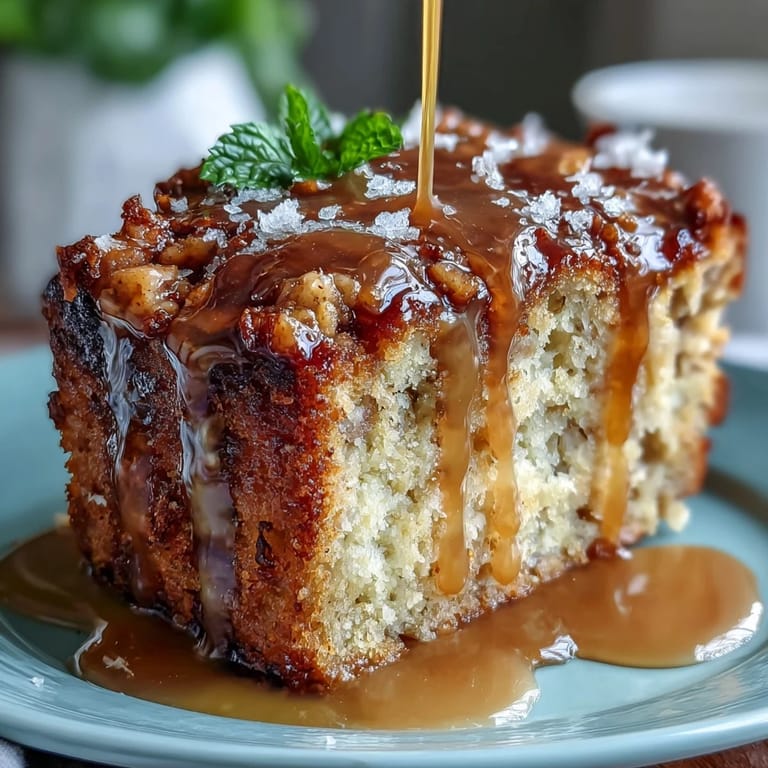
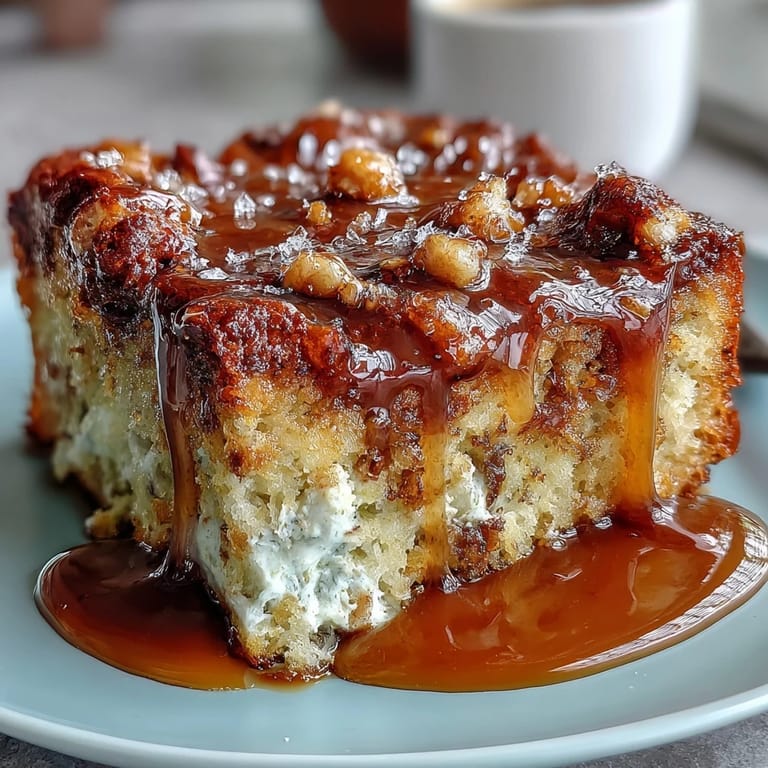
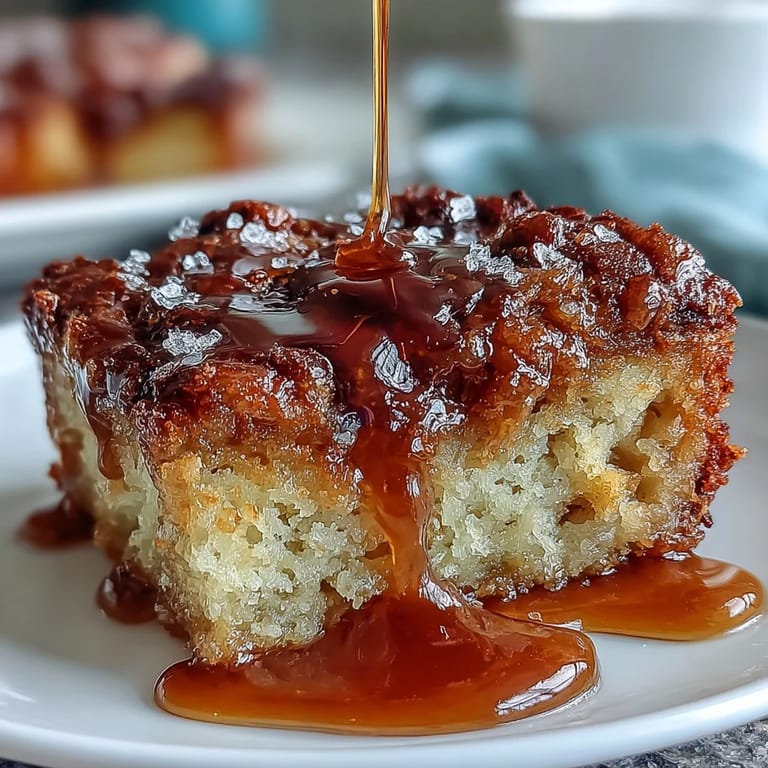
- Drizzle the glaze over the cooled cake, letting it pool slightly at the edges and run down the sides in thin, elegant streams. Let it set for 10 to 15 minutes before slicing so the glaze has time to firm up just enough.
 Save
Save There was an afternoon when a friend came over stressed about everything, and I pulled a slice of this cake from the cupboard with some tea. She took one bite and her shoulders just dropped—she said the combination of honey and lemon tasted like hope, which was probably the nicest compliment a cake has ever received. That's when I understood this recipe as something more than technique; it's an edible moment of gentleness.
The Character of Dandelion Honey
Dandelion honey deserves a moment of explanation because it's not something you find everywhere, and it's worth seeking out. It has this delicate, almost floral sweetness that regular honey doesn't possess—imagine the taste of wildflowers in late spring, subtle and not overly perfumed. I've learned that using it in baking creates depth rather than just sweetness, which is why this cake feels sophisticated instead of simple. The honey also keeps the cake moister longer than sugar alone ever could, which means leftovers actually improve by the next day.
Why the Alternating Method Matters
This recipe uses an alternating method—flour, then milk, then flour again—and it's not just tradition for tradition's sake. When you add dry ingredients directly to a wet batter, the flour hits all that moisture and starts developing gluten immediately, which toughens the cake. By splitting the flour and milk, you're treating the batter gently, almost like you're folding in whispers instead of commands. I discovered this the hard way by making dense, disappointing cakes before understanding that how you combine ingredients matters as much as what you combine.
Variations and Personal Touches
This cake is lovely as written, but it also loves being played with, and that's where your kitchen creativity comes in. You can add finely chopped fresh dandelion petals (from flowers you know are unsprayed) directly to the batter for a more pronounced floral note—about 2 tablespoons scattered through creates little pockets of delicate flavor. Some springtimes I've experimented with a touch of elderflower cordial instead of some of the milk, and it creates this ethereal quality that feels almost magical. The glaze is simple enough that it takes well to variations too—a splash of dandelion honey in it was actually an accident that turned out beautifully.
- Try brushing the cooled cake with a simple honey syrup before glazing for extra moisture and subtle sweetness.
- Pair it alongside herbal tea or a light floral white wine for a garden-party kind of experience.
- Leftovers stay fresh in an airtight container for up to three days, though they rarely last that long.
 Save
Save This cake is proof that the simplest ingredients, treated with care and a little bit of spring intuition, create something that feeds more than hunger. Bake it when you need to remember that gentleness has its place in a busy world.
Recipe FAQ
- → What can I use if dandelion honey is unavailable?
Regular honey is a great substitute that still provides sweetness and moisture to the cake.
- → How do I achieve the best lemon glaze consistency?
Gradually adding lemon juice to sifted powdered sugar helps reach a smooth, pourable glaze without being too runny.
- → Can I add fresh dandelion petals to the batter?
Yes, finely chopped unsprayed dandelion petals enhance the floral flavor for a more pronounced taste.
- → How should the cake be stored after baking?
Store in an airtight container at room temperature for up to three days to maintain freshness.
- → What pairing complements this honey and lemon dessert?
A light floral white wine or herbal tea complements the citrus and floral flavors beautifully.