 Save
Save My niece's graduation day arrived with that peculiar mix of pride and bittersweetness that only milestone moments carry. She'd mentioned wanting something special for the backyard celebration, and when she said she loved ombre anything, I knew exactly what had to happen in my kitchen that week. The idea of building those color-graduated layers felt like capturing something meaningful—how we grow through stages, each one a shade different from the last. I'd never attempted four cake layers before, but something about the occasion made me want to try.
The real test came the night before the party when I realized four full cake layers meant careful planning. I mixed the batter in one big bowl, then divided it into four separate bowls and tinted each one, lightest to darkest. Watching those colors develop—from barely-there blush to deep jewel tone—felt almost meditative. By midnight, all four layers were cooling on racks, and I actually felt calm about the buttercream work waiting for the next morning.
Ingredients
- All-purpose flour: You need 3 1/4 cups (400 g) for structure; sift it with the baking powder and salt so the cake rises evenly and stays tender.
- Baking powder: 2 1/2 teaspoons ensures your layers climb without becoming cakey or dense, which matters when you're stacking them high.
- Salt: Just 1/2 teaspoon sharpens the sweetness and balances the vanilla.
- Unsalted butter: You'll need 1 cup (230 g) for the cake and 1 1/2 cups (340 g) for the buttercream; softened butter creams properly, so pull it out about an hour before baking.
- Granulated sugar: 2 cups (400 g) for the cake and 1 1/2 cups (300 g) for the buttercream; this amount gives you sweetness without overwhelming the delicate buttercream texture.
- Large eggs: Use 4 room-temperature eggs for the cake and 6 egg whites for the buttercream; room temperature means they emulsify more smoothly into the batter.
- Vanilla extract: 1 tablespoon for the cake, 2 teaspoons for the buttercream—it's your secret depth note.
- Whole milk: 1 1/4 cups (300 ml) at room temperature keeps the batter from shocking the butter mixture and seizing up.
- Gel food coloring: This is non-negotiable for ombre work; liquid food coloring waters down your batter and muddies the colors.
Tired of Takeout? 🥡
Get 10 meals you can make faster than delivery arrives. Seriously.
One email. No spam. Unsubscribe anytime.
Instructions
- Set your stage:
- Preheat your oven to 350°F (175°C) and grease four 8-inch round pans, lining them with parchment paper so the cakes release cleanly. This setup means you're baking all four layers at once, which saves time and ensures they all bake in the same oven conditions.
- Blend the dry ingredients:
- Whisk together the flour, baking powder, and salt in a medium bowl until everything is evenly distributed. This whisking aerates the flour slightly and distributes the leavening agents, giving you a more even crumb.
- Cream your butter and sugar:
- Beat the softened butter and sugar together until light, fluffy, and pale—about 3-4 minutes—which incorporates air and sets up your cake's tender structure. You'll actually feel the mixture lighten under the beaters.
- Add your eggs one at a time:
- Drop each egg in individually and beat well after each addition, so the emulsion stays stable and smooth. Rushing this step can result in a grainy batter that won't rise properly.
- Mix in the vanilla:
- Stir in 1 tablespoon vanilla extract until just combined, which takes about 30 seconds.
- Alternate wet and dry layers:
- Add the flour mixture and milk in three additions, starting and ending with flour—this prevents the batter from becoming grainy or overworked. Mix only until you see no white streaks.
- Divide and color:
- Pour the batter into four equal bowls and tint each one with increasing amounts of gel coloring, from barely-tinted to deeply saturated. Use a toothpick to add tiny dots of color, then stir thoroughly; it's easier to add more than to lighten it.
- Fill and smooth:
- Pour each colored batter into its prepared pan and smooth the tops with an offset spatula, making sure they're level so they bake evenly. A level cake is easier to stack.
- Bake with patience:
- Bake for 22-25 minutes, until a toothpick inserted in the center comes out with just a few moist crumbs clinging to it. Overbaking makes the layers dry and difficult to frost.
- Cool gradually:
- Let the cakes rest in their pans for 10 minutes—this helps them set without falling apart—then turn them out onto wire racks to cool completely. Frosting warm cakes is a disaster waiting to happen.
- Prepare the Swiss meringue:
- Combine egg whites and sugar in a heatproof bowl and set it over a pot of gently simmering water, whisking constantly for 5-7 minutes until the mixture hits 160°F (70°C) and the sugar fully dissolves. This pasteurizes the eggs and creates the foundation for silky buttercream.
- Whip to cloud-like peaks:
- Transfer the warm mixture to a stand mixer and whip on high speed for about 10 minutes until stiff, glossy peaks form and the bowl feels cool to the touch. This creates the structure that holds your buttercream together.
- Add butter gradually:
- Drop in butter a few cubes at a time, beating well between additions, so the buttercream emulsifies smoothly instead of breaking into oily streaks. If it looks curdled at any point, keep beating—it'll come together.
- Finish with vanilla and color:
- Stir in vanilla extract and divide the buttercream into separate bowls if you want to tint portions for ombre piping effects. You can now create gradients in the frosting itself, or keep it simple with one color.
- Trim and level your layers:
- If any layers have domed slightly on top, use a long serrated knife to slice off the dome so they stack flat and stable. This small step makes assembly infinitely easier.
- Layer from dark to light:
- Place the darkest layer on your cake stand or plate, spread with a thin but generous layer of buttercream, then stack the next shade lighter. Continue until the lightest layer sits on top, creating a beautiful gradient when sliced.
- Apply the crumb coat:
- Spread a thin layer of buttercream over the entire assembled cake to seal in any crumbs, then refrigerate for 20 minutes so this foundation sets. This step makes your final frosting look polished and crumb-free.
- Frost with intention:
- Apply the final thick layer of buttercream, blending colors as you go if you want an ombre effect on the outside, or piping decorative touches with tinted buttercream. Work slowly and let the cake guide your design.
- Decorate your celebration:
- Add edible pearls, a graduation topper, or piped rosettes depending on your vision, then chill until set. The cake keeps best at room temperature but benefits from a chill before serving.
 Save
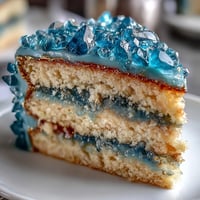
Save Carrying that cake to my niece's backyard, watching her face light up when she saw those ombre layers, made every careful step worthwhile. Later, when we sliced into it and found those perfect color gradients inside matching the outside, people actually gasped—and that felt like the real celebration.
The Ombre Effect Explained
The ombre magic happens in how you tint each portion of batter. Start with your lightest color first—just a toothpick dab of gel coloring, stirred through completely—then add progressively more color to each subsequent bowl. What looks slightly off-color in the raw batter becomes richer when baked, so don't be afraid of depth; the heat deepens everything naturally. If you're matching school colors or using a specific palette, test your colors on a small piece of white paper first so you know what to expect.
Why Swiss Meringue Over American Buttercream
Swiss meringue buttercream holds up better in warm weather and tastes less cloying than the traditional American version made with just butter and powdered sugar. The egg white base creates an almost mousse-like texture that pipes beautifully and doesn't feel like you're eating pure sugar. For a graduation cake that might sit out for a few hours, this matters—your frosting won't weep or separate, and it maintains its shape from the cake stand to the last slice.
Building Confidence with Stacked Cakes
Stacking four layers sounds intimidating until you realize it's just repetition: frosting, next layer, frosting, next layer. The crumb coat is your safety net—it seals everything together and lets you frost the outside without dragging up stray cake crumbs. If you're nervous about stability, a thin wooden dowel inserted vertically through the center of the cake provides support without being visible. The final buttercream coat is where you can cover any imperfections and make it your own.
- Level your layers: uneven cakes slide; a serrated knife and patience fix this in seconds.
- Chill between steps: a cold cake is a stable cake, and 20 minutes makes the difference between wobbly and sturdy.
- Let the cake come to room temperature before serving: cold buttercream is stiff and holds knife marks; room temperature tastes infinitely better.
 Save
Save This cake taught me that celebration baking isn't about perfection—it's about showing up with care and color for someone you love. Your ombre layers don't have to be museum-perfect to mean everything.
Recipe FAQ
- → How is the ombre effect achieved in the layers?
Each batter portion is tinted with increasing amounts of gel food coloring before baking, creating a smooth gradient from light to dark.
- → What type of buttercream is used for frosting?
A Swiss meringue buttercream made by gently heating egg whites and sugar, then whipping with butter until smooth and fluffy.
- → Can the colors be customized to match themes?
Yes, gel food coloring allows for vibrant and easily customizable shades to reflect school colors or personal preferences.
- → How long does the preparation and baking take?
Preparation takes around 45 minutes, with baking lasting approximately 35 minutes, totaling about 1 hour and 20 minutes including cooling.
- → What decorations complement this layered cake?
Optional decorations include edible gold or silver pearls and themed toppers like caps or diplomas to enhance the celebratory look.