 Save
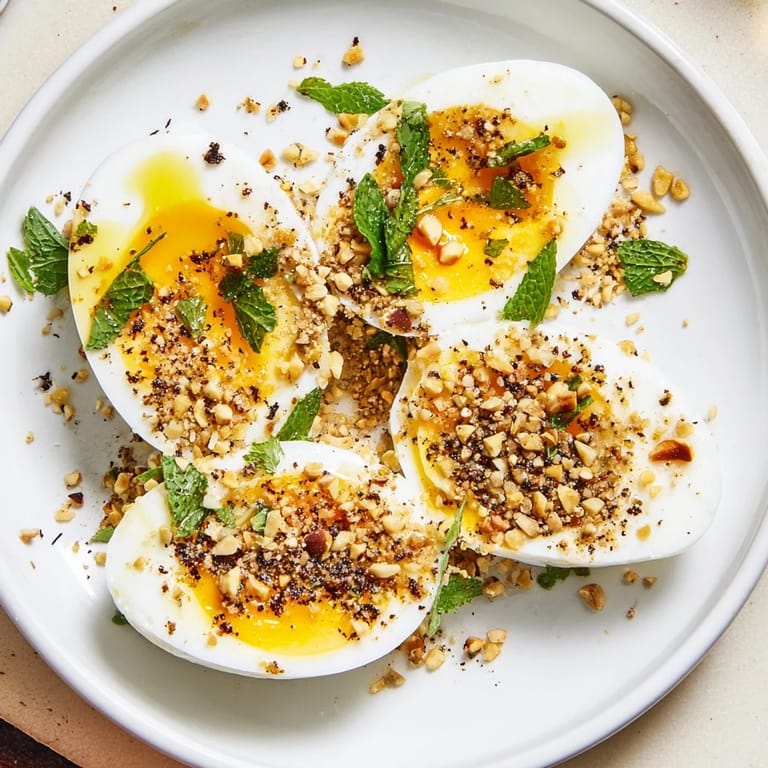
Save The first time I encountered dukkah-spiced eggs was at a cramped breakfast table in Cairo, where a neighbor casually cracked open soft-boiled eggs and reached for a small bowl of this nutty, aromatic spice blend like it was salt. I watched her dust the eggs with what looked like crushed treasure, then scatter herbs across the top with the kind of ease that comes from making something a hundred times before. That meal stuck with me—not just the taste, but how something so simple could feel utterly special.
A few years later, I served these to a friend who'd been stuck in a cooking rut, making the same five breakfasts on rotation. She took one bite and just went quiet for a second, which is how I knew I'd nailed it. Now she texts me photos of her versions with different herb combinations, and I love that this dish became something we could both keep exploring.
Ingredients
- Eggs: Use the freshest large eggs you can find—older eggs peel more cleanly, but fresh eggs have better flavor, so there's always a small trade-off here.
- Dukkah spice mix: This is where the magic lives, a blend of toasted nuts, seeds, and spices that feels more complex than its ingredients suggest; homemade is worth the effort but store-bought works beautifully too.
- Fresh parsley, cilantro, and mint: These aren't just garnish—they brighten everything and cut through the richness of the eggs in a way that makes each bite interesting.
- Extra virgin olive oil: Don't skip quality here; a good oil transforms the whole dish.
- Sea salt and black pepper: Finish with these so you can taste them, not bury them in the cooking.
Tired of Takeout? 🥡
Get 10 meals you can make faster than delivery arrives. Seriously.
One email. No spam. Unsubscribe anytime.
Instructions
- Boil with intention:
- Bring a medium saucepan of water to a gentle boil—not a rolling, aggressive boil that will crack your eggs. Carefully lower them in and set your timer: 7 minutes gives you those jammy, runny yolks that feel luxurious, while 9 minutes gets you firmer centers.
- Shock them cold:
- Once the timer goes off, fish the eggs out with a slotted spoon and plunge them into ice water immediately. This stops the cooking dead and makes peeling so much easier.
- Peel with patience:
- After 2–3 minutes in ice water, gently roll each egg on the counter to crack the shell all over, then peel under cool running water if you want. The membrane between shell and white will slip away like it's doing you a favor.
- Slice and arrange:
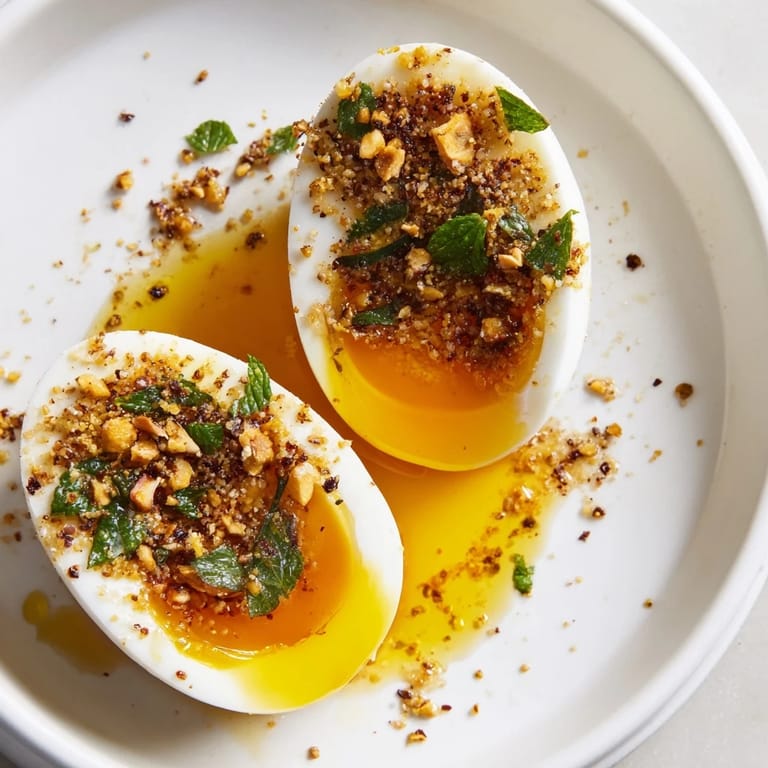
- Cut each egg in half lengthwise and lay the halves on your serving platter, cut-side up so the yolk is visible and waiting.
- The layering matters:
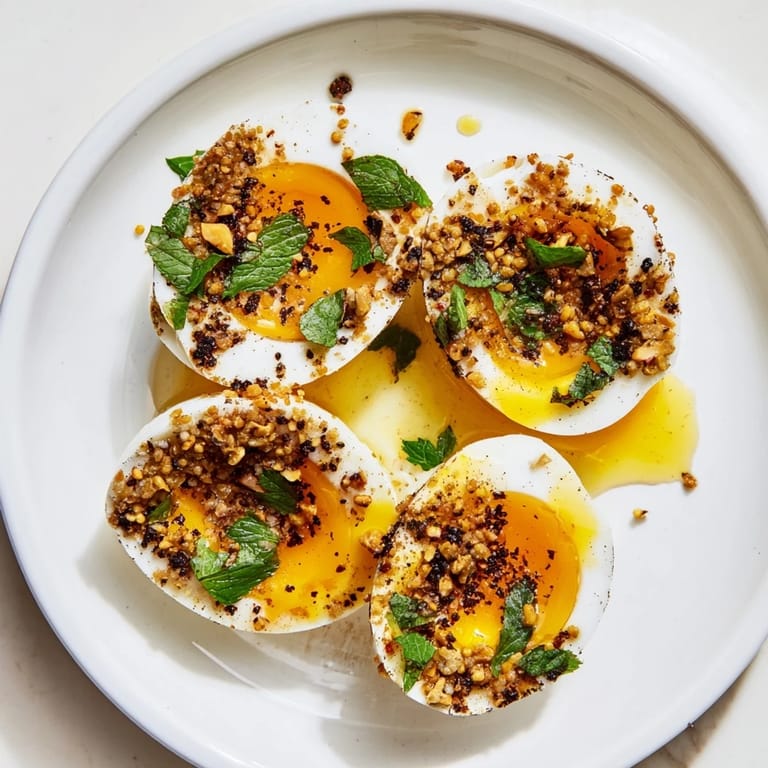
- Drizzle with olive oil first—this helps everything stick and taste better—then sprinkle the dukkah generously, like you mean it. The spice mix should look abundant, not shy.
- Finish with herbs and seasoning:
- Scatter your fresh herbs over the dukkah while it's still sitting on that oil, so they stay vibrant and don't dry out. Taste before you add salt and pepper, because dukkah already brings salt along.
- Serve right away:
- Bring it to the table while the eggs are still warm and the herbs are still bright.
 Save
Save There's a quiet moment in cooking when everything comes together—when the eggs are perfectly cooked, the herbs are still vibrant, and you set the platter down knowing you've created something that tastes like you've been making it forever. This dish has that magic.
Making Dukkah at Home
If you've never toasted nuts and seeds before, this is the perfect place to start learning. Toast 2 tablespoons of hazelnuts, 2 tablespoons of sesame seeds, 1 tablespoon each of coriander and cumin seeds, 1 teaspoon of black peppercorns, and 1 teaspoon of fennel seeds in a dry pan over medium heat, shaking the pan constantly until everything smells warm and toasty—this takes about 3–4 minutes and changes everything. Cool the mixture on a plate, then pulse it in a food processor with ½ teaspoon of sea salt until it's coarsely ground, more textured than powder.
Variations Worth Trying
Soft-boiled eggs in their shells with soldiers for dipping is a childhood comfort, while hard-boiled halves become a more substantial, less indulgent version. Poached eggs are messier but stunning, and the runny yolk mixes with the dukkah and oil into something almost like a sauce. I've also made this with just two herbs instead of three, or skipped one altogether if that's what I had, and it never disappointed.
Serving Suggestions and Pairings
Serve these with crusty bread or warm pita, and consider adding a squeeze of fresh lemon juice right before eating—the acidity wakes everything up. A simple tomato salad or a small bowl of labneh on the side turns this into a full breakfast spread without any extra effort, and it suddenly feels like you've been awake for hours, even if you just started cooking.
- Keep your dukkah in an airtight container and use it on hummus, roasted vegetables, or even yogurt.
- Make extra eggs if you're feeding more than four people; they disappear faster than you'd expect.
- If you're short on time, store-bought dukkah is genuinely good and saves you a step.
 Save
Save This dish reminds me why simple food, made with intention and fresh ingredients, is sometimes the best way to start a day. It's been in my rotation ever since that breakfast in Cairo.
Recipe FAQ
- → What is dukkah?
Dukkah is a Middle Eastern spice blend made with nuts, seeds, and aromatic spices, providing a crunchy texture and rich flavor when sprinkled over dishes.
- → How do I achieve perfectly cooked eggs?
Simmer eggs gently for 7 minutes for jammy yolks or 9 minutes for firmer yolks, then cool in ice water before peeling.
- → Can I make dukkah at home?
Yes, toast hazelnuts, sesame seeds, coriander, cumin, black peppercorns, and fennel seeds, then grind with sea salt for a fresh blend.
- → What herbs complement the dukkah eggs?
Fresh parsley, cilantro, and mint add bright, herbal notes that balance the spice mixture beautifully.
- → What are suitable serving options?
Serve the eggs with crusty bread or warm pita to enjoy the full crunch and flavor combination.