 Save
Save The first time I made falafel from scratch, my kitchen filled with the most incredible aroma—cumin, cilantro, and garlic creating this warm, herbaceous cloud that made everything feel special. I'd been intimidated by the idea of frying, worried about oil splatters and timing, but once those little green-flecked balls hit the hot oil and turned golden in seconds, I understood why this dish has been cherished for generations. Now, whenever I make these crispy pockets, it's not just lunch—it's a small celebration of how simple ingredients transform into something completely crave-worthy.
I made these for my friend Marcus one Saturday afternoon, and he ate four pita pockets before asking what was in them—he'd expected store-bought falafel mix. Watching him pile on the fresh vegetables and drench everything in tahini sauce, then close his eyes while chewing, reminded me that the best meals are the ones made with ingredients you actually picked and prepared yourself.
Ingredients
- Dried chickpeas (soaked overnight): Use dried, not canned—they create that perfect tender-inside, crispy-outside texture that canned chickpeas simply cannot match, no matter how well you drain them.
- Fresh parsley and cilantro: These aren't garnishes here; they're what make the falafel taste green and vibrant, so don't skimp or substitute dried herbs.
- Ground cumin and coriander: Toast these in a dry skillet for 30 seconds before measuring if you want an even deeper, more fragrant flavor.
- Tahini: Look for pure sesame paste with no added oils; stir it well before using because the oil naturally separates.
- Vegetable oil for frying: Use something neutral like canola or sunflower oil that can handle high heat without smoking.
Tired of Takeout? 🥡
Get 10 meals you can make faster than delivery arrives. Seriously.
One email. No spam. Unsubscribe anytime.
Instructions
- Pulse the base:
- Drain your chickpeas thoroughly and pat them completely dry with a kitchen towel—any excess moisture will make the mixture too wet. Add them to the food processor with onion, garlic, fresh herbs, and all your spices, then pulse until the mixture looks like wet sand that holds together when you squeeze it.
- Rest and firm up:
- Stir in the baking powder and flour, then refrigerate for at least 30 minutes; this gives the starches time to hydrate and makes shaping so much easier.
- Get the oil ready:
- Heat oil in a deep skillet to 350°F—it should shimmer and move easily, and a tiny piece of the mixture should sizzle immediately when it hits the oil. Use a thermometer if you have one; too cool and they'll absorb oil instead of crisping.
- Form and fry:
- Wet your hands or use a small ice cream scoop, and form golf-ball-sized rounds or flatten them slightly into patties. Fry 2–3 minutes per side until they're deep golden brown and sound hollow when you tap them—don't crowd the pan.
- Make the tahini sauce:
- Whisk tahini with lemon juice, garlic, and salt, then slowly add cold water a tablespoon at a time until it reaches a drizzle-able consistency; it should be creamy, not thick.
- Assemble with care:
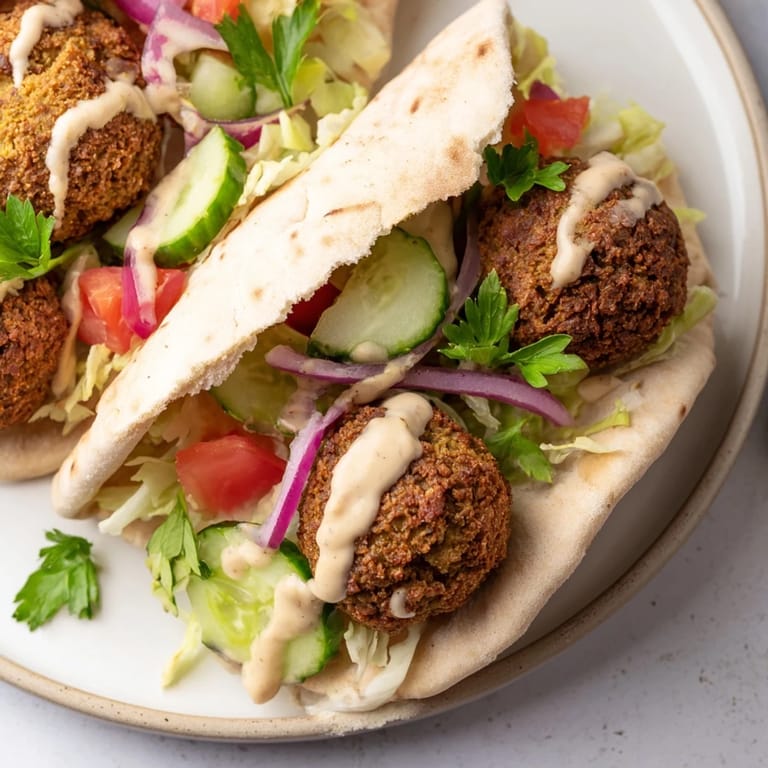
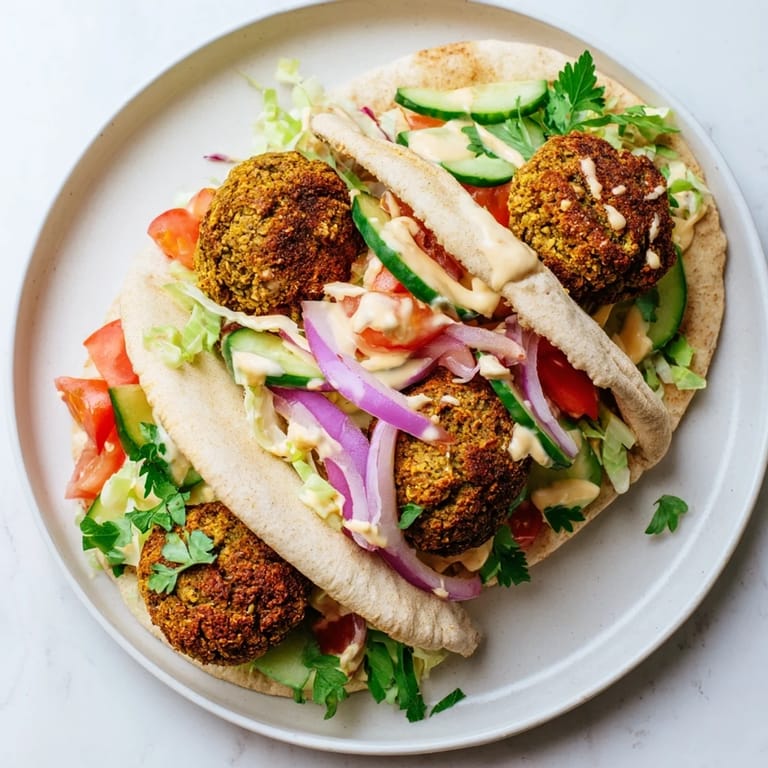
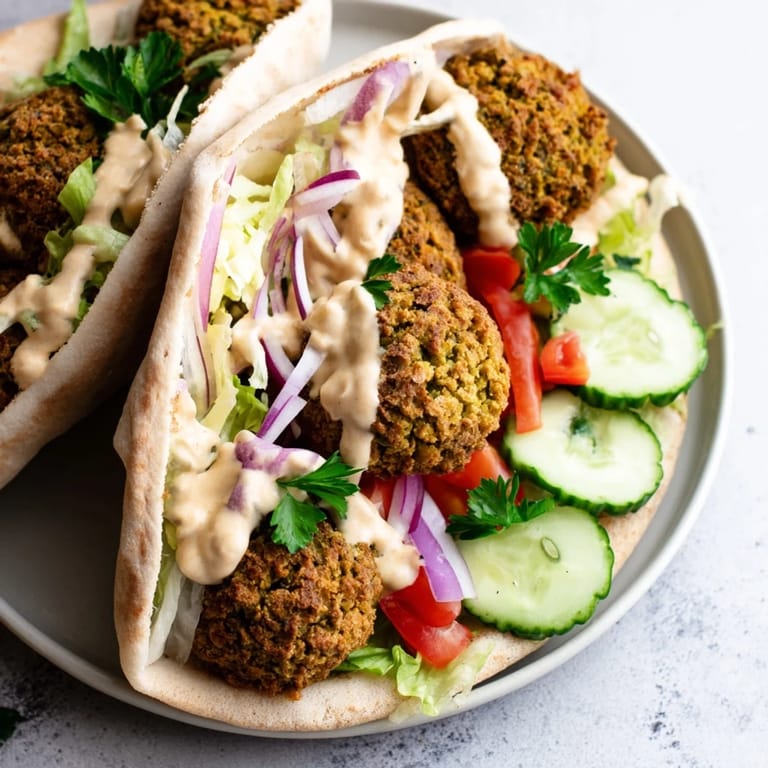
- Warm your pitas just before serving so they're still pliable, fill them generously with fresh vegetables, nestle 3–4 warm falafel inside, then drizzle tahini sauce over everything and finish with a scatter of fresh parsley.
 Save
Save My neighbor came over one evening and caught me at the stove, frying the last batch of falafel, and the smell pulled her inside before she could even say hello. We ended up making extra pitas, setting up a little assembly line in the kitchen, laughing about how this simple meal had become something we both looked forward to making together.
The Crisp Factor
The magic moment is when those falafel balls drop into hot oil and immediately form a golden crust in the first 30 seconds—that's what makes them special. I learned to trust that initial sizzle; if there's no aggressive sizzle, the oil isn't hot enough and your falafel will drink up oil instead of crisping. The inside stays tender and steamy while the outside becomes nearly shatteringly crispy, and that contrast is what makes people keep reaching for more.
Building Your Perfect Pocket
The vegetables aren't just toppings; they're what balance the richness of the falafel and tahini, adding cool crunch and brightness. I always add a little extra diced cucumber and red onion because their sharpness cuts through everything beautifully, and I've learned that shredding the lettuce rather than tearing it helps it stay packed inside the pita instead of sliding out with the first bite. The pita itself should be warm but not piping hot—that sweet spot where it's flexible enough to fold without cracking but still releases that toasty flour smell.
Tahini Sauce Secrets
A good tahini sauce should taste bright and creamy, not heavy or gritty, and the secret is patience when adding water—a tablespoon at a time makes all the difference. I once rushed it and ended up with something too thin, and I've also made it too thick by adding flour instead of water, so now I keep a spoon nearby to taste as I go. The garlic should be minced very fine so it distributes evenly, and a good squeeze of lemon juice is what transforms tahini from ordinary to crave-worthy.
- Add the water gradually and whisk constantly for the silkiest, most emulsified sauce.
- If your tahini sauce breaks or becomes grainy, whisk in a tablespoon of cold water and start over—it usually fixes itself.
- Make extra sauce because it's delicious drizzled on everything, and it keeps in the fridge for a week.
 Save
Save This dish has become my go-to when I want to cook something that feels both nourishing and indulgent, something that brings people together around flavor and freshness. Every time I make it, I'm reminded that some of the best meals come from simple, honest ingredients treated with just a little care.
Recipe FAQ
- → How do I make the falafel mixture hold together?
Soaking chickpeas overnight and pulsing them with fresh herbs and spices helps form the base. Adding baking powder and a small amount of flour improves binding and texture for frying.
- → What is the best oil for frying falafel?
Vegetable oil with a high smoke point is ideal to ensure falafel cooks evenly and becomes golden and crisp without burning.
- → Can I bake the falafel instead of frying?
Yes, baking at 400°F (200°C) for 20–25 minutes, turning halfway, offers a lighter version with a crisp exterior.
- → How is tahini sauce prepared?
Tahini sauce blends sesame paste with lemon juice, garlic, salt, and cold water for a smooth and pourable consistency that complements falafel perfectly.
- → What vegetables pair well inside the pita?
Shredded lettuce, diced tomatoes, sliced cucumber, and red onion all add freshness and crunch to each falafel pocket.
- → Are there allergy considerations to keep in mind?
This dish contains sesame from tahini and wheat in pita and flour; gluten-free alternatives can be used as needed.