 Save
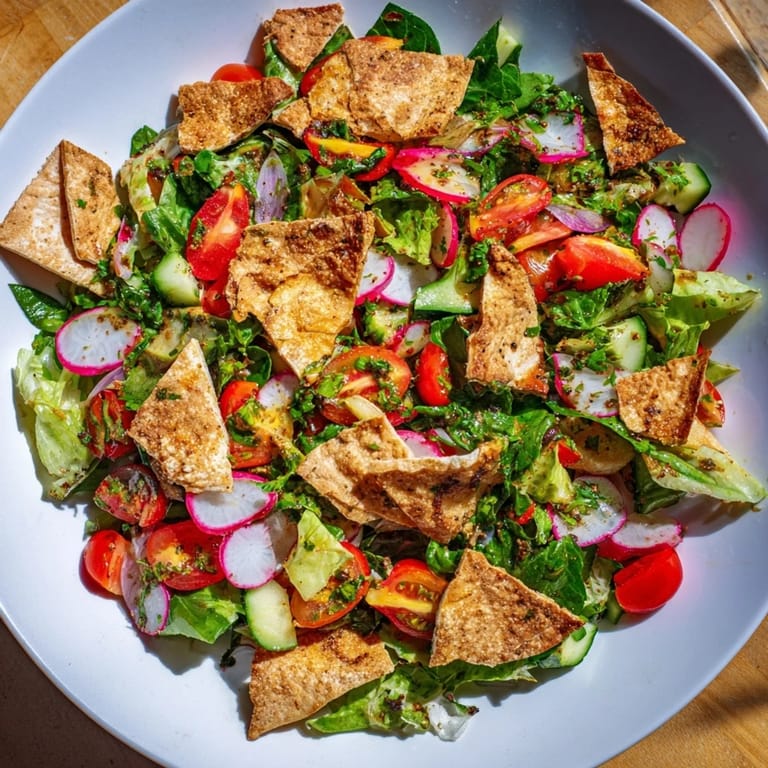
Save My first encounter with fattoush was on a humid summer evening at a small restaurant tucked into a corner of the city, where the owner's daughter was doing homework at the bar and the kitchen smelled like warm pita and lemon. The salad arrived with this exciting contrast—crisp greens meeting the sharp tang of sumac, then the crunch of toasted pita breaking through it all. I went home that night determined to recreate it, and what I discovered was that the magic wasn't complicated; it was about respecting each ingredient's texture and timing everything perfectly.
I made this for a potluck where everyone else brought heavy casseroles, and watching people come back for thirds felt like a small victory. One guest asked if I used sesame oil because the aroma was so captivating, and I realized how much personality sumac brings to a simple salad. That evening taught me that vibrant food doesn't need to be fussy—it just needs to be present.
Ingredients
- Mixed greens (romaine, arugula, or spinach): The base matters more than you'd think; arugula adds a subtle peppery edge that plays beautifully with the sumac.
- Cherry tomatoes: Halved so they release their juice and flavor throughout the salad instead of staying separate.
- Cucumber: Diced into roughly the same size as everything else keeps the eating experience consistent.
- Bell pepper (red or yellow): The sweetness acts as a gentle counterpoint to all that bright acidity.
- Radishes: Thinly sliced so they're delicate enough to fold into the greens without dominating.
- Green onions: A whisper of mild onion flavor that ties the whole salad together.
- Fresh parsley and mint: These aren't decorative—they're the soul of the dish, bringing freshness that nothing else can replicate.
- Pita bread: Day-old is actually better; it crisps more reliably than fresh.
- Extra-virgin olive oil: Quality matters here because it's the foundation of your dressing.
- Fresh lemon juice: Always fresh; bottled changes the entire character.
- Red wine vinegar: Its slight sweetness prevents the dressing from becoming too sharp.
- Ground sumac: This is the signature ingredient—buy it from a spice shop where it's fresh and fragrant, not from the back of someone's pantry.
Tired of Takeout? 🥡
Get 10 meals you can make faster than delivery arrives. Seriously.
One email. No spam. Unsubscribe anytime.
Instructions
- Toast your pita until it's golden:
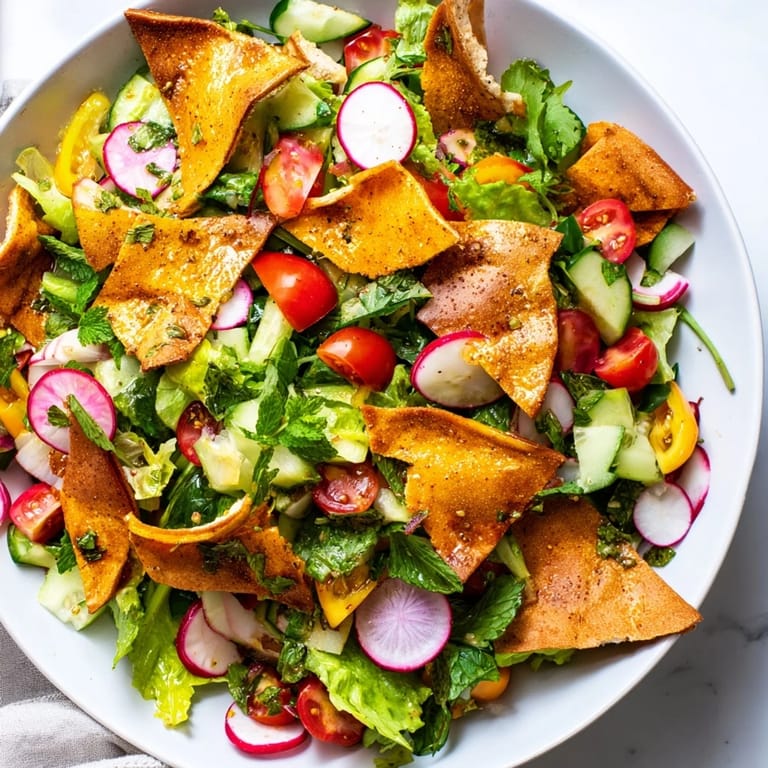
- Toss the pita pieces with olive oil, salt, and sumac, spread them in a single layer, and listen for that subtle crackling sound as they bake. They'll look like they need another minute even when they're perfect—pull them out when they're just golden, and they'll crisp completely as they cool.
- Build your dressing:
- Whisk everything together and taste it—if it feels too sharp, a tiny pinch of honey smooths it out. Let it sit for a minute so the flavors settle and introduce themselves.
- Prepare your vegetables:
- Cut everything to roughly the same size so each bite feels balanced. There's no rule about uniformity, but consistency in sizing creates a better texture throughout.
- Combine the salad:
- Toss the greens and vegetables together gently, like you're introducing friends rather than vigorously mixing. The goal is to distribute everything evenly without bruising the delicate leaves.
- Dress and serve immediately:
- Drizzle the sumac dressing over everything and toss gently until coated. Add the crispy pita chips right before serving—this is non-negotiable if you want them to stay crispy.
 Save
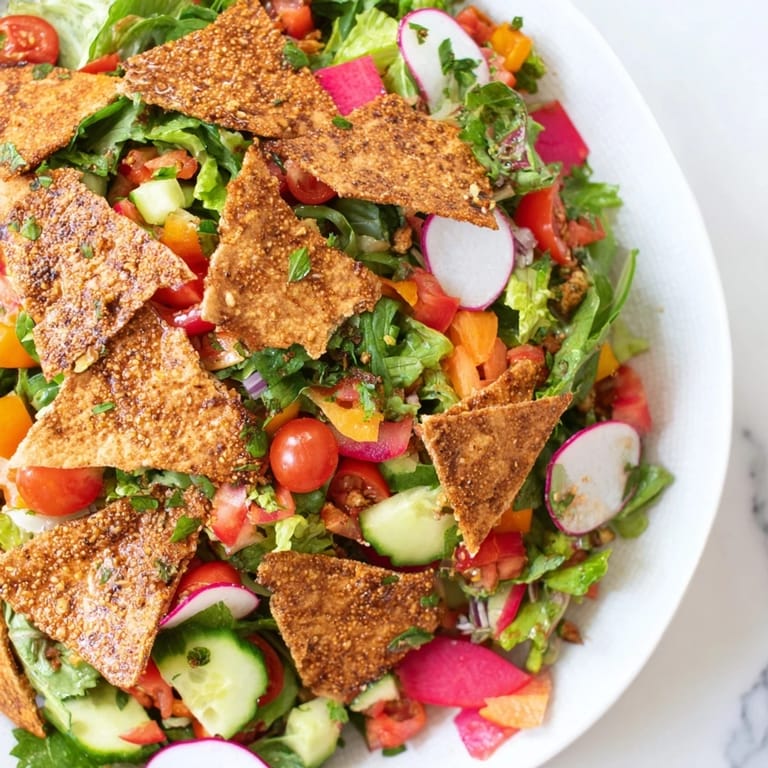
Save There's a moment when you take that first bite—when the cold crunch meets the warm spice memory from the toasted pita, and the herb flavors bloom across your palate all at once—that reminds you why simple food done with intention is the most satisfying food. That's what this salad became for me.
The Soul of Sumac
Sumac transformed how I think about seasoning. Before I understood it, I assumed all tanginess came from lemon or vinegar, but sumac brings this complex, almost wine-like depth that makes food taste more interesting without any bitterness. Once you taste it, you start seeing it everywhere—sprinkled on hummus, dusted over rice, hidden in spice blends—and you realize it's been central to Middle Eastern cooking for centuries because it solves a problem that nothing else quite does.
Make It Your Own
The architecture of this salad is strong enough to welcome additions without falling apart. I've made it with crumbled feta when I wanted richness, with thinly shaved red onion when I wanted more bite, even with a handful of pomegranate seeds when they were in season and I wanted something unexpected. The dressing stays the same, the pita chips stay the same, but the canvas adapts to what you have or what you're craving that day.
Timing and Temperature
This salad is at its best when the greens are cold and the pita chips are warm, creating this small temperature contrast that feels elegant without being pretentious. If you're bringing it somewhere, pack the dressing separately and add it just before serving, and definitely keep the pita chips in a separate container. People often skip these details thinking they don't matter, but they're the difference between a good salad and one people remember.
- Chill your bowl and greens beforehand if you have time—it keeps everything fresh and crisp.
- Make the dressing while the pita chips are baking so you're not juggling tasks.
- Cut your vegetables at the last moment if possible; they stay brighter and hold their texture better.
 Save
Save Fattoush is the kind of salad that makes you feel good while you're eating it, and even better afterward. Make it when you want something that tastes like home, even if you've never been there.