 Save
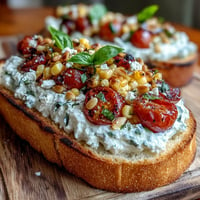
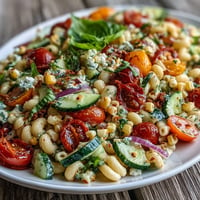
Save I discovered the magic of vertical appetizers at a dinner party where a friend stacked fresh vegetables on tiny wooden pedestals, and suddenly the whole spread felt less like standard crudités and more like an edible installation. There was something about the height variation that made guests slow down and really look at what they were eating—the colors popped differently when arranged this way. That night, I watched people who usually hurried through appetizers actually linger, picking thoughtfully from the towers. It sparked something in me about how presentation isn't just decoration; it changes the whole experience of a meal.
I made this for my sister's book club gathering, and what started as a nervous experiment with borrowed tiered stands turned into the thing everyone asked about. One guest actually took a photo and said it looked like something from a design magazine, which made me laugh because I'd assembled it to music in my kitchen, half-joking about whether anyone would actually care. But they did—they spent more time talking about the arrangement itself than the food, and that felt like its own kind of win.
Ingredients
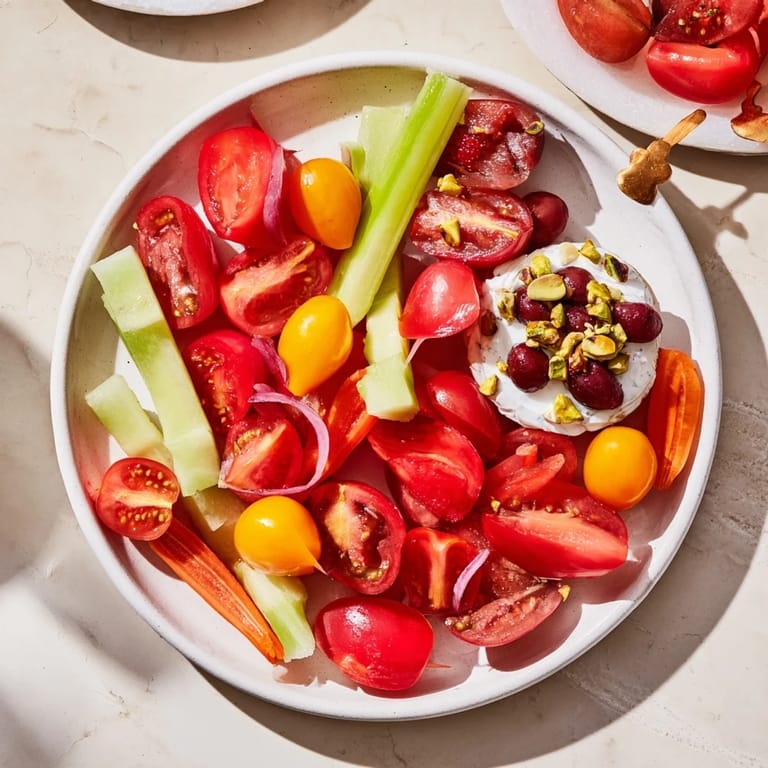
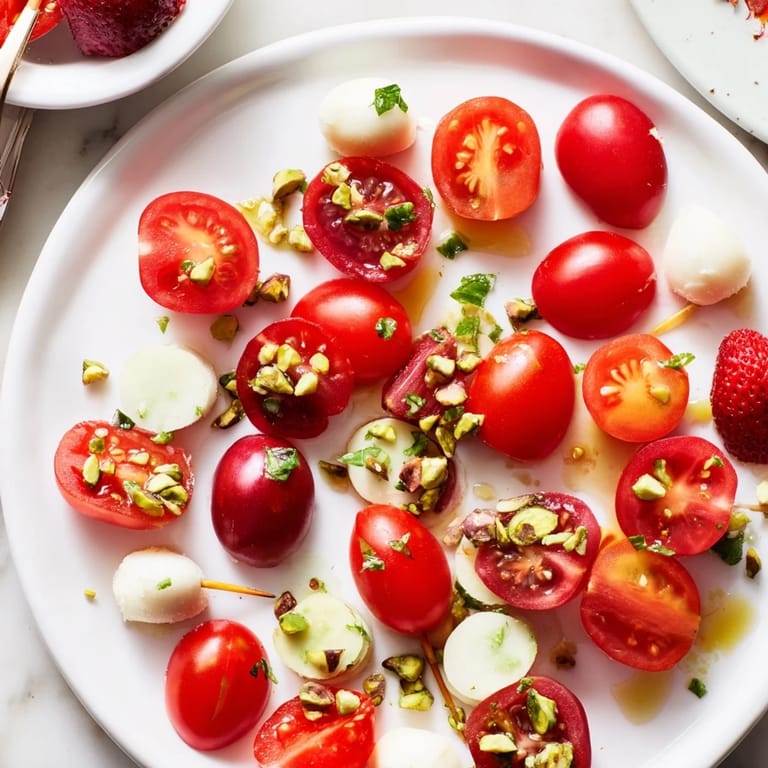
- Cherry tomatoes: Halving them gives you flat surfaces that sit nicely on the stands and show off those jewel-like colors—they're doing the real visual work here.
- Baby carrots: Their natural tapered shape makes them perfect for nestling into gaps, and they're sweet enough that people actually want to eat them raw.
- Cucumber slices: Keep these cool in the fridge until the last moment; they wilt faster than anything else and look sad when they do.
- Radishes: Thin slices give you paper-like translucence when you hold them up to light, plus that peppery snap that makes people's eyes open.
- Snap peas: Leave these whole—there's something satisfying about biting into a pod, and they're sturdy enough to handle being arranged and rearranged.
- Endive leaves: These are your little spoons; they're naturally boat-shaped and substantial enough to hold dip without falling apart.
- Seedless grapes: The sweetness hits differently when you're eating savory vegetables, and they add color variation without extra work.
- Strawberries: Halving them shows off the beautiful seed pattern inside and makes them less overwhelming when mixed with vegetables.
- Goat cheese: Rolling it into balls keeps things elegant, and it's soft enough to spread on endive or cucumber if guests want it that way.
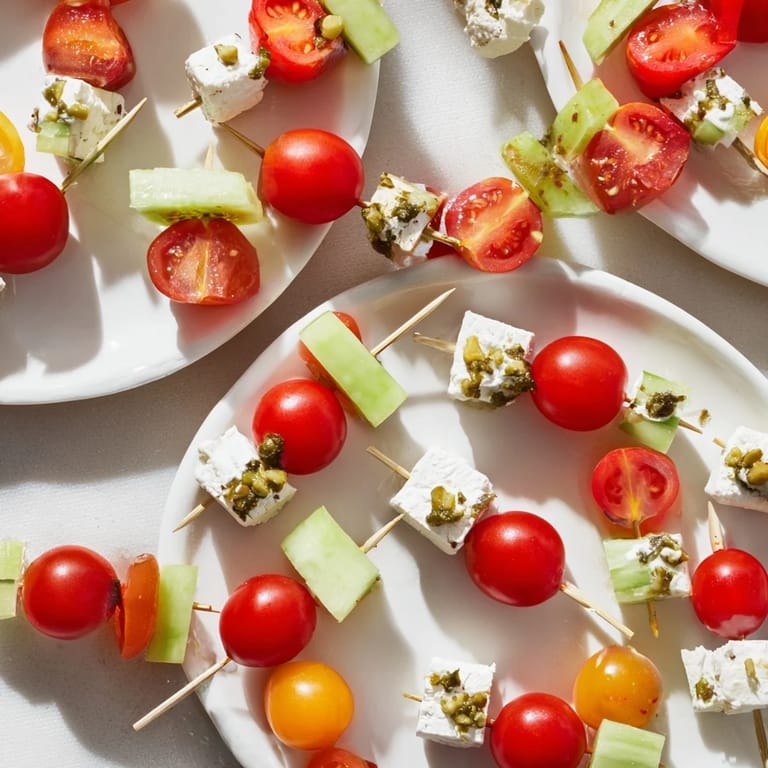
- Feta: Cubing it gives you texture contrast, and its tanginess balances all the sweet vegetables perfectly.
- Hummus, tzatziki, and pesto: These three dips give you a flavor range from earthy to bright to herbal—set them in small bowls so people can dip freely without double-dipping.
- Toasted pistachios: Toasting them first brings out a nuttier flavor and keeps them from tasting raw or dusty against fresh vegetables.
- Fresh basil and edible flowers: These are your finishing touches—scatter them just before serving so they don't wilt or bruise from handling.
- Olive oil and seasoning: A light drizzle of good olive oil and a crack of black pepper right at the end remind people that simple ingredients, when chosen well, don't need much else.
Tired of Takeout? 🥡
Get 10 meals you can make faster than delivery arrives. Seriously.
One email. No spam. Unsubscribe anytime.
Instructions
- Get everything prepped:
- Wash your vegetables and fruits, trim what needs trimming, and lay everything out on a clean surface so you can see what you're working with. This isn't just about cleanliness; it's about getting familiar with the colors and shapes before you start arranging, so you can balance them instinctively.
- Shape your cheeses:
- Roll the goat cheese between your palms into bite-sized balls, and cube the feta into small pieces. Cold hands work better for this, so you might want to rinse your hands in cool water first.
- Build your framework:
- Set up your mini-stands and small bowls on your largest platter or board at different heights, as if you're creating a landscape. Step back and look at it from across the room—that's what your guests will see first.
- Arrange with abandon:
- Start placing vegetables, fruits, and cheeses among the stands, letting things cascade and overflow slightly. Think less like a perfect grid and more like a garden where plants grow together naturally; mix colors across different levels so no one stand is monochromatic.
- Settle in the dips:
- Place your small bowls of hummus, tzatziki, and pesto among the vegetables, treating them as part of the landscape rather than an afterthought. They become focal points themselves.
- Add sparkle and flavor:
- Scatter your toasted pistachios, fresh basil, and any edible flowers you're using across the whole display, tucking them into gaps and perching them on top of arrangements. This is where the design really comes together.
- Final touch:
- Drizzle a light thread of olive oil across the display (don't overdo it or things get slippery), and finish with a few cracks of black pepper and a pinch of sea salt. Taste one element to make sure the seasoning feels right to you.
- Serve immediately:
- Set this out and invite people to pick and dip as they like. The arrangement is meant to be grazed on, so it's fine if it becomes less organized as people eat—that's the whole point.
 Save
Save There's a moment right before guests arrive when you step back and see this thing you've created—this edible garden standing tall on your table—and you realize you've made something that's as much about hospitality as it is about food. It's an invitation to linger, to touch, to taste without ceremony.
Why Height and Arrangement Actually Matter
When everything sits flat on a platter, people graze in a predictable pattern—grabbing from the nearest edge and working inward. But a tiered arrangement does something different; it creates visual interest that draws the eye across the whole display, and suddenly even simpler ingredients feel special. The varying heights also mean different people can reach different things simultaneously without crowding around one spot. It sounds almost trivial, but it genuinely changes how people interact with the food and each other around it.
Customizing for What You Have
The beauty of this arrangement is that it's endlessly flexible—you can swap almost any fresh vegetable in depending on the season or what's at the market. Spring might mean fresh asparagus tips and pea shoots, summer could bring stone fruit and fresh herbs everywhere, fall works with roasted beets and pomegranate seeds. If you're not vegetarian, cured meats like prosciutto or salami draped loosely add another dimension. The structure stays the same; you're just changing what fills it.
Pairing and Serving Strategies
This works beautifully with a crisp white wine like Sauvignon Blanc, or if you're keeping it non-alcoholic, sparkling water with fresh lemon does something lovely—the bubbles cleanse your palate between the different flavors and textures. Set it out as people arrive so it's the first thing they see and reach for; it sets a gracious, unhurried tone for the entire gathering.
- Have small plates nearby so people can actually gather pieces on a plate rather than juggling vegetables in napkins.
- Keep the dips cool by nesting the small bowls in a larger bowl filled with ice if you're serving over a long period.
- Pair it with gluten-free crackers or good toasted bread if you want to extend it into a more substantial appetizer course.
 Save
Save This dish taught me that entertaining doesn't have to mean cooking all day—sometimes the most memorable spreads are the ones that celebrate ingredients in their natural state. It's an appetizer that feels generous because it is.
Recipe FAQ
- → What vegetables work best for this medley?
Crunchy vegetables like cherry tomatoes, baby carrots, cucumber slices, radishes, snap peas, and endive provide a mix of colors and textures that hold well on stands.
- → Can I substitute the cheeses in this arrangement?
Yes, fresh cheeses like goat cheese and feta can be replaced with similar soft cheeses or your preferred variety to suit taste and dietary needs.
- → How do I keep the ingredients fresh during serving?
Arrange all ingredients just before serving and keep perishable items chilled until ready. Use fresh garnishes and serve dips in small bowls to maintain freshness.
- → Is it necessary to use edible flowers?
Edible flowers are optional but add a beautiful pop of color and a subtle floral note to the presentation without overpowering flavors.
- → What alternatives can I use for the dips?
You can swap hummus, tzatziki, and pesto with other flavorful spreads like baba ganoush, olive tapenade, or flavored yogurt dips to suit your preferences.
- → How can I create the elevated display effectively?
Use mini-stands, tiered trays, or bowls at varying heights placed on a large platter or board to create layers and visual interest for the medley.