 Save
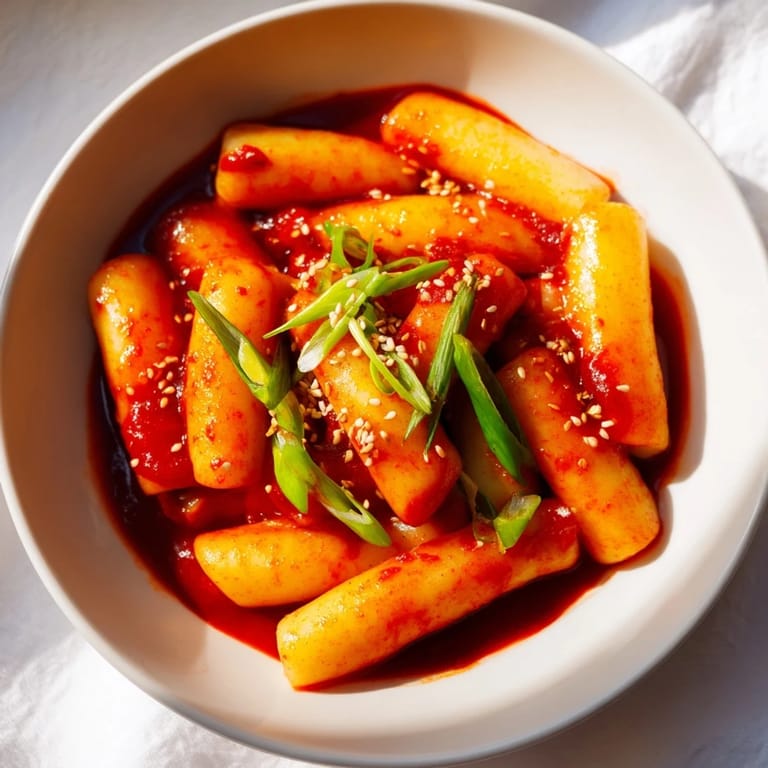
Save The first time I tasted tteokbokki, I was standing in the middle of a Seoul night market, watching a vendor's hands move in practiced rhythm as she stirred a pot of glistening red rice cakes. Steam rose up and fogged my glasses. I burned my tongue on the first bite, didn't care, and came back the next night for more. Now whenever I make it at home, that same smell fills my kitchen and suddenly everyone appears, drawn by something they can't quite name.
My friend Marco came over on a rainy Tuesday and I made this on a whim, thinking it might be too ambitious. Instead, we ended up gathered around the pot like we were at a street food stall, each of us fishing for pieces with our own spoons, laughing about how undignified we looked. He asked for the recipe before he even finished eating.
Ingredients
- Korean rice cakes (500 g): These need to be the cylindrical kind, not round—they soften differently and hold the sauce better. If they're hard or from the fridge, a quick soak makes them pliable without falling apart.
- Gochujang and gochugaru (3 tbsp + 1 tbsp): The paste gives body and depth while the flakes add brightness and heat. They're not interchangeable; use both for real dimension.
- Soy sauce (2 tbsp): This anchors everything and keeps the sauce from tasting one-dimensional. Use full-sodium for best results.
- Sugar and honey (1 tbsp each): Sugar dissolves fast and lifts the spice; honey adds a subtle richness that rounds the whole thing out.
- Garlic (2 cloves, minced): Mince it fine so it melts into the sauce rather than appearing as distinct pieces.
- Kelp and anchovies for broth: These create an umami-rich base that makes the sauce taste restaurant-quality. Don't skip them or rush the steeping.
- Green onions (2), onion (1 small), cabbage (optional): The green onions finish the dish with a fresh bite; regular onion sweetens as it cooks; cabbage adds body and absorbs flavor beautifully.
- Boiled eggs and sesame seeds: Eggs make it heartier; sesame seeds add textural contrast and a toasty note.
Tired of Takeout? 🥡
Get 10 meals you can make faster than delivery arrives. Seriously.
One email. No spam. Unsubscribe anytime.
Instructions
- Wake up your rice cakes:
- If they're hard or cold, soak them in warm water for 10 minutes until they're pliable but not yet soft. You want them to have enough give to bend without breaking apart.
- Build your broth foundation:
- Combine water, kelp, and anchovies in a pot and let it simmer for 10 minutes. This is not a shortcut moment—that broth is doing the heavy lifting. Once the liquid turns golden, fish out the solids and save what you've made.
- Make the sauce:
- Whisk gochujang, gochugaru, soy sauce, sugar, honey, and minced garlic into your warm broth until the paste fully dissolves. Taste it and adjust—it should be spicy, salty, and slightly sweet in that order.
- Bring everything together:
- Add drained rice cakes, sliced onion, and cabbage to the pot and bring to a gentle boil. Stir occasionally so nothing sticks to the bottom and the sauce clings evenly.
- Reach the finish line:
- Simmer for 10 to 15 minutes, watching as the sauce thickens and clings to each rice cake. The rice cakes should be tender and chewy, and the liquid should reduce to a glossy coat rather than a broth.
- Final flourish:
- In the last 2 minutes, add green onions and halved boiled eggs if you're using them. The onions should stay bright and slightly raw, a cool contrast to the heat.
- Serve at once:
- Transfer to a serving dish while everything is still steaming. Sprinkle with sesame seeds and get it to the table before it cools.
 Save
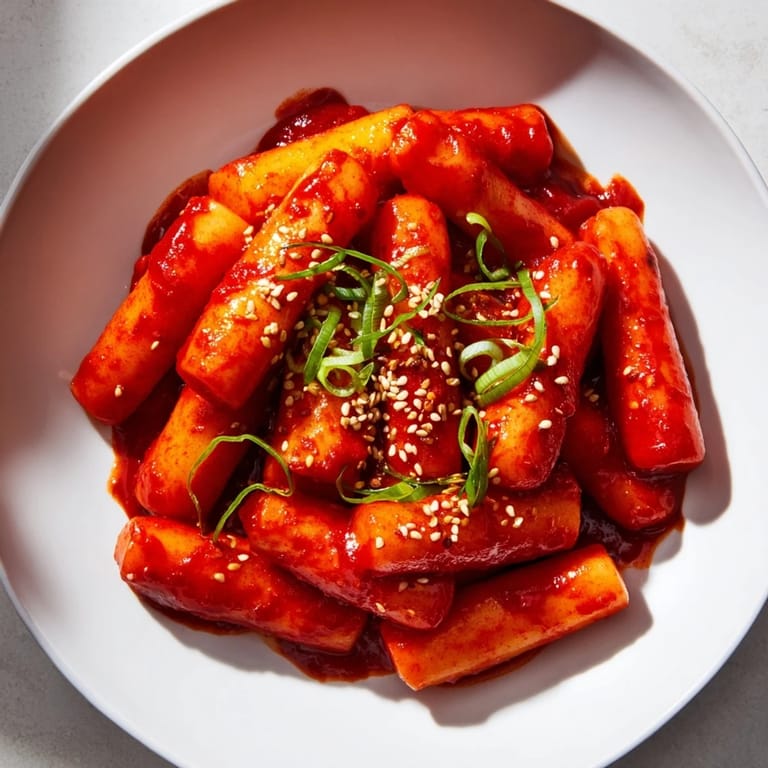
Save There's a particular satisfaction in watching someone taste tteokbokki for the first time and see that moment when the heat and sweetness hit them at once. My mom took one bite and immediately asked if I could add fish cakes next time, which felt like the highest compliment.
Making It Your Own
The beauty of tteokbokki is how forgiving it is to customization. I've added fish cakes when I had them, which adds a slightly bouncy texture and more savory depth. Sliced mushrooms work beautifully, carrots add sweetness, and even spinach wilts into the sauce without overwhelming it. The vegetarians in your life will appreciate the kombu broth version, which tastes just as rich without any fish.
The Spice Conversation
Tteokbokki is supposed to have heat, but not everyone likes it at the same level. Start with the gochugaru amount listed and taste as you go—you can always add more, but you can't take it out. If you go too far, adding more honey or sugar helps balance it, though some people I know swear by a splash of sesame oil to mellow things out. The gochujang is the backbone, so don't reduce that; adjust the flakes instead.
Why This Works as a Meal
A bowl of tteokbokki with an egg and some cabbage is honestly complete as it is, but it tastes even better alongside pickled radish or steamed dumplings, which cut through the richness and cleanse your palate. I've also served it as a starter before larger meals, and people fill up on it without meaning to. The chewiness of the rice cakes, the sauce's complexity, and the way it stays hot in the bowl make it feel more substantial than it has any right to be.
- If you have leftover tteokbokki, store it in an airtight container and eat it cold the next day—the flavors deepen and it becomes almost snack-like.
- Reheat gently in a pot with a splash of water so the sauce doesn't dry out or scorch.
- This recipe doubles easily if you're feeding a crowd, and it comes together faster the second time around.
 Save
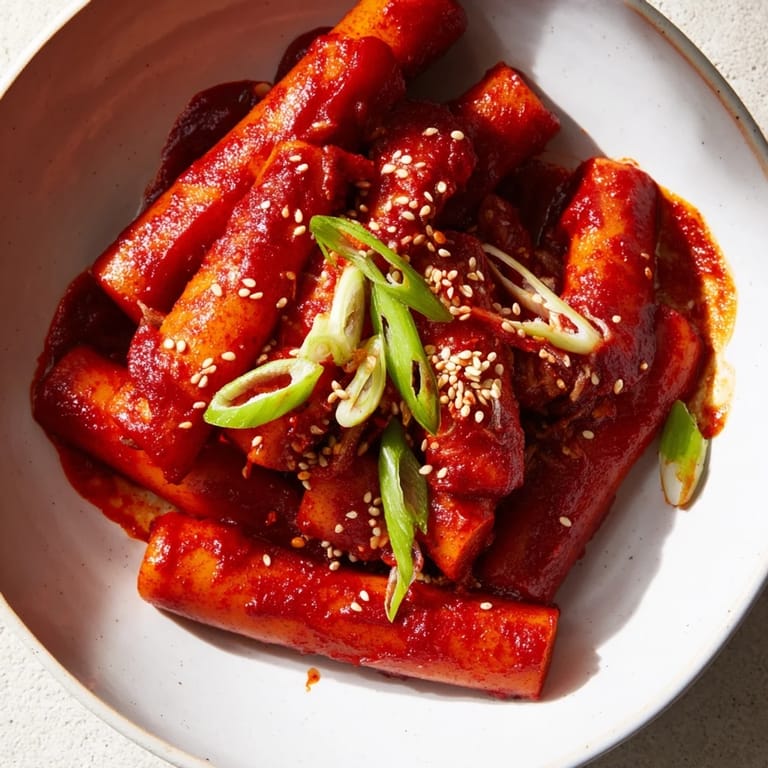
Save Tteokbokki is one of those dishes that tastes like home to someone, even if home was a night market stall you visited once. Make it for people you want to feed well.
Recipe FAQ
- → What are the key ingredients for authentic flavor?
Essential ingredients include Korean rice cakes, gochujang chili paste, gochugaru flakes, soy sauce, garlic, and kelp broth for a balanced spicy and savory profile.
- → How can I make this dish vegetarian?
Use kelp only for the broth, omitting dried anchovies, and ensure all sauces are free from fish-based additives.
- → What is the best way to soften rice cakes before cooking?
Soak the rice cakes in warm water for about 10 minutes if they are hard or refrigerated, ensuring they cook evenly and become chewy.
- → Can additional ingredients be added for variation?
Yes, fish cakes, cabbage, onions, or boiled eggs can be added to enrich the flavor and texture experience.
- → How can spiciness be adjusted?
Modify the amount of gochugaru chili flakes used in the sauce to tailor the heat level to your preference.
- → What garnishes enhance the dish?
Sliced green onions and a sprinkle of sesame seeds provide freshness and a nutty note that complements the rich sauce.