 Save
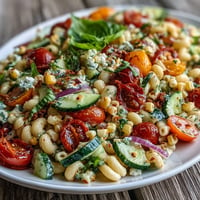
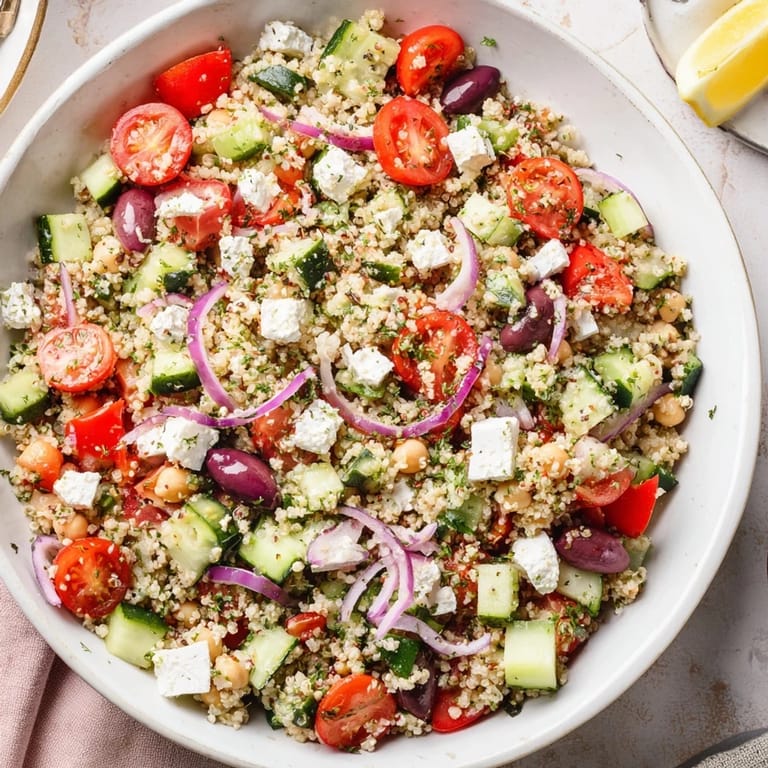
Save There's something about assembling a Mediterranean bowl that feels less like cooking and more like creating art on a plate. I discovered this particular combination on a lazy afternoon when my fridge held nothing but chickpeas, some vegetables that needed rescuing, and a block of vegan feta I'd been meaning to use. Twenty minutes later, I had something so satisfying and bright that I found myself making it twice a week. The beauty of this bowl is that it requires zero actual cooking—just thoughtful assembly and a really good dressing that ties everything together.
I remember bringing this to a potluck where I wasn't sure if anyone would eat it, and somehow it became the first thing to disappear. A friend came back for thirds and asked how I made it taste so Mediterranean, as if I'd spent hours simmering something. I just laughed and told her the secret was the dressing and treating the bowl like it mattered—because it does.
Ingredients
- Chickpeas (1 can, drained and rinsed): These are your protein anchor, and rinsing them thoroughly removes that starchy liquid that can make everything taste canned.
- Cucumber (1 medium, diced): The cool crispness keeps the bowl from feeling heavy, and it hydrates everything as it sits.
- Cherry tomatoes (1 cup, halved): They release their juice into the dressing and create little pools of flavor throughout the bowl.
- Red onion (1/4 small, thinly sliced): Raw and sharp, it adds a bite that becomes mellowed and sweet if the bowl sits for a few hours.
- Red bell pepper (1/2, diced): This brings sweetness and a natural crunch that won't disappear even after a day in the fridge.
- Vegan feta (80 g, crumbled): Choose a brand that actually crumbles; some versions are too soft and you'll end up with cheese paste instead of distinct pieces.
- Kalamata olives (1/3 cup, halved): These are salty and rich, so you don't need much—they're doing the heavy lifting flavor-wise.
- Fresh parsley (2 tbsp, chopped): More than just garnish, it brings a grassy brightness that elevates everything.
- Extra-virgin olive oil (2 tbsp): This is not the time to use regular olive oil; the quality matters and you'll taste the difference.
- Lemon juice (1 tbsp): Fresh squeezed makes a noticeable difference in how alive the whole bowl tastes.
- Dried oregano (1 tsp): Toast it briefly in a dry pan before adding to the dressing if you have time—it wakes up the flavor.
- Sea salt and black pepper: Season boldly; Mediterranean food expects assertiveness.
Tired of Takeout? 🥡
Get 10 meals you can make faster than delivery arrives. Seriously.
One email. No spam. Unsubscribe anytime.
Instructions
- Prep your vegetables with intention:
- Dice everything into roughly the same size so each bite has balance. I learned this the hard way after making one with chunks of tomato and slivers of cucumber—texture matters.
- Build your base:
- Drain and rinse your chickpeas, then toss them into a large bowl with the cucumber, tomatoes, onion, and bell pepper. Let them all get to know each other.
- Make the dressing sing:
- In a small bowl, whisk together the olive oil, lemon juice, oregano, salt, and pepper until emulsified. Taste it straight—it should make you want to drink it.
- Marry the flavors:
- Pour the dressing over everything and toss gently but thoroughly, making sure the dressing coats all the chickpeas and vegetables. This is where the magic happens.
- Layer it up:
- If you're using quinoa or rice, divide it between two bowls first, then top with the dressed chickpea mixture. If not, just divide the mixture directly.
- Crown it with toppings:
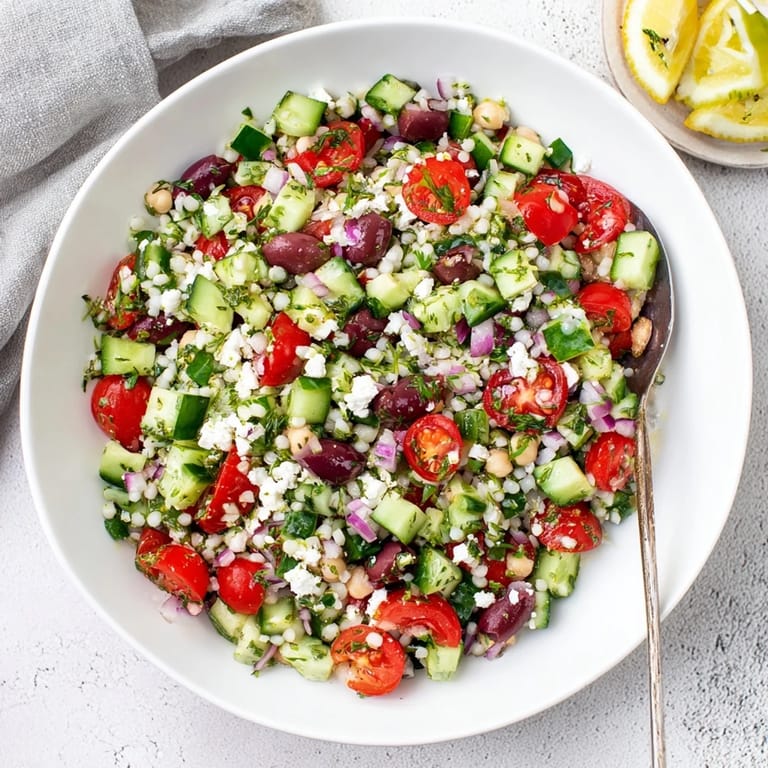
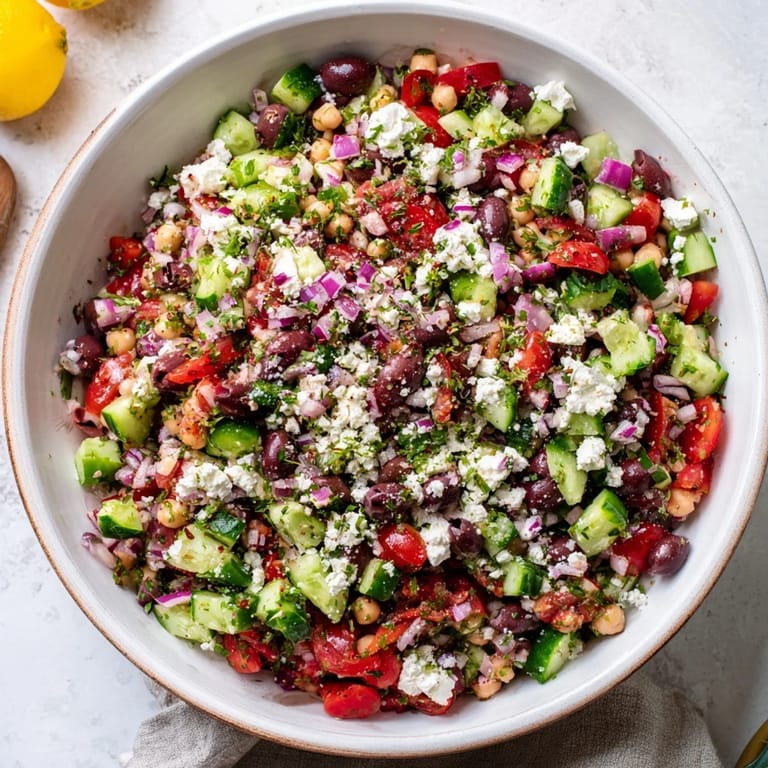
- Scatter the vegan feta, olives, and parsley over each bowl. These aren't just decoration—they're the final flavor punch.
- Eat now or let it rest:
- Serve immediately for maximum crispness, or cover and refrigerate for a few hours or even overnight, when everything becomes more cohesive and the flavors deepen.
 Save
Save I realized this bowl had become something special when my partner started asking me to make it on days when we needed something that felt indulgent but wasn't heavy. It became our default "I'm not sure what to eat" answer, the thing I'd throw together when I wanted to feel nourished without spending an hour in the kitchen.
Timing and Make-Ahead Magic
This bowl genuinely improves with time, which is unusual for salads. The vegetables soften just slightly and absorb the dressing, the chickpeas become more tender, and the flavors knit together into something more cohesive than when you first assemble it. If you're making this for meal prep, assemble it the day before and keep the toppings separate until you're ready to eat. The first day it's crisp and bright; by day two it's deeper and more marinated.
Customization Without Losing the Character
The Mediterranean formula is flexible, and I've made successful versions with roasted chickpeas for extra crunch, swapped the feta for a cashew ricotta, added artichoke hearts when I had them, or thrown in some crispy chickpeas from my pantry. The key is respecting the acidic-salty-fresh balance—as long as you keep that going, the bowl stays delicious. I've also discovered that toasted pine nuts add an unexpected richness if you're not strictly vegan, and they stay crispy even after a few hours.
Pairing and Serving Ideas
This works beautifully as a main course, a side dish alongside grilled vegetables, or even as a substantial salad at dinner. I've brought it to picnics, eaten it straight from the fridge on busy evenings, and served it to guests as a lunch option. It pairs naturally with sparkling water with fresh herbs, chilled white wine, or simply on its own.
- Serve it in a shallow bowl where you can see all the layers and components.
- If you're bringing it somewhere, keep the dressing separate and dress it just before serving to maintain maximum crispness.
- Double the recipe if you're feeding more than two people—it never seems like there are leftovers.
 Save
Save This bowl became my answer to the question "what do I eat when I want something that's good for me but doesn't taste like virtue." It's proof that simple, honest ingredients and thoughtful assembly create something far greater than the sum of its parts.
Recipe FAQ
- → What can I use instead of vegan feta?
You can substitute vegan feta with traditional feta cheese or use crumbled tofu seasoned with lemon and herbs for a dairy-free option.
- → Is this bowl suitable for gluten-free diets?
Yes, the bowl is naturally gluten-free if you use quinoa or gluten-free grains as the base.
- → Can I prepare the dressing in advance?
Absolutely, the lemon-oregano dressing can be made ahead and stored in the refrigerator for up to 2 days.
- → What are some good additions for extra crunch?
Adding roasted chickpeas or toasted pine nuts provides a satisfying crunch and extra texture.
- → Can this bowl be served chilled?
Yes, refrigerate the assembled bowl for up to 2 days to enjoy a refreshing, marinated flavor.