 Save
Save There's something about setting out a mezze platter that instantly shifts the mood of a gathering—suddenly everyone clusters around the table, conversations bloom, and the meal becomes an excuse to linger. I discovered this years ago when a friend from Beirut brought one to a casual dinner, and I watched how people naturally grazed, mixing flavors, discovering combinations I'd never thought to pair. Now whenever I want to feed a crowd without fussing over a formal meal, this is my answer.
My favorite moment was watching my neighbor's kids discover that creamy hummus could be scooped with a carrot stick instead of waiting for bread—suddenly the vegetables disappeared faster than the cheese. That's when I realized a mezze isn't really about following rules; it's about creating a table where people feel free to eat exactly as they want.
Ingredients
- Cooked chickpeas (1½ cups): Use canned if you're short on time, but rinse them well to remove excess sodium and starch—this step makes the hummus taste cleaner and lighter.
- Tahini (¼ cup): The backbone of the hummus, but cheap tahini tastes bitter; splurge on a good brand and stir the jar well before measuring, as the oil separates.
- Fresh lemon juice (3 tbsp): Never use bottled; the brightness changes everything, and you'll taste the difference immediately.
- Extra virgin olive oil (2 tbsp, plus more for drizzling): This isn't just fat—it's flavor, so use something you actually enjoy tasting.
- Garlic clove (1 small): Mince it fine or it'll bite too hard; one clove is enough to whisper presence, not scream.
- Ground cumin (½ tsp): Toast it in a dry pan for thirty seconds before adding if you want the hummus to taste more alive.
- Salt (½ tsp): Taste as you go; hummus needs more salt than you'd think, but add it slowly.
- Cold water (2–3 tbsp): This is your texture control—add it gradually, one tablespoon at a time, and stop when the hummus reaches that cloud-like consistency.
- Cherry tomatoes (1 cup): Halve them just before serving so they don't weep and soften the platter.
- Cucumber (1 cup sliced): Use the longest, straightest cucumber you can find, and slice it on a bias for a more elegant presentation.
- Red bell pepper (1 cup sliced): The sweetness balances the salty olives and tangy cheese beautifully.
- Carrot sticks (1 cup): Cut them thick enough that they stay crisp and don't become droopy after sitting out.
- Mixed olives (1 cup): A mix of green and Kalamata gives you range—briny, buttery, and slightly different textures.
- Feta cheese (150 g): Cut it into uneven chunks or thick slices; the irregularity makes the platter feel more abundant and less precious.
- Pita bread (4): Warm it gently in a dry skillet just before serving, and it becomes soft and pillowy instead of rigid.
- Fresh parsley (2 tbsp chopped): Torn by hand rather than finely minced adds a lighter, fresher feel.
- Sumac or paprika (1 tsp): Sumac brings a subtle tartness that makes people pause and ask what it is; paprika is warmer and more forgiving.
- Lemon wedges: People love squeezing these over everything, so don't skimp on them.
Tired of Takeout? 🥡
Get 10 meals you can make faster than delivery arrives. Seriously.
One email. No spam. Unsubscribe anytime.
Instructions
- Blend the hummus base:
- Pulse the chickpeas, tahini, lemon juice, olive oil, minced garlic, cumin, and salt in a food processor until the mixture breaks down into a rough paste. This should take about thirty seconds of pulsing—don't let the motor run continuously or the hummus becomes grainy instead of silky.
- Reach the perfect texture:
- With the processor running, drizzle cold water in one tablespoon at a time, pausing between each addition to feel how the mixture transforms. You'll know it's done when you see a pale, creamy cloud that holds together but isn't dense.
- Taste and adjust:
- Scoop a tiny bit onto a carrot or cracker and taste honestly—it should taste bright from lemon, warm from cumin, and salty enough that your mouth waters slightly. Add another pinch of salt or squeeze of lemon if it tastes flat.
- Present the hummus:
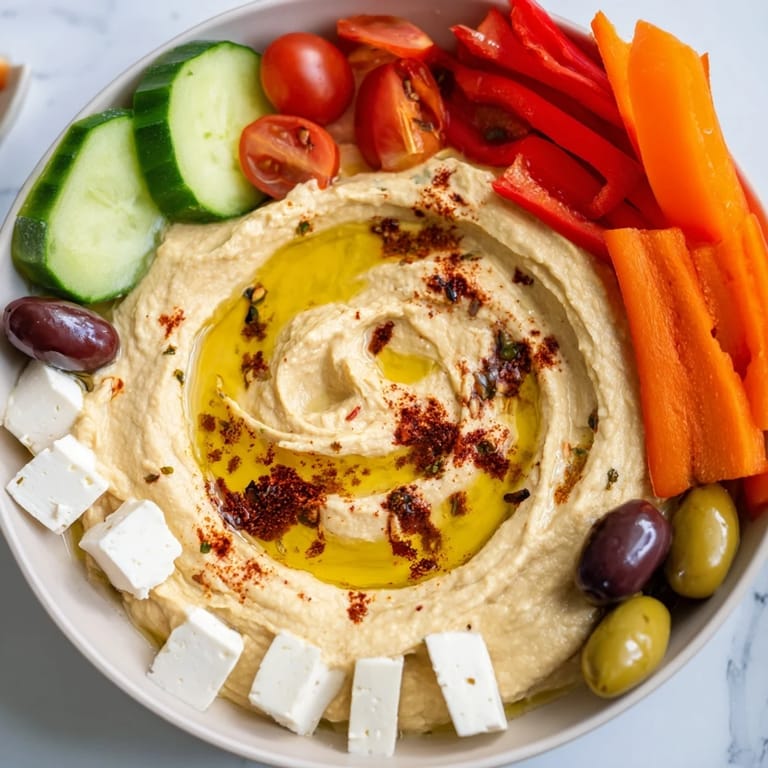
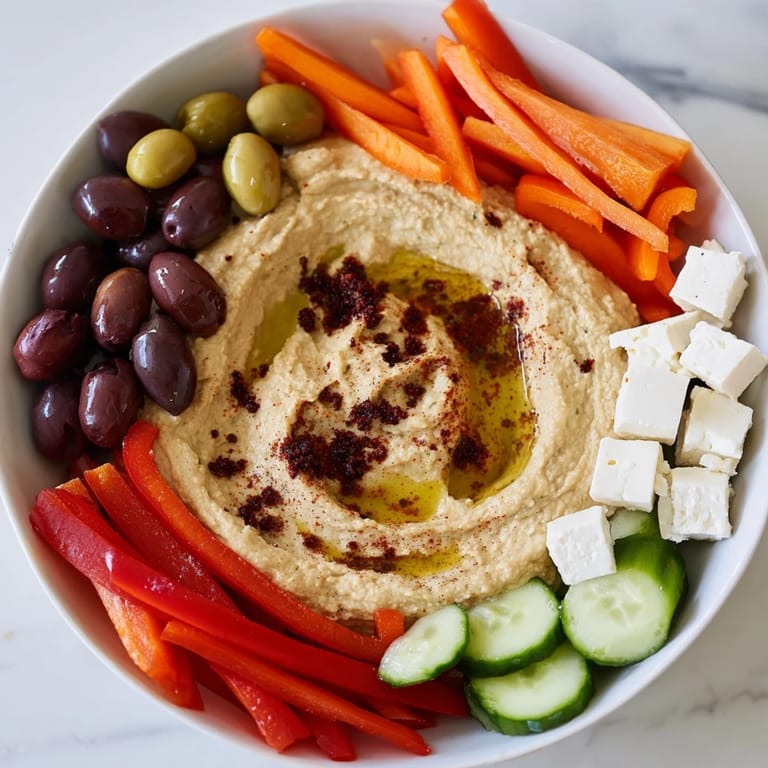
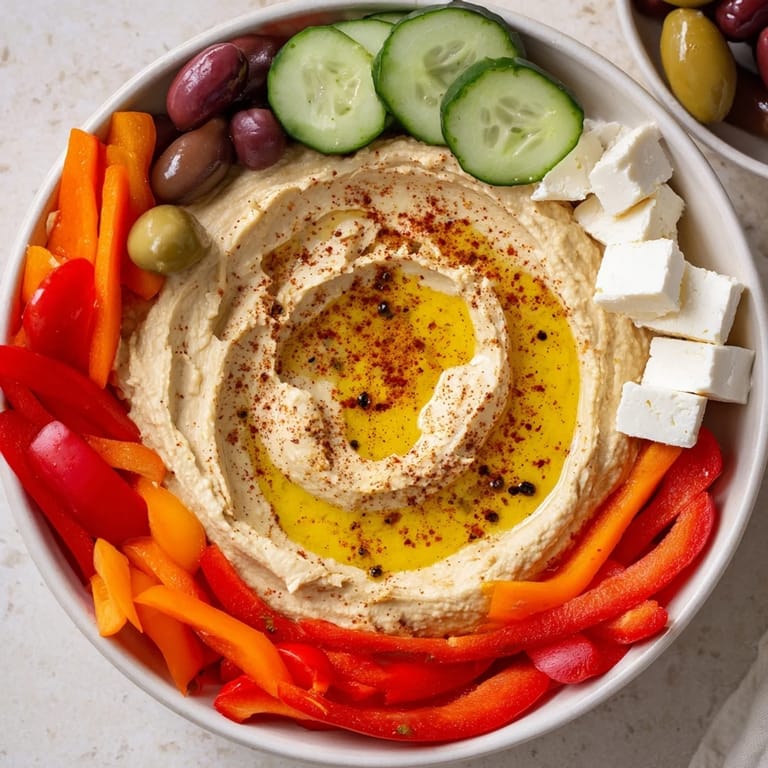
- Spread the hummus into a shallow bowl or across the center of your platter, creating a slight well with the back of a spoon. Drizzle a generous arc of olive oil over the top and dust with sumac or paprika, letting the color contrast with the cream beneath.
- Arrange the vegetables and extras:
- Group the tomatoes, cucumber, peppers, and carrots in loose clusters around the hummus, leaving space so they're easy to grab. Scatter the olives and feta between the vegetables, creating little pockets of flavor throughout.
- Warm and cut the pita:
- Heat the pita in a dry skillet for just twenty seconds per side so it becomes flexible and warm but not crispy. Cut each into six triangles and tuck them into gaps on the platter.
- Finish and serve:
- Scatter the torn parsley over the top and position the lemon wedges around the edge. Serve immediately while the pita is still warm and everything feels fresh.
 Save
Save I remember my sister bringing her new partner to a casual dinner and watching them both quiet down mid-conversation to focus entirely on building the perfect bite—a dab of hummus, a triangle of feta, a piece of warm pita, and a squeeze of lemon. That's when I understood that this platter works because it gives people permission to slow down and be intentional about eating, even in a crowd.
Building Flavor Through Contrast
The magic of a mezze platter lives in the play between textures and flavors—creamy against crisp, salty against bright, smooth against chunky. I've learned that the olives shouldn't all be the same size or type, the vegetables shouldn't be cut identically, and the feta shouldn't be too perfectly cubed. When things have variation, your mouth stays interested and every bite feels slightly different, which is what keeps people grazing instead of losing interest.
Timing and Temperature
The ideal mezze platter is a careful balance of cold and warm elements. The hummus should be room temperature and creamy, the vegetables should be cool and crisp, the olives should be at whatever temperature they were stored in, and the pita should be warm enough that it's pliable but not so hot it overshadows the other flavors. If you're making this ahead, assemble everything except the pita, which should be warmed just before guests arrive.
Endless Variations and Add-Ons
Once you master the basic platter, it becomes a canvas for whatever you want to add—roasted red peppers, fresh herbs, nuts, dried fruit, or small portions of tabbouleh, baba ganoush, or labneh. I've added crispy chickpeas, pomegranate seeds, pine nuts, and even small meatballs on nights when I wanted something heartier. The platter is forgiving enough to grow and shrink with your appetite and whatever ingredients inspire you.
- Toast pine nuts in a dry pan until fragrant and scatter them over the hummus for a subtle crunch.
- If you want to add protein, crispy chickpeas or small falafel fit naturally into the flow without making it feel like a full meal.
- Fresh herbs like mint, dill, or cilantro, torn and sprinkled at the last moment, add a living quality that feels generous.
 Save
Save A mezze platter is less about following rules and more about creating a moment where people feel welcomed and cared for through abundance and choice. Serve it with confidence, and watch how it naturally brings people together.
Recipe FAQ
- → What makes hummus creamy and smooth?
Blending cooked chickpeas with tahini, lemon juice, garlic, olive oil, and water creates a smooth and creamy texture.
- → Can I substitute feta cheese with other cheeses?
Yes, labneh or goat cheese are excellent alternatives that complement the platter's flavors well.
- → How should the vegetables be prepared for the platter?
Fresh vegetables like cherry tomatoes and cucumbers are sliced or halved for easy picking and a crunchy contrast.
- → What is the best way to serve the pita bread?
Warming the pita before cutting it into triangles enhances softness and makes it ideal for dipping.
- → Are there common allergens in this assortment?
Yes, sesame from tahini, wheat in pita, and dairy from feta are present; gluten-free substitutions are possible.
- → How can the platter be customized for a larger spread?
You can add stuffed grape leaves, falafel, or tabbouleh for added variety and portion size.