 Save
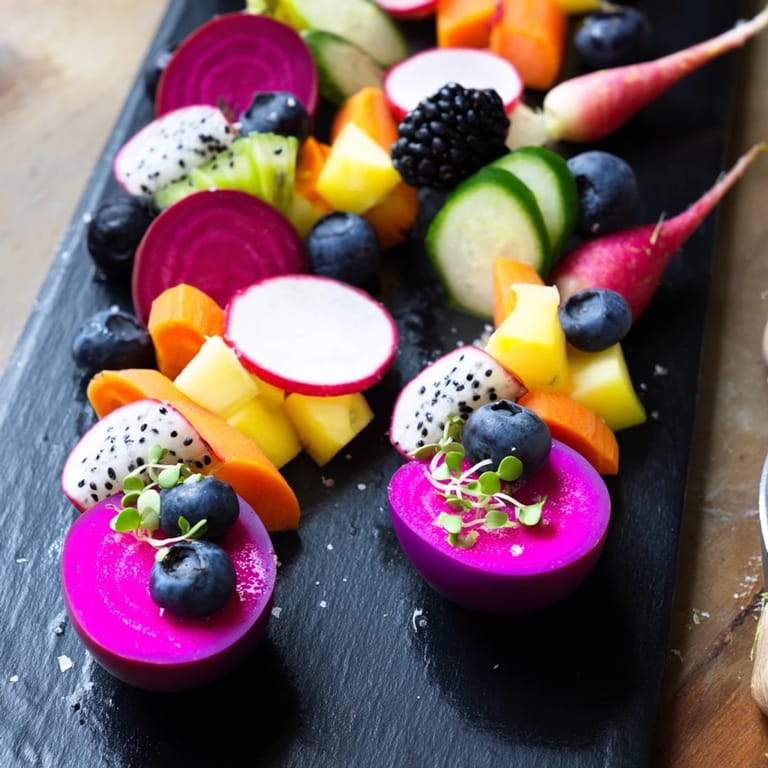
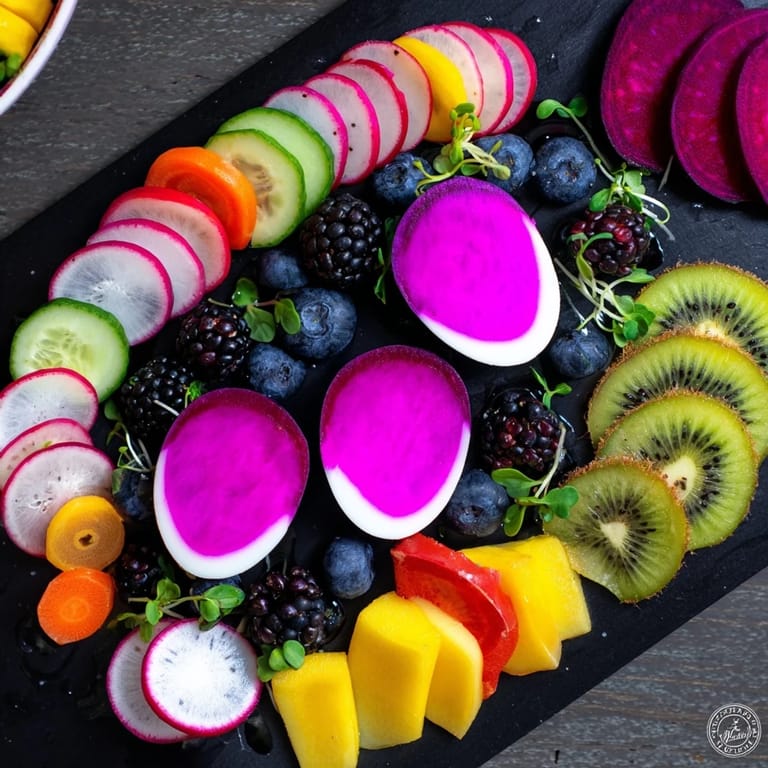
Save I'll never forget the moment I saw this platter at a rooftop dinner party on a summer night—the black board practically glowed under the string lights, lined with jewel-toned pickles and deep crimson eggs alongside fruits so vivid they seemed almost impossible. Someone asked me how I'd made it, and honestly, I stumbled through an explanation, but the look on everyone's faces told me they needed the real recipe. That night sparked an obsession with creating something equally stunning in my own kitchen.
I made this for my sister's book club one autumn, and it became the thing people kept talking about weeks later—not because it was complicated, but because it felt unexpected and joyful. Someone took a photo and posted it online, and I realized that food doesn't always have to be traditional to feel special.
Ingredients
- Mini cucumbers: Buy them small and slice them on the bias for that restaurant-quality look that makes the whole board feel intentional.
- Rainbow carrots: The bias cut is your secret weapon here, creating uniform pieces that catch the light beautifully.
- Radishes: Paper-thin slicing means they'll pickle faster and taste sharper, adding real bite to the spread.
- Red onion: Slice it thin so it becomes tender and sweet after a few hours in the brine.
- White vinegar: Don't use fancy vinegar for pickling—the cheap stuff works just as well and lets the vegetables shine.
- Mustard seeds and peppercorns: Toast them briefly in the pan before adding liquid if you want deeper flavor.
- Large eggs: Older eggs peel more easily, so don't use eggs from this week.
- Fresh beet: A roasted beet from the store works perfectly if you're short on time, and the liquid will turn a stunning deep pink.
- Apple cider vinegar: This matters for the egg brine—it has a gentler flavor that lets the beet shine.
- Mixed fresh fruits: Whatever's in season works, but blueberries and dragon fruit create that neon effect that makes the board sing.
- Microgreens: A tiny handful transforms the whole thing into something that feels elevated and restaurant-worthy.
Tired of Takeout? 🥡
Get 10 meals you can make faster than delivery arrives. Seriously.
One email. No spam. Unsubscribe anytime.
Instructions
- Warm up your pickling liquid:
- Combine vinegar, water, sugar, salt, mustard seeds, and peppercorns in a saucepan and bring to a simmer. You'll know it's ready when you can smell the mustard and spice releasing into the air.
- Get the vegetables ready:
- Slice everything thin and uniform—it sounds tedious, but it's what makes the board look intentional rather than thrown together. Place them in a heatproof container and pour the hot pickling liquid over everything.
- Let them sit:
- Cool to room temperature, then refrigerate for at least two hours. Overnight is even better if you have time, because the flavors deepen and the vegetables soften just enough.
- Boil and ice your eggs:
- Bring cold water to a boil, gently lower eggs in, and cook for eight to nine minutes. Immediately transfer to an ice bath—this stops the cooking and makes them peel like a dream.
- Create the beet dye:
- Peel your cooled eggs and place them in a jar with sliced beet, apple cider vinegar, water, sugar, and salt. The color develops as they sit, and by tomorrow morning they'll be a gorgeous deep pink or crimson depending on how long they've been soaking.
- Assemble your board:
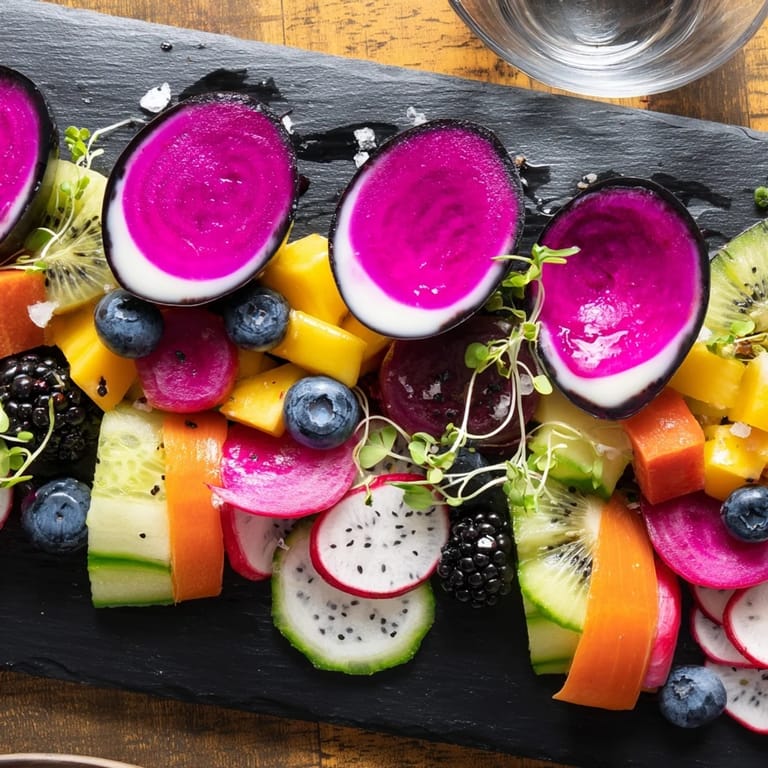
- Drain the pickles and arrange everything on a black serving board like you're painting a picture. Group colors together so the eye travels across the whole thing, then finish with a scatter of microgreens and flaky sea salt.
 Save
Save The best part happened when my nephew, who claims he hates vegetables, grabbed a handful of pickled radishes and ate them like candy. His mom looked shocked, and I realized that sometimes presentation isn't vanity—it's permission to try something new.
Color Strategy That Actually Works
The secret isn't just bright colors; it's contrast. The deep crimson of the beet-dyed eggs makes the yellow and orange of the fruits sing louder. If you're making this ahead, remember that some colors will fade or darken (the beets especially), so plan to assemble the board no more than two hours before serving.
Timing and Make-Ahead Magic
Everything can be prepped a full day ahead except the final assembly. The pickles taste better after sitting overnight, the eggs need time to take on color, and honestly, this is exactly the kind of dish that rewards you for planning ahead. The morning of the party, you'll have nothing left to do but arrange everything and feel quietly proud.
Variations and Substitutions
If your supermarket doesn't have dragon fruit or you want to swap fruits based on the season, that's perfectly fine. Same goes for the vegetables—use whatever's fresh and looks stunning. The formula is simple: choose things that are naturally bright, slice them with intention, and let them do the work.
- For deeper yellow pickles, add turmeric to the brine and watch it transform into something unexpected.
- Purple cabbage in the pickling liquid creates an entirely different vibe if you're ever craving blue instead of pink.
- A vegan version is easy—just skip the eggs and add more pickled vegetables or roasted vegetables instead.
 Save
Save This platter is proof that you don't need fancy cooking techniques to impress people—you just need to pay attention to color, texture, and flavor balance. Make it for someone you want to surprise.
Recipe FAQ
- → How long should the vegetables marinate for best flavor?
Marinate the vegetables for at least 2 hours, but overnight refrigeration develops deeper flavors and vibrant color.
- → What is the purpose of beet-dyed eggs in this platter?
Beet-dyed eggs add a striking red hue and a mild earthy sweetness, complementing the pickled vegetables and fresh fruits visually and flavor-wise.
- → Can I substitute any fruits for those listed?
Yes, fresh fruits like kiwi, mango, and dragon fruit can be swapped with other colorful options like strawberries, grapes, or peaches to suit your preference.
- → Are there suggestions to make this platter vegan?
Omit the eggs and increase the variety and quantity of pickled vegetables to maintain color and texture variety without animal products.
- → What kind of vinegar is recommended for pickling?
White vinegar and apple cider vinegar both work well, balancing acidity and brightness to enhance the vegetables and eggs.
- → How should this platter be served for best presentation?
Arrange the pickled vegetables, beet-dyed eggs, and fresh fruits on a large black board, then garnish with microgreens or edible flowers and a sprinkle of flaky sea salt for a dramatic look.