 Save
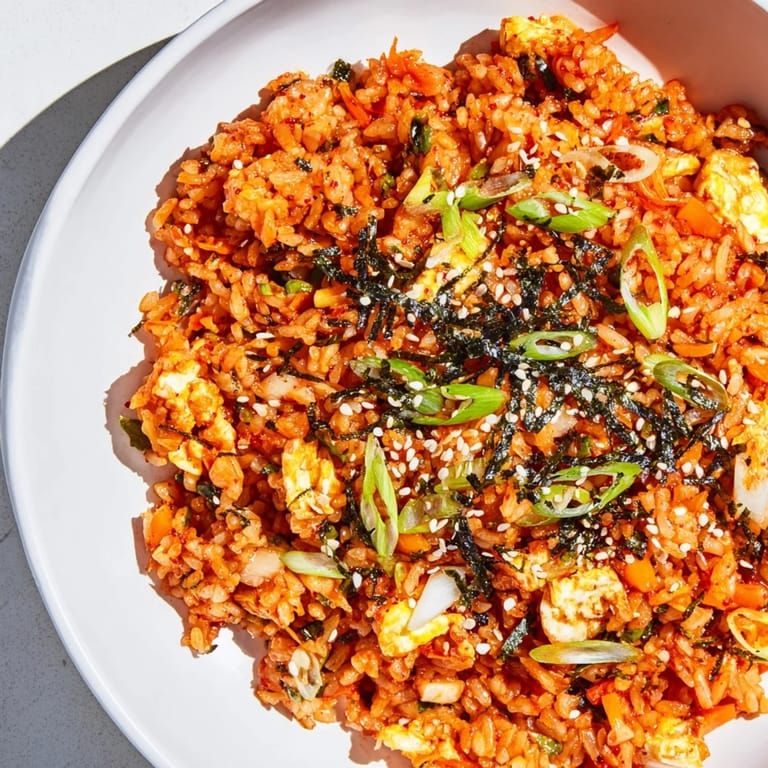
Save There's a particular magic that happens when you're standing in front of the stove at eleven at night with nothing but leftover rice and a jar of kimchi, suddenly struck by the urge to create something spicy and alive. That's when kimchi fried rice entered my kitchen permanently—not as a planned dinner, but as the solution to a hungry moment and a craving I couldn't quite name. The first time I made it, I didn't measure anything; I just let instinct and the hiss of the pan guide me. Now it's become my go-to when I want something that feels both comforting and bold, ready in less time than it takes to order delivery.
I made this for my roommate on a Tuesday after she'd had the kind of day that required urgent comfort food, and watching her face light up when that first bite hit—the heat, the tang, the richness of the egg—reminded me that sometimes the simplest meals carry the most meaning. She asked for the recipe that night, and now whenever she cooks it, she tells me it reminds her that good food doesn't require hours of fussing.
Ingredients
- Cold cooked white rice (2 cups, preferably day-old): Day-old rice is non-negotiable here; fresh rice turns mushy and clumpy. If you only have warm rice, spread it on a plate and let it cool completely, or the fried rice becomes a soggy mess.
- Napa cabbage kimchi, chopped (1 cup, plus 2 tbsp juice): The backbone of this dish—don't skip the juice, as it adds funky depth and helps bind everything together with acid and salt.
- Large eggs (2): They scramble into creamy pockets throughout the rice and add richness without heaviness.
- Onion, finely diced (1/2 small): This builds the base flavor as it softens and sweetens in the oil.
- Green onions, sliced (2, white and green parts separated): White parts add mild sweetness when cooked; green parts scatter fresh bite at the end.
- Carrot, finely diced (1 small, optional): A small touch of sweetness and texture that balances the spice, though the dish is perfect without it.
- Gochujang (2 tbsp): This is where the heat and fermented complexity come from; it's not just spice, but umami and funk that makes every bite interesting.
- Soy sauce (1 tbsp): Adds savory depth and salt that rounds out the kimchi's sharpness.
- Toasted sesame oil (1 tsp): Just enough to drizzle at the end for nuttiness without overpowering.
- Vegetable oil (1 tbsp): The workhorse oil that lets everything cook at high heat without burning.
- Sugar, optional (1 tsp): A tiny pinch only if your kimchi is very acidic and you want to soften that edge slightly.
- Cooked pork belly, Spam, or tofu (1/2 cup, optional): Adds textural contrast and makes the dish feel more substantial if you want a heartier meal.
- Toasted sesame seeds and roasted seaweed strips, for garnish: These finish the dish with crunch and a whisper of the ocean.
Tired of Takeout? 🥡
Get 10 meals you can make faster than delivery arrives. Seriously.
One email. No spam. Unsubscribe anytime.
Instructions
- Heat and soften:
- Pour vegetable oil into a large skillet or wok and let it get hot over medium-high heat until it shimmers—you should feel the warmth radiating before you add anything. Toss in the diced onion, the white parts of the green onions, and carrot if using, stirring constantly for two to three minutes until the onion turns translucent and the carrot edges soften.
- Awaken the kimchi:
- Add the chopped kimchi to the pan and let it sit for a moment before stirring, watching as it releases its aroma into the kitchen. Stir-fry for two to three minutes, letting it caramelize slightly at the edges until the smell becomes almost aggressive with tangy heat—that's when you know it's ready.
- Build the sauce:
- Stir in the gochujang, soy sauce, and a pinch of sugar if needed, mixing until everything is coated in a glossy, deep red sauce that clings to every piece of kimchi.
- Scramble the eggs:
- Push the kimchi mixture to one side of the pan, leaving an empty space on the other. Crack both eggs into that empty spot and let them cook for a moment before scrambling gently with your spatula, breaking them into small, custard-like curds that will distribute throughout the rice.
- Bring the rice home:
- Add the cold rice, using your spatula to break up any clumps as you fold it into the other ingredients—this should take a minute or two of patient, deliberate mixing. Pour in the kimchi juice and keep stirring for three to four minutes, letting the heat push into every grain until the rice is hot all the way through and the whole pan glistens with that reddish glaze.
- Finish with restraint:
- Drizzle the sesame oil over the rice, fold in the green parts of the green onions and any optional meat or tofu, then taste and adjust the seasoning if your palate demands it.
- Serve and celebrate:
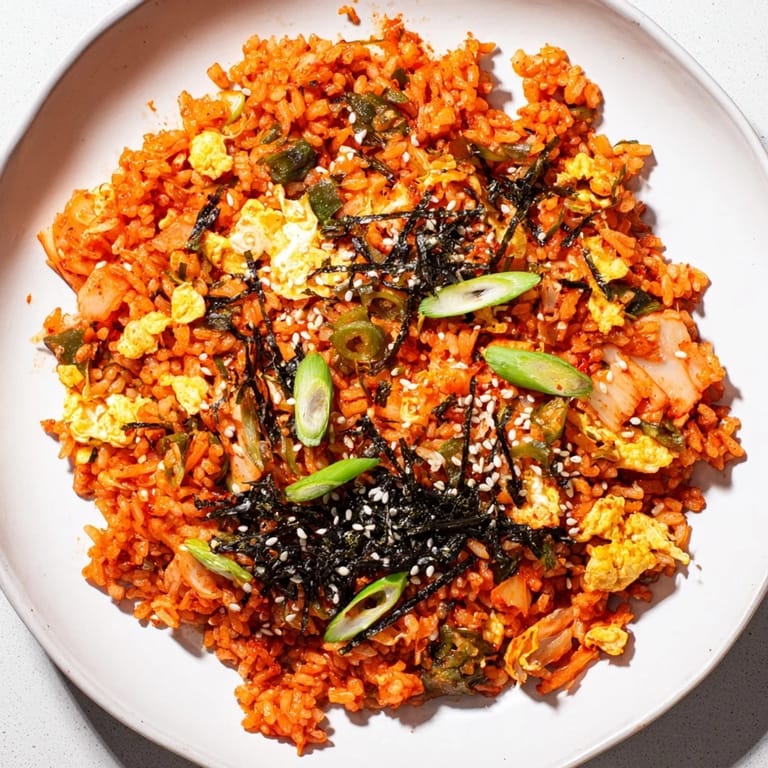
- Divide between bowls and scatter sesame seeds, extra green onions, and seaweed strips on top—these small garnishes make the dish feel intentional and complete.
 Save
Save I remember the first time I made this after a long week, and how the kitchen filled with that pungent, alive smell that seemed to push away all the exhaustion I'd been carrying. My partner walked in from another room just to ask what that smell was, and somehow sharing that moment—the sizzle of the pan, the vivid red color, the promise of something bold—made the whole day feel worth it.
The Gift of Kimchi
Kimchi is one of those ingredients that sounds intimidating if you've never worked with it, but it's actually a shortcut to flavor that would otherwise take hours of coaxing and balancing to achieve. The fermentation has already done the hard work of developing complexity, so when you add it to hot oil, you're borrowing months of kitchen chemistry in a single gesture. Once you understand that kimchi isn't just a side dish but a complete flavor system, you start seeing it everywhere in your cooking—in scrambled eggs, in soups, in salads, in moments when you want to say something bold without saying it out loud.
Playing with Heat
There's a real skill in knowing how much gochujang to use, and it's not the same for every person or every jar. Some gochujang is mellower and more umami-forward; others hit you with fermented fire that lingers on the back of your tongue. The best approach is to start with less than you think you need, taste as you go, and remember that you can always add more heat but you can't take it back. I've learned that the people who end up loving this dish most are the ones who adjust it to their own tolerance rather than following the recipe with religious precision.
Building Your Own Rhythm
This recipe is deceptively flexible, which is part of why it's become such a comfort to me over time. Some mornings I'm in the mood for the egg to be fully scrambled and mixed throughout; other times I want it slightly runny so it creates a sauce as I eat. Sometimes I add a handful of mushrooms, sometimes a squeeze of gochugaru for extra texture, sometimes nothing but exactly what's written here. The point is that once you've made it a few times and understand the basic framework—aromatic base, fermented kick, rice, egg, seasoning—you can improvise with whatever you have on hand.
- Don't feel locked into white rice; brown rice or even cauliflower rice works beautifully if that's what you have.
- For a vegan version, skip the eggs entirely or use firm tofu scrambled alongside the vegetables.
- If you want it milder, use less gochujang or balance it with an extra teaspoon of sugar and a splash of rice vinegar instead.
 Save
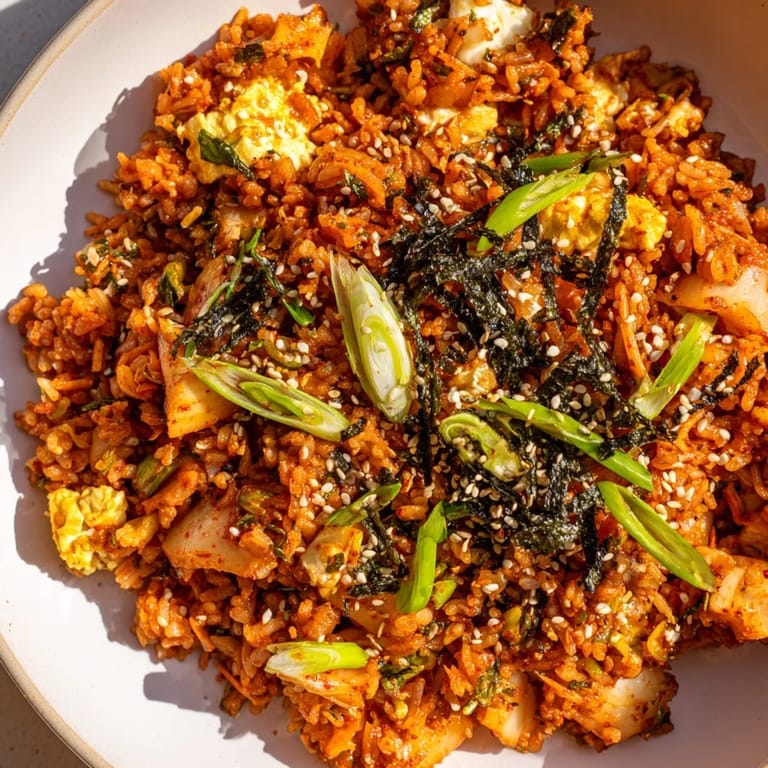
Save This dish has a way of showing up when you need it most—not because it's complicated or precious, but because it asks so little and gives so much. It's the kind of food that makes you feel like you're taking care of yourself without the effort feeling like a burden.
Recipe FAQ
- → Can I use fresh rice instead of day-old rice?
Day-old rice is preferred as it is dryer and prevents clumping, but fresh rice can be used if spread out to cool and dry slightly before cooking.
- → How can I adjust the spice level?
Adjust the amount of gochujang to your taste; reduce for milder heat or increase for a spicier dish.
- → What alternatives exist for eggs?
For vegan options, omit eggs and substitute with firm tofu, scrambled or diced.
- → Is kimchi juice necessary?
Kimchi juice adds tanginess and depth but can be omitted; replace with a splash of vinegar or extra soy sauce if desired.
- → What garnishes pair well with this dish?
Toasted sesame seeds, extra sliced green onions, and roasted seaweed strips add texture and enhance flavor.