 Save
Save I discovered these crispy rice bites at a tiny sushi bar tucked between office buildings, where the chef would fry them fresh during happy hour. The contrast of that crackling exterior against creamy spicy tuna was so addictive I had to figure out how to make them at home. What started as copying the concept became my own version after a few kitchen experiments and one memorable disaster involving too much heat and smoking oil. Now they're my go-to when I need something that feels fancy but comes together in under an hour.
I made these for a casual dinner party where my friend brought a new colleague, and watching them reach for a second one before finishing the first told me everything. There's something about serving something warm and textured and a little spicy that makes people slow down and actually taste their food instead of just nibbling while standing.
Ingredients
- Sushi rice: Short-grain rice is essential here because those smaller, stickier grains hold together and fry up with that perfect golden crust without shattering.
- Rice vinegar: This gentle acid seasons the rice and keeps it from tasting blank, and the warmth when you microwave it helps it absorb into each grain evenly.
- Sushi-grade tuna: Don't skip the quality here; this is raw fish and it needs to taste clean and sweet, not fishy or funky.
- Kewpie mayonnaise: If you can find it, use it—it's richer and less acidic than American mayo, making the spicy tuna mixture silky instead of sharp.
- Sriracha: Brings heat and a subtle sweetness; adjust the amount based on how you like the kick.
- Sesame oil: Just a teaspoon adds depth and nuttiness that makes people wonder what the secret ingredient is.
- Avocado: Adds a cooling contrast to the heat and a luxurious mouthfeel that makes these feel special.
Tired of Takeout? 🥡
Get 10 meals you can make faster than delivery arrives. Seriously.
One email. No spam. Unsubscribe anytime.
Instructions
- Rinse and cook the rice:
- Run cold water over the rice in a fine-mesh strainer until the water runs clear—this removes starch so the rice stays separate and crispy when fried. Bring it to a boil with 1 1/4 cups water, then drop the heat low and cover; it'll be done in 15 minutes.
- Season while warm:
- Microwave your vinegar mixture just enough to warm it through, then gently fold it into the hot rice so it absorbs the flavor. This is the opposite of aggressive stirring; you're being tender with the grains.
- Press and chill:
- Line your 8x8-inch pan with plastic wrap and press the cooled rice evenly and firmly into a 3/4-inch slab. Let it sit in the fridge for at least an hour so it holds together when you cut and fry it.
- Build the spicy tuna:
- Dice your tuna small and combine it with mayo, Sriracha, soy sauce, sesame oil, and green onion in a separate bowl. Keep this cold until service so the tuna stays firm and fresh-tasting.
- Cut the rice:
- Lift the plastic-wrapped slab out of the pan and peel back the plastic, then cut the rice into 16 equal pieces with a sharp knife—wiping the blade between cuts keeps things clean.
- Fry until golden:
- Heat 1/2 inch of oil in a nonstick skillet over medium-high heat until it shimmers. Fry the rice squares in batches, 2-3 minutes per side, until they're golden brown and crispy all over, then drain on paper towels.
- Top and serve:
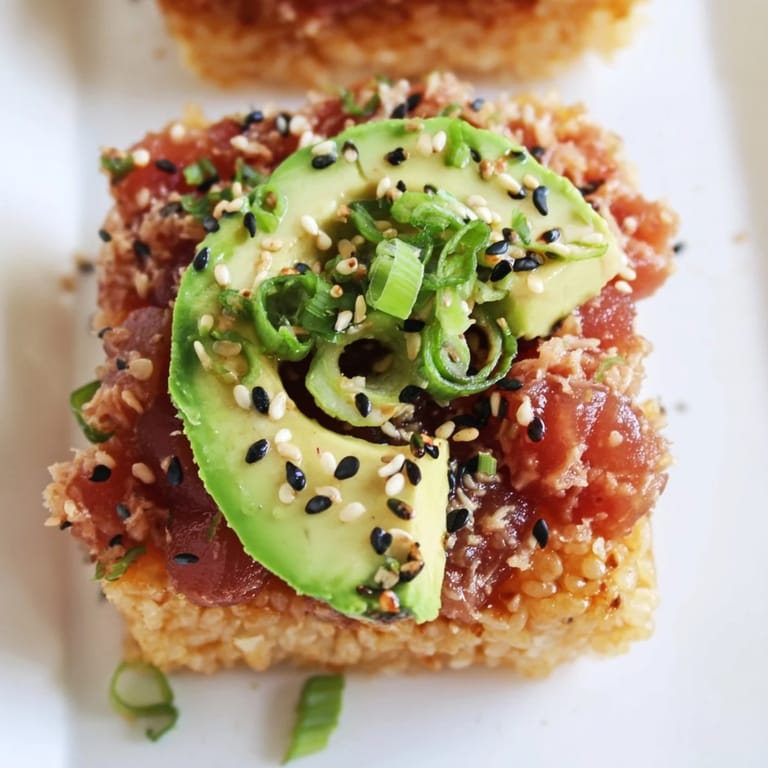
- Spoon spicy tuna onto each warm rice square, add a slice of avocado, and scatter sesame seeds and green onion over top. Serve immediately so the rice stays crispy and warm.
 Save
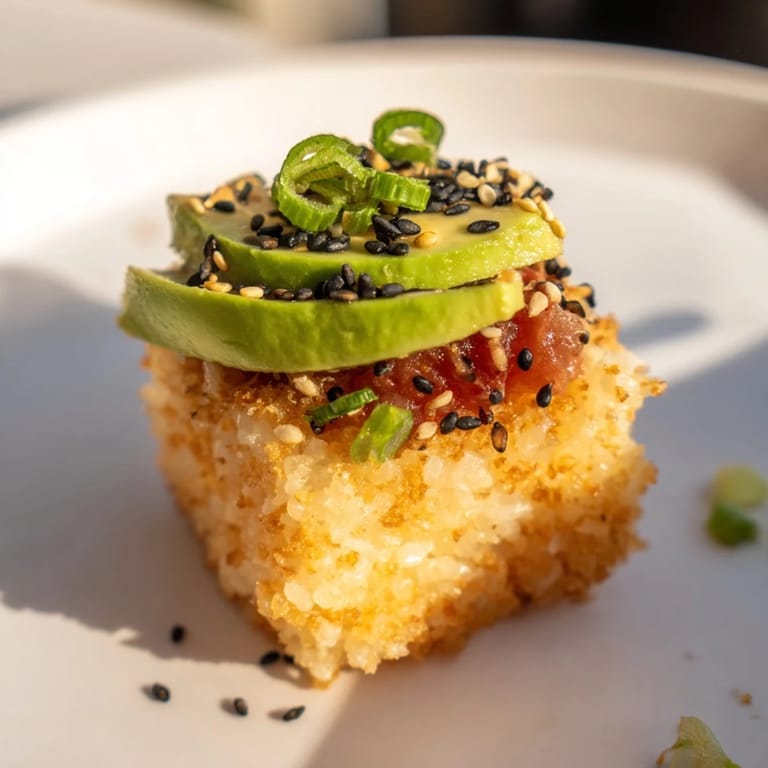
Save These bites remind me that some of the best party foods are the ones that make people pause mid-conversation to say 'wow, what is this?' It's simple rice and fish and avocado, but the technique transforms it into something memorable.
Why the Chill Time Matters
When I first tried to make these, I was impatient and cut the rice while it was still slightly warm, thinking it would be fine. It wasn't—the rice fell apart the moment it hit the hot oil, and I ended up with scattered grains instead of solid squares. Now I understand that the chill time isn't just helpful, it's crucial; it lets the starches set so the rice becomes almost a solid block that crisps beautifully instead of fragmenting.
Managing the Oil Temperature
The oil should shimmer and move quickly when you tilt the pan, but if it's smoking, it's too hot and your rice will burn on the outside while staying soft inside. I use a wooden chopstick as my tester—if tiny bubbles stream off it immediately but not aggressively, the temperature is perfect. This is one of those things that seems finicky until you've done it once and then it becomes instinct.
Making It Your Own
The beauty of this recipe is that the crispy rice base is the real star, so you can swap the tuna for other proteins and flavors you love. I've made these with spicy crab, with a shrimp and sriracha mix, and even with a quick seared scallop situation that people went absolutely wild for.
- Salmon works beautifully instead of tuna and has a slightly sweeter, richer flavor that pairs well with the crispy rice.
- Make the tuna mixture up to 4 hours ahead and keep it covered in the fridge, but always top and serve right before eating to keep the rice crunchy.
- If you want to prep these completely ahead, cool the fried rice, store it in an airtight container for a day, and quickly reheat in a 300°F oven for 5 minutes before topping.
 Save
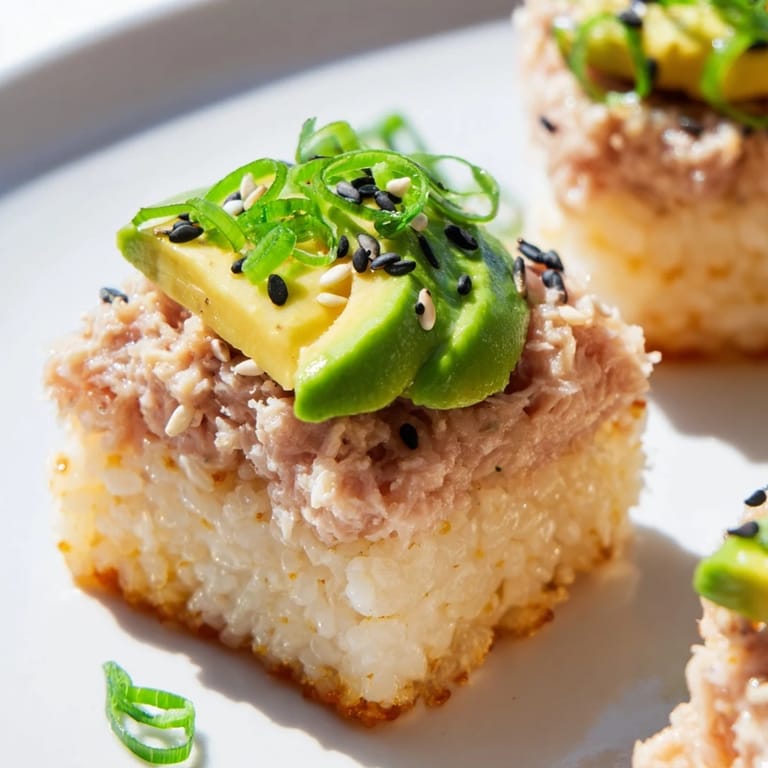
Save These are the kind of appetizers that make a moment feel a little more special, whether you're serving them at a dinner party or sneaking one from the kitchen while you cook. There's real satisfaction in watching something you made disappear into happy faces.
Recipe FAQ
- → How do I achieve perfectly crispy rice squares?
Chill the cooked rice in the pan for at least an hour to firm up, then fry in hot vegetable oil until golden brown on each side for a crisp texture.
- → What type of tuna should I use?
Use sushi-grade tuna to ensure freshness and safety, finely diced for a tender, flavorful topping.
- → Can I substitute the tuna with other seafood?
Yes, chopped salmon or cooked crab make excellent alternatives while maintaining a seafood-forward taste.
- → How is the rice seasoned before frying?
A mixture of rice vinegar, sugar, and salt is gently folded into the cooked rice, giving a subtle tangy flavor typical of sushi rice.
- → What garnishes enhance the flavor?
Slices of avocado, black sesame seeds, and thinly sliced green onions add creaminess, nuttiness, and freshness to each bite.