 Save
Save There's something about summer afternoons that makes you crave something bright and alive on your plate. I discovered tabbouleh during a particularly warm July when my neighbor brought over a bowl she'd made from her grandmother's Syrian recipe, and I was completely won over by how a handful of simple ingredients—mostly herbs, really—could taste so vibrant and satisfying. The way the lemon cut through everything, how the parsley seemed to capture the essence of fresh green itself, it changed how I thought about salads entirely. Now I make it constantly, especially when tomatoes are at their peak and I need something that feels both nourishing and celebratory.
I served this at a small dinner party last summer, and what struck me wasn't the compliments—though there were plenty—it was watching everyone go back for seconds without thinking about it. One guest, who swears she doesn't like cilantro or mint, quietly asked for the recipe. There's something disarming about a bowl of herbs and lemon that just makes people relax and eat more slowly, which somehow makes everything taste better.
Ingredients
- Fine bulgur wheat (1 cup): The grain base that absorbs the dressing beautifully—use the fine version, not coarse, so it softens quickly and doesn't need cooking.
- Boiling water (1 1/2 cups) and sea salt (1/2 teaspoon): The hot water rehydrates the bulgur gently; the salt seasons it from the inside out.
- Ripe tomatoes (2 cups, diced): Choose tomatoes at peak season if possible—they're what makes this sing, so their quality matters more than any other ingredient.
- English cucumber (1/2, diced): The watery, seeded kind keeps things fresh without becoming watery; slice it just before assembling.
- Fresh flat-leaf parsley (1 1/2 cups, chopped): This isn't a garnish—it's the backbone of the dish, so don't skimp and do use the flat-leaf variety.
- Fresh mint (1/2 cup, chopped): It brightens everything and balances the richness of the olive oil with its cool, clean bite.
- Scallions (4, thinly sliced): The raw bite of green onion adds a subtle heat that ties the whole bowl together.
- Extra virgin olive oil (1/4 cup): This is your emulsifier and flavor base, so use one you actually like tasting on its own.
- Fresh lemon juice (1/4 cup): Squeeze it yourself—bottled won't give you that bright, alive quality that defines this dish.
- Garlic clove (1, minced): Just one, because you want whisper of garlic, not garlic salad.
- Ground black pepper (1/2 teaspoon): Fresh ground makes a noticeable difference in the dressing's flavor.
- Optional feta cheese (1/4 cup, crumbled): It adds a salty, tangy richness that makes this feel more substantial, though it's wonderful without it.
- Toasted pine nuts (1/4 cup): They bring a gentle crunch and warmth that elevates the whole experience.
Tired of Takeout? 🥡
Get 10 meals you can make faster than delivery arrives. Seriously.
One email. No spam. Unsubscribe anytime.
Instructions
- Bloom the bulgur gently:
- Pour boiling water over the bulgur and salt, cover it with a plate or lid, and let it sit undisturbed for 10 minutes until the grains are tender and the water has vanished. You'll hear a subtle quiet as the water gets absorbed—that's exactly what you want.
- Make the dressing while waiting:
- Whisk the olive oil, fresh lemon juice, minced garlic, and pepper together in a small bowl, tasting as you go to make sure the lemon and oil are balanced. Set it aside and let the flavors start getting to know each other.
- Cool the bulgur completely:
- Fluff the cooked grain gently with a fork, breaking up any clumps, then spread it on a plate or shallow bowl to cool to room temperature. Warm grain will wilt your delicate herbs, so don't rush this step.
- Combine vegetables with the grain:
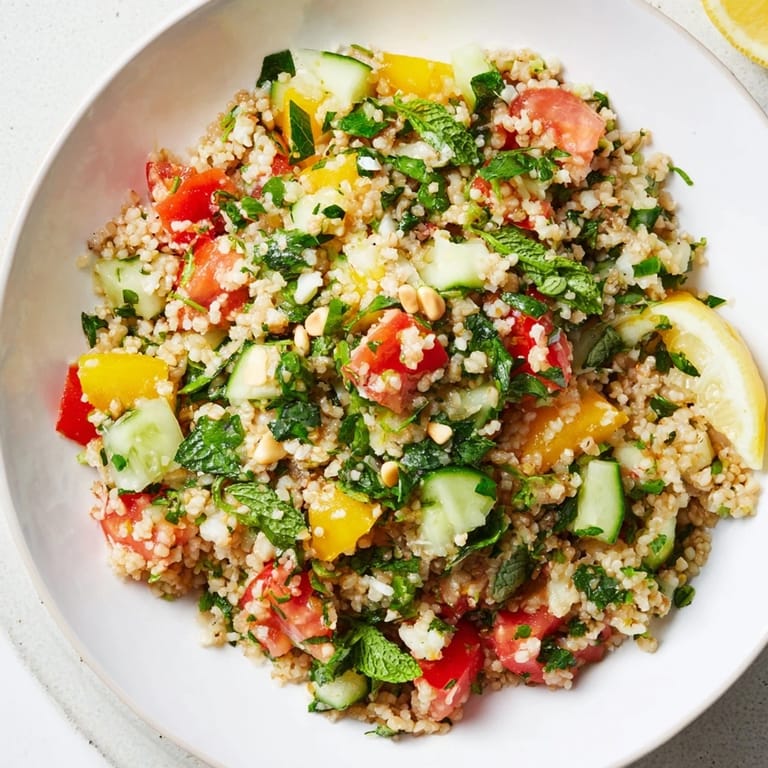
- Once the bulgur is cool, add the tomatoes, cucumber, parsley, mint, and scallions directly to the bowl, tossing everything gently with your hands or two forks so nothing bruises. The green should look vibrant and fresh, not crushed.
- Dress and marry the flavors:
- Pour the dressing over the grain mixture and mix thoroughly with a gentle hand, coating everything evenly so each bite has olive oil and lemon. Taste and adjust the salt or lemon if needed—the seasoning should feel clean and bright.
- Chill and serve:
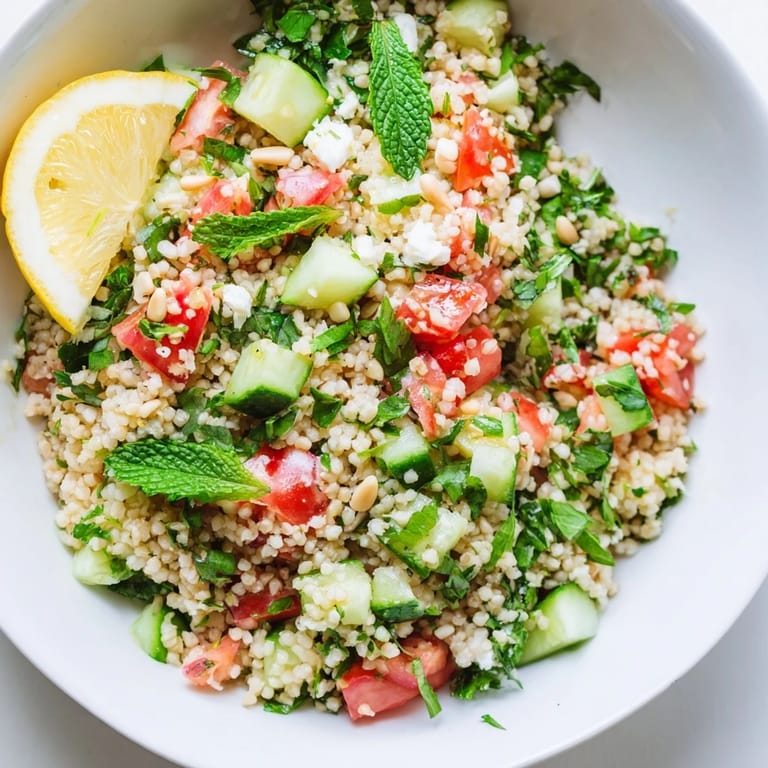
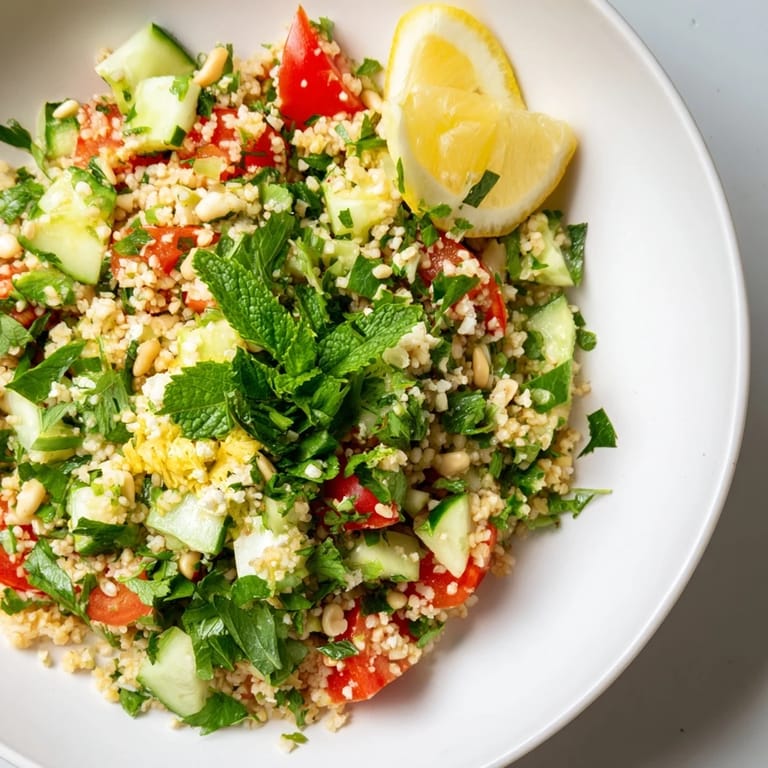
- Let it rest in the refrigerator for at least 10 minutes, which gives the flavors time to meld and makes everything taste more cohesive. Top with feta and pine nuts, serve with lemon wedges, and watch people eat quietly and contentedly.
 Save
Save My favorite moment making tabbouleh is right after I've added all those fresh herbs—there's this instant where the bowl transforms from grain and vegetables into something that smells like a garden, green and alive and somehow hopeful. It's a small magic that happens in a mixing bowl, and it never gets old.
Variations That Work
This bowl is forgiving and adaptable without losing its essence. I've made it with quinoa instead of bulgur on nights when I wanted something gluten-free, and it works beautifully—the grain still carries the dressing perfectly. You can add chickpeas for protein, or even some grilled chicken if you want it to be more of a main course. I once threw in some roasted eggplant when I had leftovers, and it added a soft, smoky depth that surprised me in the best way.
Storage and Keeping
This keeps well in the fridge for up to 2 days, though the vegetables will soften slightly and release a bit more water as time goes on. If you're making it ahead, you can prep everything separately and assemble it just before serving—the bulgur and dressing actually benefit from sitting together overnight, but the fresh herbs are best added just before eating. Pack it in a container with lemon wedges on the side and you've got lunch that tastes intentional and special, not like you were scrambling at 7 a.m.
When to Serve This
Summer picnics are the obvious moment, but I also make this in fall when tomatoes are still good and you want something that tastes like warmth without the weight of cooked food. It's perfect alongside grilled fish or chicken, stands beautifully as a light vegetarian lunch, and honestly tastes even better the next day when everything has had time to settle into itself. You can serve it warm or cold, though cool is when the herbs and lemon really shine through.
- Serve it alongside warm pita bread for scooping and substance.
- Add a dollop of yogurt or hummus on the side for creaminess if you want it.
- Top with whatever toasted nuts or seeds you have on hand—they all add welcome texture.
 Save
Save There's something deeply satisfying about a bowl of fresh herbs, grain, and lemon that somehow tastes both simple and generous at the same time. Make this when you want to feel good about what you're eating.
Recipe FAQ
- → Can bulgur be substituted?
Yes, cooked quinoa can be used instead of bulgur to make the dish gluten-free while maintaining a similar texture and nutty flavor.
- → How long should the bulgur soak?
Bulgur needs about 10 minutes in boiling water to become tender and absorb the liquid fully before mixing with other ingredients.
- → What herbs are used in this dish?
Fresh flat-leaf parsley, mint leaves, and scallions provide a bright, herbaceous character essential to the bowl’s flavor.
- → What dressing is recommended?
A simple lemon juice, extra virgin olive oil, minced garlic, and black pepper dressing adds a zesty and fresh flavor that complements the ingredients.
- → Can additional toppings be added?
Optional toppings like crumbled feta cheese, toasted pine nuts, and lemon wedges enhance texture and taste but can be omitted for dietary preferences.
- → How should the dish be stored?
Chilled in an airtight container, it can be kept in the refrigerator for up to 2 days while retaining freshness and flavor.