 Save
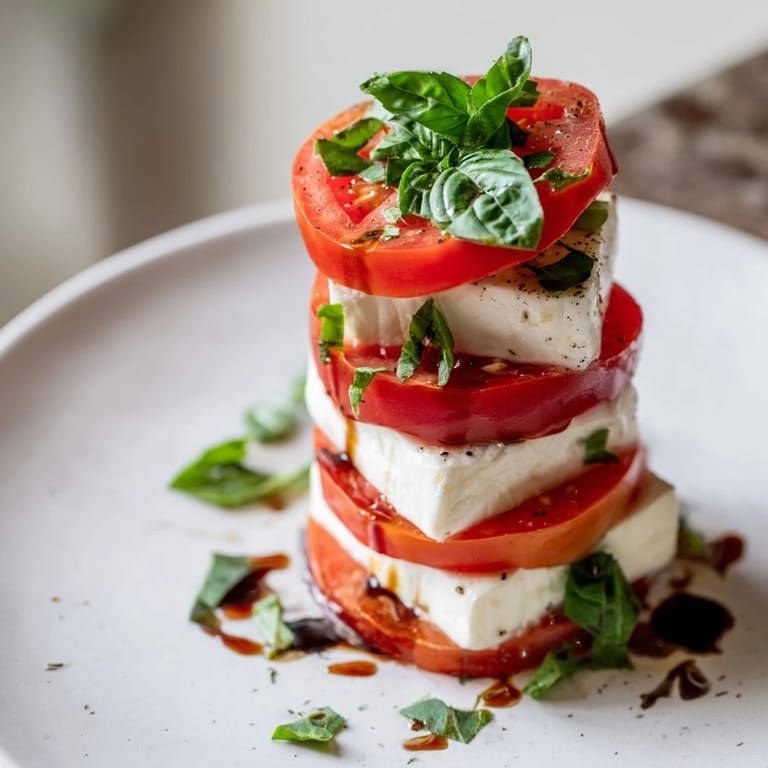
Save I discovered these stacks entirely by accident one summer afternoon when my neighbor Giulia stopped by with an armful of tomatoes from her garden and a knowing smile. She arranged slices of mozzarella and basil in vertical layers on my kitchen counter, calling them Tuscan pillars, and suddenly I understood how the simplest ingredients could create something that looked like it belonged in a gallery rather than on a plate. That moment changed how I thought about appetizers—they didn't need to be fussy or complicated, just thoughtfully stacked.
The first time I made these for guests, I was genuinely nervous about whether they'd hold up on the plate, whether the toothpicks would look amateur, whether anyone would actually eat them. By the time the first person took a bite and closed their eyes for just a second, I knew I'd found something special. Now I make them whenever I want to feel like I've done something elegant without spending hours in the kitchen.
Ingredients
- Fresh ripe tomatoes: Use medium ones that feel heavy in your hand and smell fragrant—this is where most of your flavor lives, so don't skimp on quality.
- Fresh mozzarella cheese: The creamy, delicate kind, never the rubbery block cheese; it should feel almost custard-like when you slice it.
- Fresh basil leaves: Pick them just before you cook if you can; they lose their brightness quickly once bruised.
- Extra-virgin olive oil: A good one tastes peppery and grassy, and you'll notice the difference in every bite.
- Balsamic glaze: The reduced, syrupy kind that clings to food rather than running off; it's worth buying the real thing.
- Sea salt and freshly ground black pepper: These aren't afterthoughts—they amplify everything around them.
Tired of Takeout? 🥡
Get 10 meals you can make faster than delivery arrives. Seriously.
One email. No spam. Unsubscribe anytime.
Instructions
- Slice with intention:
- Cut your tomatoes and mozzarella into eight rounds each, about 1 centimeter thick. A sharp knife and a steady hand matter here—uneven slices won't stack as elegantly, and they'll be harder to build.
- Prepare your basil:
- Wash the leaves gently and pat them completely dry; any water left behind will make them wilt and turn dark.
- Build from the bottom up:
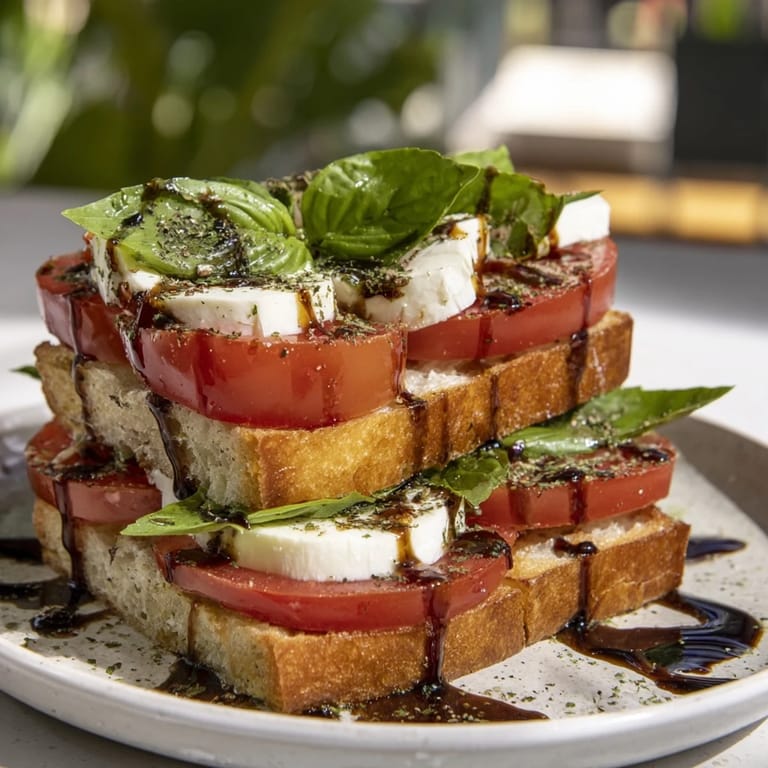
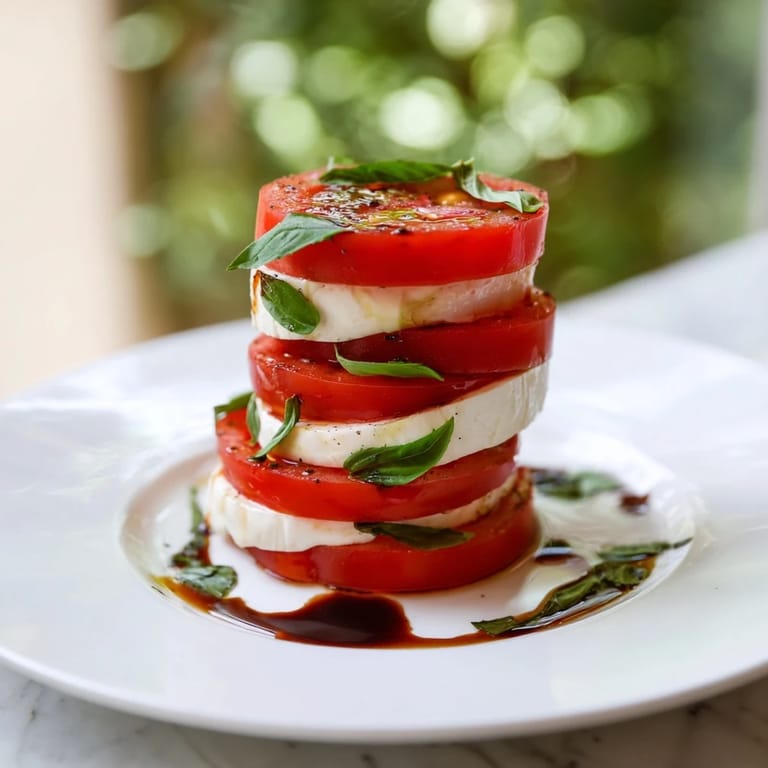
- Place a tomato slice on your serving platter, then add a mozzarella slice, then a basil leaf. Keep layering to three or four layers high, finishing with basil on top so it's the first thing you see and smell.
- Anchor each stack:
- Push a long toothpick or bamboo skewer vertically through the center of each pillar to hold the layers together. This is practical and pretty at the same time.
- Finish with golden drizzles:
- Distribute the olive oil and balsamic glaze generously across all your pillars, then taste the seasoning and add salt and pepper as needed.
- Serve right away:
- These are best enjoyed immediately, when everything is still cool and the basil hasn't started to darken.
 Save
Save There was this one dinner party where my friend Maria took a photo of the pillars before eating hers, and I remember thinking that was the moment I knew this recipe had crossed over from just being good to being something people wanted to remember and share. Food that makes people pause like that is rare and wonderful.
When to Serve These
I've learned these work best at the beginning of a meal, when palates are fresh and the summer heat makes people crave something cool and bright. They're equally at home on a casual afternoon platter with crusty bread or as the opening act of a more formal dinner. The beauty is they don't demand much from what comes next—they leave you satisfied but not stuffed, curious but not overwhelmed.
Variations Worth Exploring
The skeleton of this recipe is flexible enough to play with. I've experimented with heirloom tomatoes in reds and oranges and yellows, which turn the whole thing into a confetti of color. Sometimes I add a whisper of dried oregano, and once I tried it with burrata instead of regular mozzarella, which made the whole thing almost unbearably creamy and indulgent in the best way.
Pairing and Serving
These shine alongside a crisp Italian white wine—a Pinot Grigio or a Vermentino will complement the freshness without overpowering it. If you're building a full menu, follow these with something that respects their delicate flavor, not something heavy that will overshadow what came before. I've learned that sometimes the smallest courses are the ones people talk about long after the main course is forgotten.
- Serve on a chilled platter if your kitchen is warm, so the mozzarella stays soft and dreamy.
- Have extra basil on hand to tuck around the pillars for both beauty and flavor insurance.
- Cut your skewers if they're too long—they should add structure without looking like tiny swords.
 Save
Save This recipe taught me that elegance isn't about complexity—it's about knowing when to stop, when ingredients are already perfect on their own. Every time I make these pillars, I'm reminded that the best meals often come from respecting simplicity.
Recipe FAQ
- → What type of tomatoes work best for the stacks?
Medium ripe tomatoes are ideal as they provide the right balance of juiciness and firmness to hold the layers together.
- → How should the mozzarella be prepared?
Slice fresh mozzarella into even rounds about 1 cm thick to match the tomato slices for uniform stacking.
- → Can I use other herbs besides basil?
While fresh basil is traditional, you can experiment with herbs like oregano or parsley for varied flavors.
- → What is the best way to serve these stacks?
Serve immediately after assembling and drizzling with olive oil and balsamic glaze to maintain freshness and texture.
- → Are there recommended accompaniments for these stacks?
A crisp Italian white wine such as Pinot Grigio pairs wonderfully with these tomato and mozzarella stacks.