 Save
Save There's something almost ceremonial about arranging a cheese board the night before winter truly arrives. I found myself standing at my kitchen counter with an armful of olives, figs, and honey, suddenly struck by how much the arrangement mattered—not just for taste, but for the story it told. The idea came to me during one of those gray December afternoons when everything feels like it's teetering between two seasons, and I thought: why not make that feeling edible? Half darkness, half light, all delicious.
I made this for the first time when my partner's family arrived unannounced on the solstice, and I realized I had exactly the ingredients I needed but zero confidence. Watching their faces as they leaned over the board—how their eyes traced from dark to light—made me understand that sometimes the most memorable meals are the ones we almost didn't make.
Ingredients
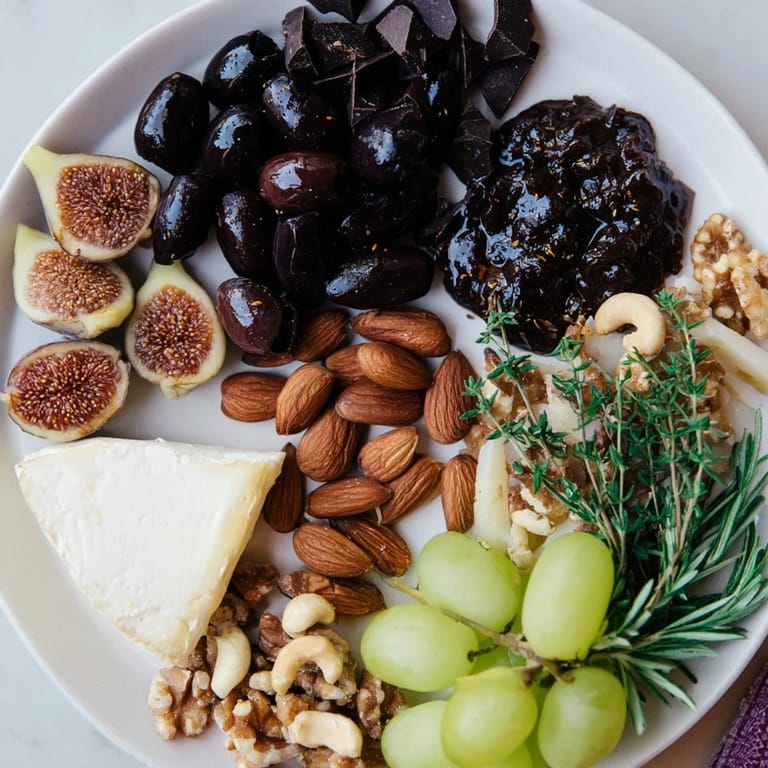
- Kalamata olives: These bring a serious, briny backbone to the dark side; I learned to pit mine the night before so I'm not wrestling with them while guests arrive.
- Oil-cured black olives: Deeper, almost smoky compared to Kalamatas—they're what makes people reach back for another.
- Dried mission figs: Halving them makes them easier to eat standing up, and they soften slightly as they sit, releasing their sweetness.
- Fig jam: A small dollop goes such a long way; it catches the eye and bridges sweet and savory beautifully.
- Dark chocolate: Breaking it into uneven pieces feels more intentional than neat squares, and it melts slightly against warm cheese.
- Roasted almonds: Buy them already roasted so your only job is not eating them all beforehand.
- Fresh rosemary: The sprig is both garnish and hint; when people brush it while reaching for olives, the smell hits them first.
- Ripe Brie: This is everything—if it's cold and firm, it won't have the creamy center you want, so let it sit out for ten minutes before serving.
- Pears: Slice them moments before serving so they don't brown; slightly underripe pears actually hold together better than perfectly ripe ones.
- Honeycomb or honey: Honeycomb is gorgeous and stays put, but liquid honey pools beautifully and tastes incredible when soaked into a cracker.
- Toasted walnuts: Toast your own if you have time; the smell alone is worth it, and they taste infinitely better than the pre-toasted kind.
- Seedless green grapes: They're the unexpected brightness that makes people smile; their simple sweetness cuts through all the richness.
- Fresh thyme: Smaller than rosemary, more delicate; it's the gentle counterpoint to the dark side's boldness.
- Baguette and crackers: Offer both so everyone has a vehicle they actually like; some people want bread, others want the crunch and staying power of crackers.
Tired of Takeout? 🥡
Get 10 meals you can make faster than delivery arrives. Seriously.
One email. No spam. Unsubscribe anytime.
Instructions
- Create your dividing line:
- Lay your board in front of you and run a line of fresh rosemary down the middle, or arrange a clean row of crackers—this isn't just practical, it makes the board feel intentional and balanced. If you wobble on the decision, trust your gut; either approach works.
- Build the dark side:
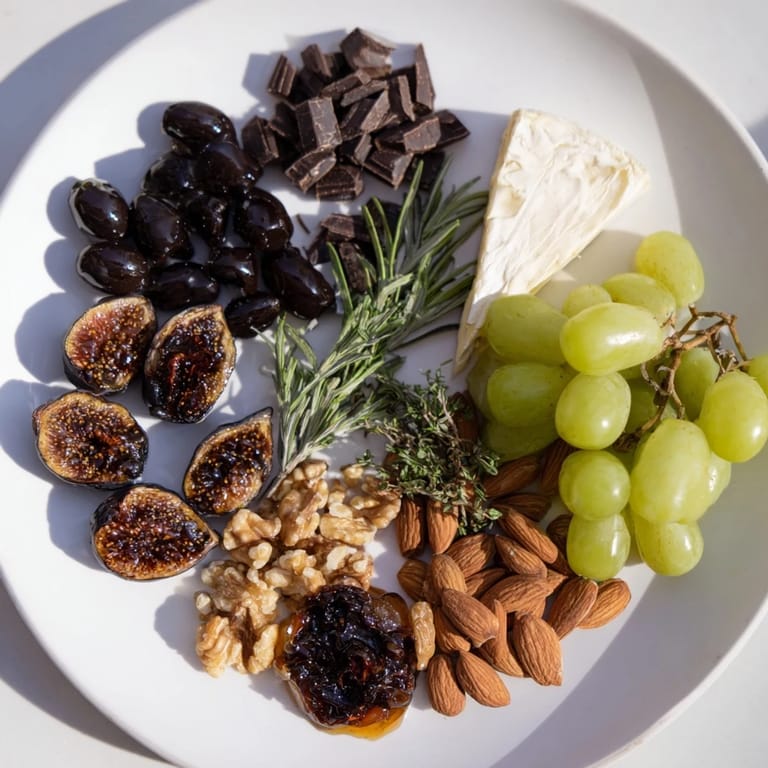
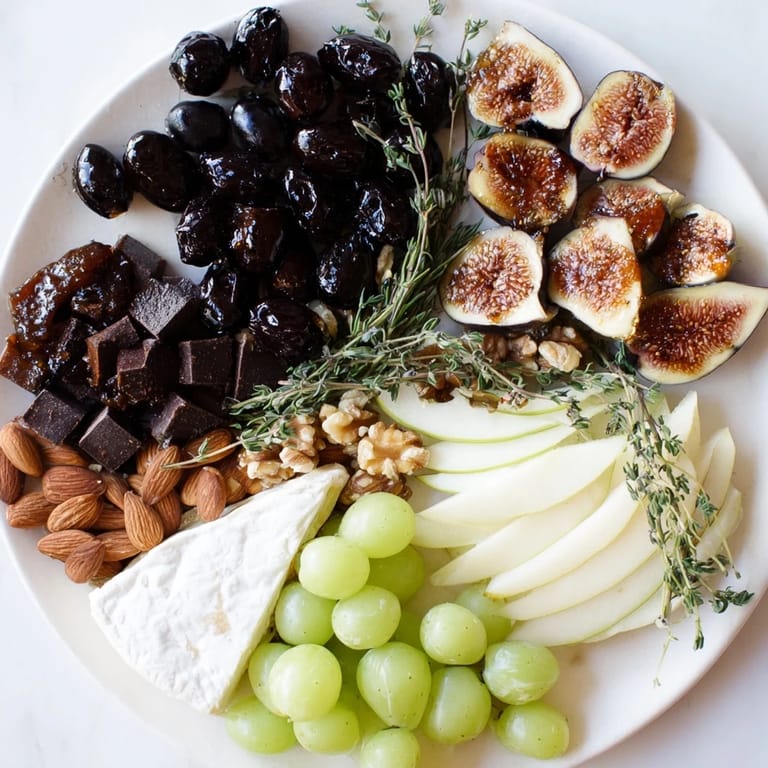
- Cluster the olives in one area so people aren't hunting for them, then tuck the halved figs alongside. Add a small bowl or ramekin of fig jam so it stays contained, scatter the dark chocolate pieces throughout, pile the almonds in their own spot, and let the rosemary sprig rest across the top like it just happened to fall there.
- Build the light side:
- Set the Brie where it has room to breathe—it's the star here, so don't crowd it. Fan the pear slices in a loose arrangement so they look abundant, place the honeycomb (or drizzle honey) near the cheese so they find each other, cluster the walnuts and grapes in their own little sections. A sprig of thyme adds the final touch.
- Add your accompaniments:
- Lean the baguette slices against the center dividing line or arrange them on a separate small plate—this prevents them from getting lost among the other elements. Scatter crackers around both sides so they're accessible from anywhere on the board.
- Serve right away:
- Room temperature is everything here; bring it to the table as soon as it's done and let people graze as they talk. The warmth of the room will soften the Brie just enough and wake up all the flavors.
 Save
Save The moment I'll never forget is when someone broke off a piece of Brie, added a sliver of pear, a walnut, and a tiny drizzle of honey—and just closed their eyes. That's when I realized this board was more than ingredients; it was a meditation on balance, on the turning of the year, on the idea that darkness and light aren't enemies but partners on a plate.
The Story Behind the Solstice Board
Winter solstice boards exist in so many cultures, but this version came to me while reading about pagan celebrations and how food was always at the center of marking the turning seasons. I wanted to capture that feeling of transition—that moment when you're not sure if it's still autumn or winter has truly arrived. The duality felt honest; winter isn't just cold and dark, and it's not just quiet and restful either. It's both things at once, and the board celebrates that complexity in the most delicious way.
Building a Board That Tells a Story
I've learned that the best boards aren't perfectly symmetrical or arranged like they're under glass. They have breathing room, areas of abundance and areas of restraint, and they look like someone thoughtfully chose each element rather than checking off boxes. When you're arranging yours, think about color and texture first—how the deep purples of the olives echo the dark chocolate, how the green grapes and pale pears create a kind of visual music on the other side. The arrangement becomes part of the eating experience, and that matters.
Pairing and Serving Wisdom
The magic really happens when you consider what drinks and moments pair with this board. A dry sparkling wine brings brightness that echoes the light side, or a light-bodied red wine (something with good acidity, not heavy tannins) plays beautifully against the olives and chocolate. This board is ideal for that awkward moment between appetizers and dinner when everyone's gathered but nothing formal has started yet—or for afternoon gatherings when you want something that feels intentional without requiring you to actually cook.
- Let the board sit out for twenty minutes before serving so every element reaches its best temperature and flavor.
- Set out small plates so people can actually build bites instead of trying to eat everything at once from their hands.
- If you're prepping ahead, cover the board with plastic wrap and refrigerate it; just bring it back to room temperature before unveiling.
 Save
Save This board taught me that sometimes the most generous thing you can do is arrange beautiful food and let people enjoy it together. No cooking required, just presence and intention.
Recipe FAQ
- → How do I create balance on the board?
Divide the board into two halves—one with rich, savory items like olives and dark chocolate, and the other with fresh, bright ingredients like Brie and pears. Use herbs or crackers as a visual divider.
- → Can I substitute any ingredients on the board?
Yes, for example, swap Brie with Roquefort or Camembert, pears with apples, or dried figs with apricots depending on preference and availability.
- → What accompaniments work well with this board?
Include sliced baguette and assorted crackers to complement the textures and flavors, making it easy to enjoy each element.
- → Are there suggested pairings for beverages?
Dry sparkling wine or a light-bodied red wine pairs beautifully, enhancing both the savory and fresh components.
- → How long does it take to prepare this board?
Preparation is simple and takes about 15 minutes, with no cooking involved, perfect for last-minute entertaining.