 Save
Save There's something about the smell of focaccia baking that stops conversations mid-sentence. A friend had just brought back a tin of za'atar from a trip to Lebanon, and I found myself standing in my kitchen at dusk, wondering what to do with it besides the usual hummus. I remembered my grandmother pressing dimples into focaccia dough with her thumbs, and it hit me—what if I married those two worlds, Italian and Middle Eastern, in one bread? The result was golden, fragrant, and somehow tasted like both a memory and a discovery.
I made this for a potluck where everyone brought something forgettable, and this focaccia became the thing people asked about as they left. Someone wrapped a piece in a napkin to take home, which felt like the highest compliment. That's when I knew it wasn't just bread—it was the kind of thing that makes people feel welcomed.
Ingredients
- Bread flour (500 g): Use bread flour, not all-purpose, because it gives you that chewy-crispy texture that makes focaccia addictive.
- Active dry yeast (7 g): Make sure it's fresh and dissolve it in warm water first—this is your insurance policy for a good rise.
- Fine sea salt (1½ tsp for dough): Don't skip this; it brings out every other flavor and strengthens the gluten.
- Warm water (325 ml): Temperature matters more than you'd think—too hot kills the yeast, too cold and nothing happens.
- Extra virgin olive oil (60 ml plus 2 tbsp more): This is the soul of the bread, so choose one you'd actually taste on its own.
- Za'atar spice blend (2 tbsp): If you can, buy it from a Middle Eastern market where it's fresher and more vibrant than supermarket versions.
- Kalamata olives (100 g): Pit them yourself if you can—the juice that clings to your fingers is liquid gold for flavor.
- Flaky sea salt (1 tsp): This goes on top at the end and adds a texture surprise.
Tired of Takeout? 🥡
Get 10 meals you can make faster than delivery arrives. Seriously.
One email. No spam. Unsubscribe anytime.
Instructions
- Wake up the yeast:
- Dissolve the yeast in warm water and let it sit for 5 minutes—you'll see it foam up like a tiny, delicious science experiment. This tells you the yeast is alive and ready to work for you.
- Build the dough:
- Mix flour and salt, then add the foamy yeast mixture and olive oil. Stir until everything comes together in a shaggy, slightly sticky mess. Don't worry if it looks rough at this point.
- Knead it into submission:
- Work the dough for 8–10 minutes by hand or machine until it's smooth and elastic—your hands should come away clean. This develops the gluten and gives you structure.
- First rise:
- Oil a bowl, nestle the dough inside, cover it with a damp towel, and leave it in a warm corner of your kitchen for about 1 hour. You want it to double in size, puffy and alive.
- Shape and second rise:
- Oil your baking pan, punch down the dough (this is deeply satisfying), and stretch it out to fill the pan. Cover again and let it rise for 30 minutes—it should feel pillowy when you touch it.
- Dimple and dress:
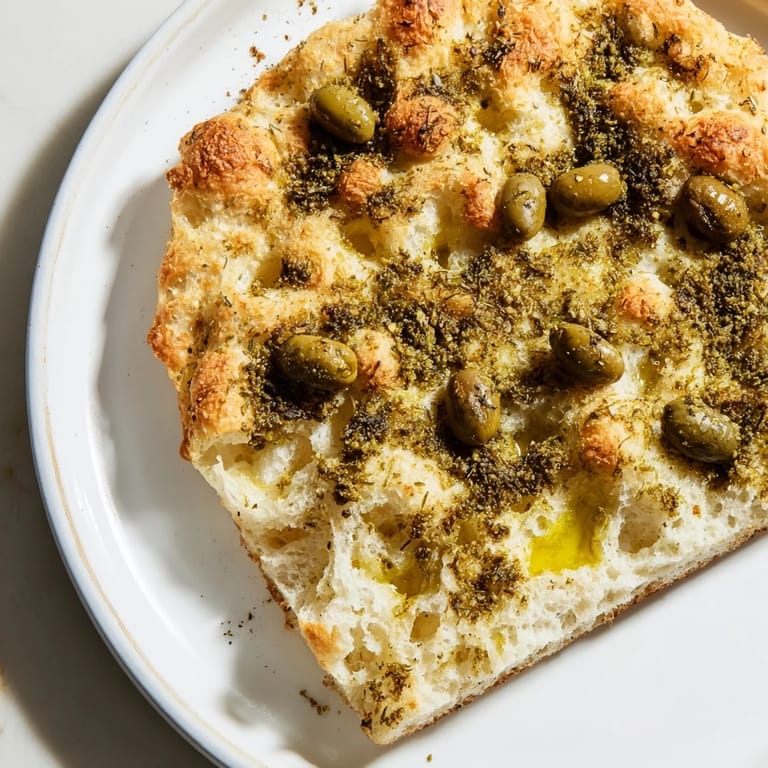
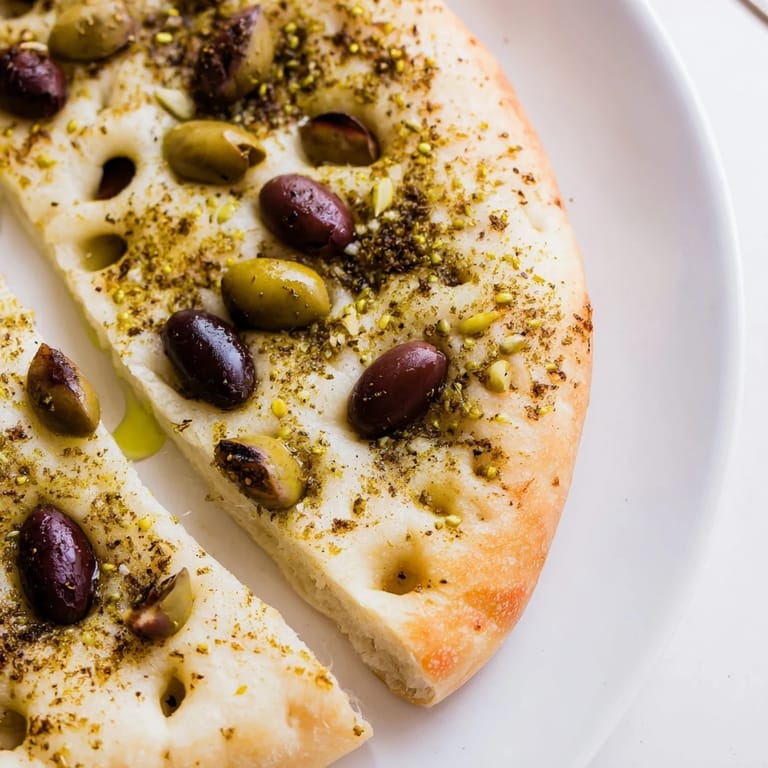
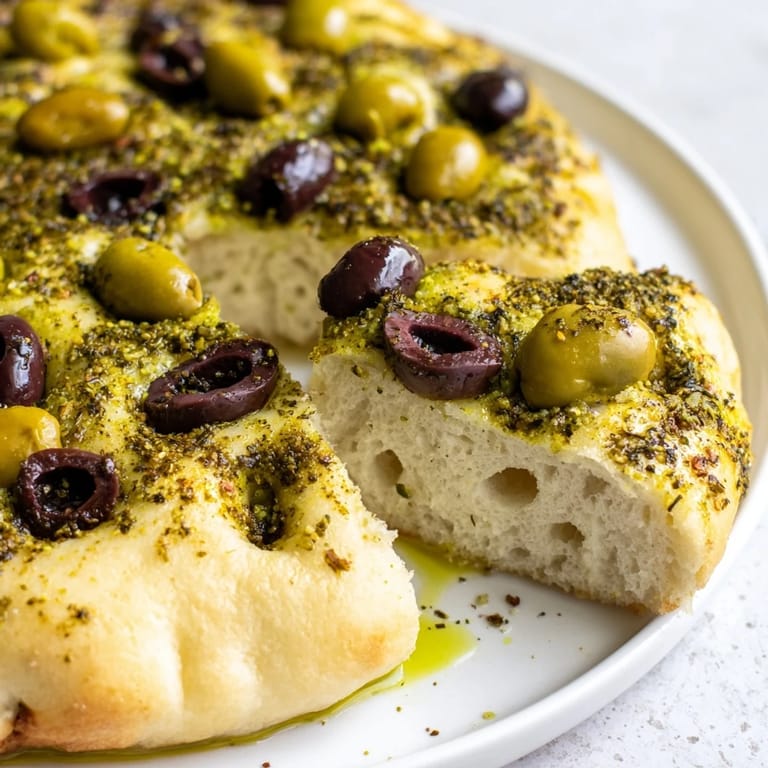
- Preheat your oven to 220°C (425°F). Using your fingertips, press deep dimples all over the surface—this is where the oil and seasoning will pool. Drizzle with olive oil, scatter za'atar evenly, add your olives, and finish with flaky sea salt.
- Bake until golden:
- Bake for 20–25 minutes, watching as the edges turn crispy and the top deepens to golden brown. Your kitchen will smell incredible.
- Cool and serve:
- Let it rest for a few minutes, then slice and serve warm or at room temperature. It's best the day you make it, but it reheats beautifully.
 Save
Save My partner took one bite, closed their eyes, and asked what it was—not because they didn't know, but because something about it transported them somewhere else. That's the magic of combining traditions, unexpected but somehow inevitable.
Why Za'atar Changes Everything
Za'atar isn't just a topping; it's a flavor bomb that brings earthiness, herbaceousness, and a subtle tang all at once. When it hits the warm, oil-soaked surface of the focaccia, the oils release the spice blend's essential oils, making every bite taste more vivid than the last. If you've only used it on labneh, you're missing out—this bread is where za'atar truly shines.
The Olive Question
Kalamata olives are briny and bold, which is why they're perfect here, but don't be afraid to experiment. I've made this with green olives when Kalamatas weren't on hand, and it was lighter, less funky, equally good. The rule is simple: use an olive you actually enjoy eating straight from the bowl.
Storage, Variations, and Next Steps
Wrapped tightly, focaccia stays fresh for two days and reheats beautifully in a 180°C (350°F) oven for five minutes. Some of my favorite variations have included roasted garlic cloves pressed into the dough, a handful of sun-dried tomatoes, or fresh rosemary mixed with the za'atar. This bread is a canvas.
- Serve it alongside hummus, labneh, or a good olive oil for dipping—it transforms from snack to experience.
- Make it the day before and bring it to a gathering; room temperature focaccia travels well and tastes even better the next day.
- Double the batch and freeze one loaf uncut for up to a month; thaw and refresh in the oven whenever the craving strikes.
 Save
Save This focaccia is proof that sometimes the best things come from simple curiosity and a willingness to blend worlds. Make it, share it, and watch how something so humble becomes a conversation.
Recipe FAQ
- → What is the best way to prepare the dough?
Mix bread flour, sea salt, yeast dissolved in warm water, and olive oil until a shaggy dough forms. Knead until smooth and elastic for about 8–10 minutes, then allow it to rise covered in a warm spot until doubled.
- → Can I substitute the olives used?
Yes, green olives can be used instead of Kalamata for a milder, less briny flavor without compromising texture.
- → How do I achieve the characteristic dimpled surface?
Use your fingertips to press deeply and evenly across the dough surface after shaping, allowing oil and toppings to settle in the indentations for better flavor absorption.
- → Is this bread suitable for a vegan diet?
Absolutely, this focaccia contains no animal products and uses plant-based ingredients like olive oil and herbs.
- → How should the focaccia be served?
It tastes best warm or at room temperature, paired with dips like hummus or labneh, or simply drizzled with extra olive oil.
- → Can additional flavors be incorporated?
Yes, sun-dried tomatoes or roasted garlic can be mixed into the topping for enhanced taste complexity.