 Save
Save I still smell that garlic butter hitting the hot skillet every time I think about naan night. My first batch came out unevenly thick, some parts crispy and others doughy, but once I brushed on that golden garlic butter, nobody cared. The dough is forgiving, the process is fast, and the payoff is a basket of warm, pillowy bread that disappears before dinner even starts. Now I make extra just so there are leftovers for breakfast.
I made this for a dinner party where the curry was good but the naan stole the show. People kept reaching across the table for another piece, tearing off corners and mopping up sauce until the platter was empty. One friend asked if I had a tandoor oven hidden somewhere. I just laughed and pointed at my cast iron skillet sitting on the stove.
Ingredients
- All purpose flour: The foundation of the dough, giving you that soft, stretchy texture without needing specialty flours.
- Instant dry yeast: Speeds up the process so you do not have to wait hours for the dough to rise.
- Plain yogurt: Adds tang and tenderness, keeping the naan pillowy even after it cools.
- Warm water: Wakes up the yeast and brings the dough together without being too hot or cold.
- Vegetable oil: Keeps the dough from sticking and adds a hint of richness.
- Unsalted butter: The carrier for all that garlicky goodness you brush on at the end.
- Garlic cloves: Freshly minced is the only way to go, the flavor blooms in the melted butter.
- Fresh cilantro: Optional but worth it, the green flecks add a bright, herbal finish.
Tired of Takeout? 🥡
Get 10 meals you can make faster than delivery arrives. Seriously.
One email. No spam. Unsubscribe anytime.
Instructions
- Mix the dry ingredients:
- Whisk together the flour, sugar, yeast, and salt in a large bowl so everything is evenly distributed. This ensures the yeast activates consistently throughout the dough.
- Form the dough:
- Pour in the warm water, yogurt, and oil, then stir with a wooden spoon until a shaggy, sticky mass forms. Do not worry if it looks rough, it will smooth out when you knead.
- Knead until smooth:
- Turn the dough onto a lightly floured surface and knead for about five minutes, pressing and folding until it feels elastic and no longer sticky. If it clings to your hands, dust with a little more flour.
- Rest the dough:
- Cover the dough with a clean kitchen towel and let it rest for ten minutes. This short break relaxes the gluten and makes rolling much easier.
- Prepare the garlic butter:
- Stir the melted butter and minced garlic together in a small bowl, letting the garlic infuse while you work. The aroma will start to fill the kitchen.
- Divide and roll:
- Cut the dough into six equal pieces, then roll each one into an oval about a quarter inch thick. Uneven edges and organic shapes are part of the charm.
- Heat the skillet:
- Place your skillet or cast iron pan over medium high heat until a drop of water sizzles on contact. You want it hot enough to blister the dough without burning.
- Cook the naan:
- Lay one rolled piece in the dry skillet and cook for one to two minutes until bubbles form and the underside has golden brown spots. Flip and cook the other side until it puffs and chars lightly.
- Brush with garlic butter:
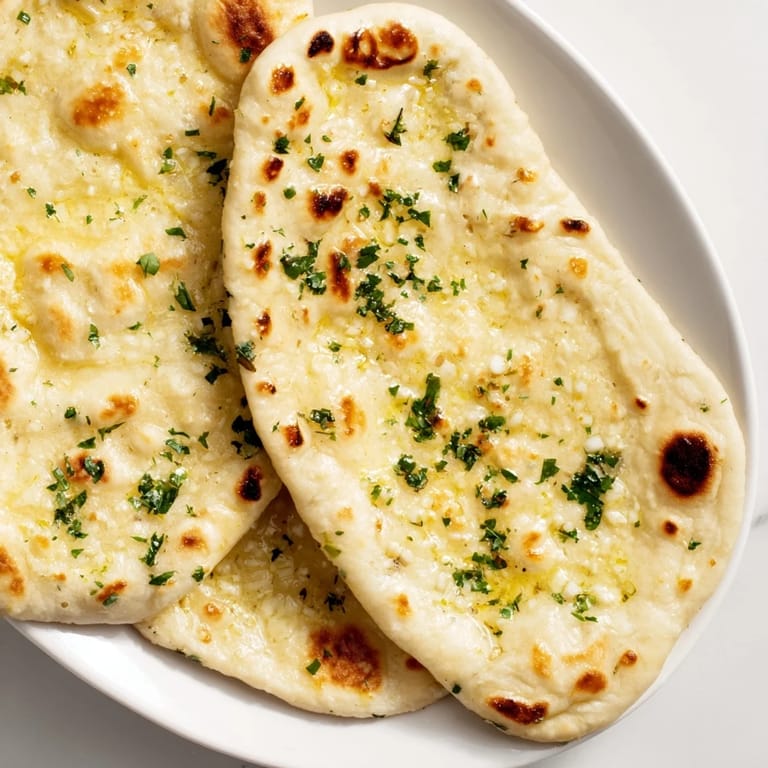
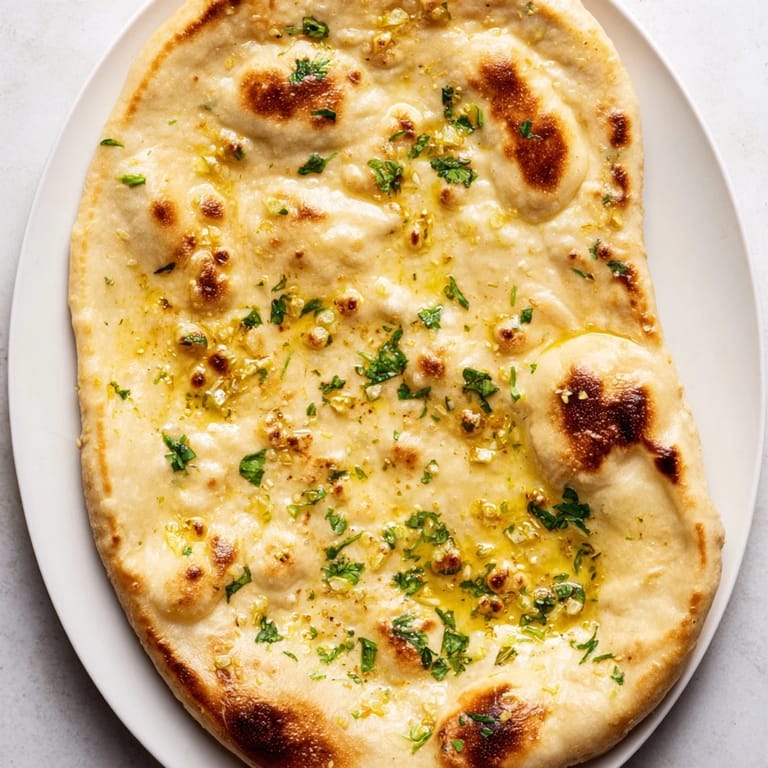
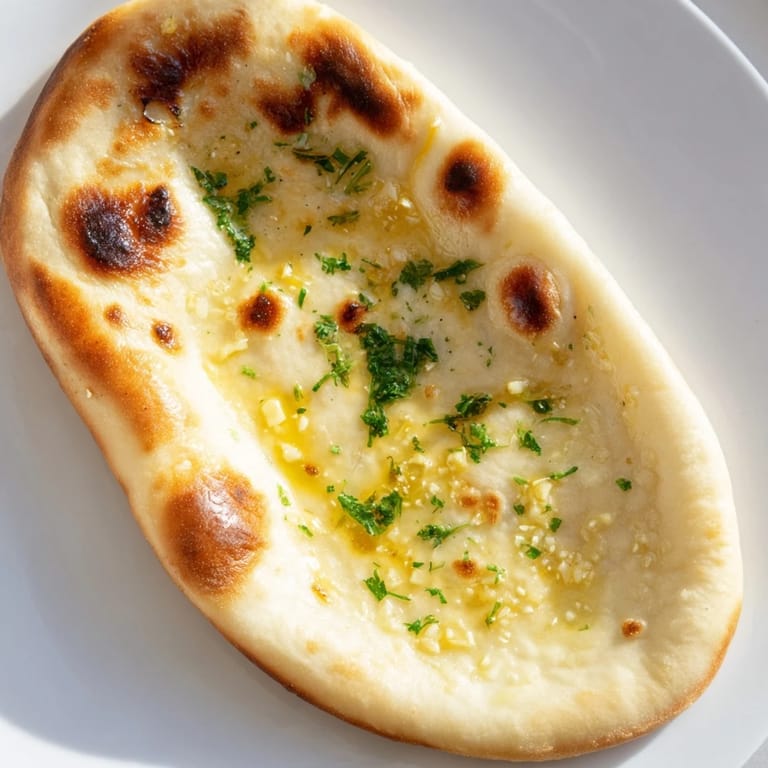
- As soon as you pull the naan off the heat, brush it generously with the garlic butter and sprinkle with chopped cilantro if using. The butter will melt into the hot surface, making it glisten.
- Repeat and serve:
- Continue with the remaining dough, stacking the finished naans on a plate and covering with a towel to keep them warm. Serve immediately while they are soft and fragrant.
 Save
Save There was a rainy evening when I made a double batch and we sat on the floor with bowls of dal, tearing off pieces of naan and talking until the pot was empty. The kitchen smelled like a Indian restaurant, and the windows fogged up from the steam. It was one of those meals where the food was simple but the moment felt special, and I knew this recipe would be on repeat forever.
How to Get the Perfect Char
The secret is a smoking hot skillet and patience to let the naan sit undisturbed for the first minute. When you see those bubbles start to form and the edges lift slightly, that is your cue to flip. If you move it too early, you lose the chance for those deep caramelized spots that add so much flavor. I learned this after making a few pale, soft naans that tasted fine but lacked that restaurant quality look and texture.
Storage and Reheating
Leftover naan keeps well in an airtight container at room temperature for a day or two, but it is best reheated in a dry skillet for thirty seconds on each side to bring back the softness. You can also freeze them in a zip top bag with parchment between each piece, then thaw and warm them straight from the freezer. I have pulled frozen naan out on a weeknight and had it ready to eat in under five minutes, which feels like a small miracle when dinner is already running late.
Variations and Add Ins
Once you have the basic technique down, you can play around with the toppings and flavors. I have brushed naan with herb butter, sprinkled it with nigella seeds before cooking, and even stuffed the dough with a little cheese for a richer version. Some nights I skip the cilantro and add a pinch of red pepper flakes to the garlic butter for a subtle kick.
- Try brushing with ghee instead of butter for a deeper, nuttier flavor.
- Swap half the all purpose flour for whole wheat to make it heartier and slightly nutty.
- Sprinkle sesame seeds on top before cooking for extra crunch and visual appeal.
 Save
Save This naan has become my go to whenever I want something warm and comforting without a lot of fuss. It turns any meal into something worth lingering over.
Recipe FAQ
- → What flour works best for this flatbread?
All-purpose flour provides a soft texture, while whole wheat can be used for a nuttier flavor and denser crumb.
- → How can I make the bread fluffier?
Ensuring the dough is well kneaded and adequately rested allows the yeast to create air pockets, resulting in a soft and fluffy texture.
- → Can I cook the bread without a cast-iron pan?
Yes, any heavy skillet or non-stick pan heated over medium-high heat works well to achieve the characteristic browning.
- → What’s the purpose of the yogurt in the dough?
Yogurt adds moisture and tenderness, creating a softer crumb with slight tanginess in the bread.
- → How is the garlic flavor incorporated?
Fresh garlic is minced and mixed into melted butter, then brushed onto the hot bread for a fragrant, rich taste.