 Save
Save A friend from Damascus once told me that the secret to feeling at home in a new kitchen is mastering one dish so well you could make it with your eyes closed. This stew became mine during a particularly gray winter when I needed something that tasted like warmth and spice. The first time I added sumac, expecting it to be just another seasoning, I was startled by how it brightened everything—suddenly the whole pot sang with citrus notes I hadn't cooked in myself. That's when I understood: this wasn't just another lentil stew; it was an invitation to taste how different cultures layer flavor.
I made this for my roommate on a Tuesday when she came home looking defeated by her day. By the time the stew finished simmering, the whole apartment smelled so impossibly good that she actually smiled before tasting a single spoonful. We sat on the kitchen counter, bowls balanced on our laps, and she asked for the recipe before she'd even finished her first bowl—that's the kind of dish this is.
Ingredients
- Brown or green lentils (1 cup): They hold their shape better than red lentils and give the stew real substance; rinse them well because grit hides in there.
- Canned chickpeas (15 oz, drained and rinsed): The rinsing matters more than you'd think—it removes the thick liquid that makes everything gummy.
- Olive oil (2 tablespoons): Medium heat and patience, not high heat and haste; good oil tastes like itself here.
- Yellow onion, garlic, carrots, celery: These aren't background notes; they're the foundation, so don't rush the chopping or the softening.
- Sumac (1½ teaspoons): This is the star—tangy, slightly floral, nothing quite like it; if you can't find it, lemon zest works, but it's not the same.
- Cumin, coriander, smoked paprika (1 teaspoon, ½ teaspoon, ½ teaspoon): Toast these mentally as you stir them in, watching for the moment they release their fragrance into the oil.
- Vegetable broth and water (4 cups and 1 cup): The ratio matters because you want enough liquid for lentils to cook through without drowning them.
- Lemon juice (1 large lemon): Fresh, not from a bottle; add it at the end so it stays bright and doesn't cook away.
- Fresh parsley (½ cup): Chop it just before serving so it stays green and alive on the tongue.
Tired of Takeout? 🥡
Get 10 meals you can make faster than delivery arrives. Seriously.
One email. No spam. Unsubscribe anytime.
Instructions
- Start with the foundation:
- Heat your oil in a large pot over medium heat, then add the onion. Let it soften into translucent sweetness—about 4 to 5 minutes—while you resist the urge to crank up the heat because faster is almost never better.
- Build the flavor base:
- Add garlic, carrots, and celery, stirring occasionally for 3 to 4 minutes until the kitchen smells alive with possibility. You're not trying to brown anything; you're coaxing flavors out gently.
- Wake up the spices:
- Stir in sumac, cumin, coriander, paprika, salt, pepper, and cayenne if you want heat. Cook for exactly one minute—this is where the magic happens, where the spices bloom in the oil and fill your kitchen with their personality.
- Bring everything together:
- Add lentils, chickpeas, broth, and water, then bring the whole thing to a boil before dropping the heat to low and covering it. Simmer for 25 to 30 minutes until the lentils soften and the stew begins to taste like something complete.
- Finish with brightness:
- Stir in lemon juice and half the parsley, letting it cook uncovered for 2 to 3 more minutes so the lemon doesn't fade. Taste, adjust, and understand that seasoning is a conversation, not an instruction.
- Serve with intention:
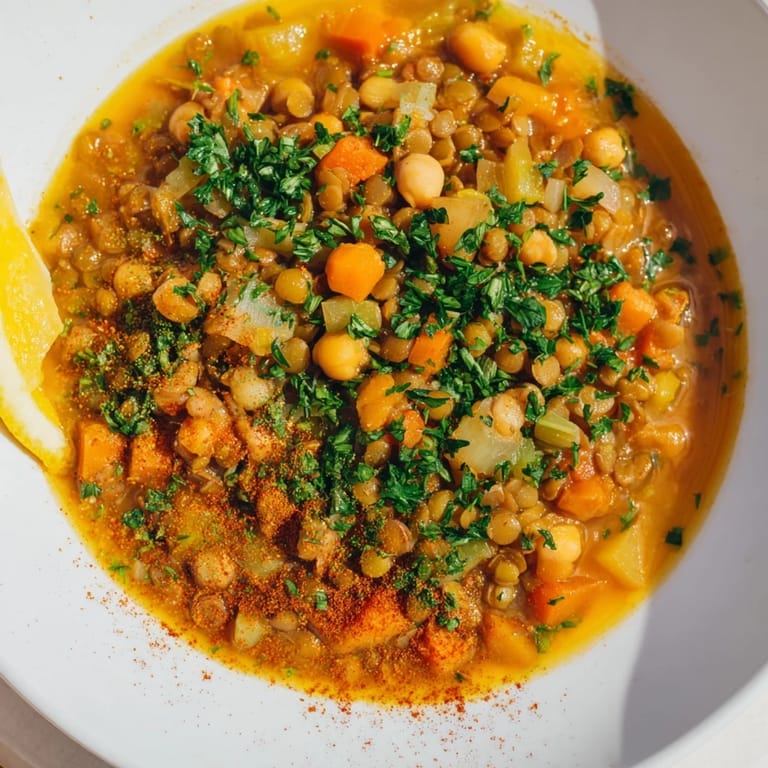
- Ladle into bowls, scatter the remaining parsley on top, and offer lemon wedges so each person can add their own brightness. This is a dish that wants to be shared.
 Save
Save There's a moment near the end of cooking when the aroma shifts—when it stops smelling like individual spices and starts smelling like a complete, coherent dish. That's when I know the stew is almost ready, and I've learned to trust that moment more than any timer. It's the moment when cooking stops feeling like following instructions and starts feeling like understanding.
Why This Stew Asks for Patience
This dish teaches you something important: flavor doesn't explode; it accumulates. When you bite into a spoonful of this stew, you're tasting the result of thirty minutes of gentle simmering, of spices melting into broth, of lentils and chickpeas becoming tender enough to collapse on your tongue. Rush it, and you have soup; respect the timing, and you have something that tastes like it came from someone's grandmother's kitchen, even if you made it on a Tuesday night in your own.
When to Serve It (and When to Make It Again)
This stew belongs on winter nights when you want something warm but not heavy, comforting but not dull. It's equally at home in a simple white bowl under a bare lightbulb as it is on a table crowded with other dishes. Make a double batch because people always ask for seconds, and the flavors actually deepen after a day in the refrigerator, making it perfect for meal prep or unexpected guests.
The Variations That Grow From Here
The beauty of this base is how generously it accepts additions without losing its identity. Some cooks stir in spinach or kale in the last five minutes for color and iron; others add a handful of dried mint or a pinch of cinnamon for complexity. I once added roasted beets and suddenly had something almost burgundy and earthy, completely different but somehow still itself. Trust your instincts and remember that recipes are suggestions, not scripture.
- Serve over rice or beneath warm flatbread to turn soup into a proper meal.
- Drizzle with extra virgin olive oil and a sprinkle of sumac just before serving for visual appeal and extra flavor.
- This stew freezes beautifully for up to three months, so make it when you have time and enjoy it when you don't.
 Save
Save This stew is proof that some of the most satisfying food comes not from complexity but from honoring simple ingredients and giving them time to become themselves. Make it, share it, and let it become yours.
Recipe FAQ
- → How do I ensure lentils become tender but not mushy?
Rinse the lentils and simmer gently for 25–30 minutes, checking texture often. Avoid excessive stirring to maintain shape.
- → Can I use canned lentils instead of dried ones?
Using canned lentils reduces cooking time; add them towards the end and simmer briefly to meld flavors without overcooking.
- → What can I substitute for sumac if unavailable?
Lemon zest or a splash of lemon juice can mimic sumac's tangy notes, brightening the stew similarly.
- → Is it possible to add greens to this dish?
Yes, chopped spinach or kale can be stirred in during the last 5 minutes for extra color and nutrients.
- → How should the stew be stored and reheated?
Keep refrigerated in an airtight container for up to 3 days. Reheat gently on the stove or microwave until warmed through.