 Save
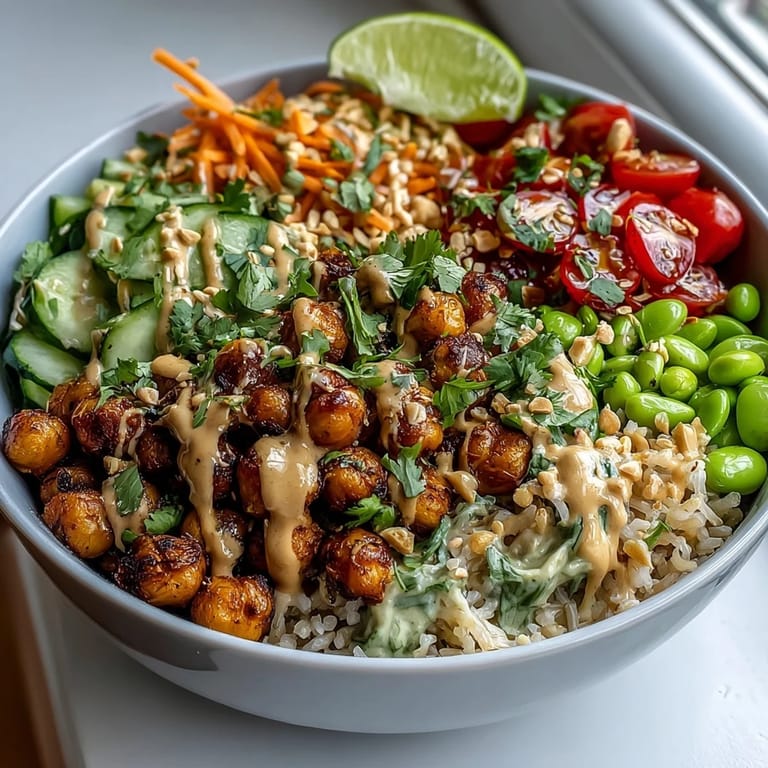
Save My kitchen counter was a disaster zone of half-prepped vegetables when I realized I had completely forgotten about the chickpeas roasting in the oven. The smell hit me first, that borderline-burnt aroma that makes you sprint across the room. I yanked open the oven door expecting charcoal, but instead found these perfectly crispy, deeply golden nuggets that crackled when I shook the pan. That happy accident taught me that chickpeas need more heat and time than I ever gave them credit for, and it turned this bowl from something I meal-prepped out of obligation into something I actually craved.
I started making these bowls during a particularly chaotic month when cooking felt like one more thing on an endless list. My friend Sam came over, took one look at my fridge full of containers, and said it looked like a salad bar exploded. But when I assembled a bowl in front of her, drizzled that peanut sauce over the top, and watched her take the first bite, her eyes widened. She texted me the next day asking for the recipe, and now she claims these bowls got her through her thesis deadline.
Ingredients
- Chickpeas: The star protein here, and roasting them transforms their texture from soft and forgettable to crispy and addictive. Make sure they are completely dry before tossing with oil, or they will steam instead of crisp.
- Smoked paprika: This adds a subtle smoky depth that makes the chickpeas taste more complex than the effort required. Regular paprika works but lacks that campfire magic.
- Brown rice or quinoa: The foundation that soaks up the peanut sauce, and I have learned that slightly undercooked grains hold up better under all the toppings. Day-old rice from the fridge actually works beautifully here.
- Red cabbage: Provides that satisfying crunch and a pop of color that makes the bowl look alive. It also holds its texture even when the sauce hits it, unlike softer greens.
- Carrots: Julienned thin so they are tender enough to eat raw but still have bite. A vegetable peeler makes quick work of this if you do not feel like knife skills practice.
- Cucumber: Adds a cool, refreshing contrast to the rich peanut sauce, and I always slice it just before serving so it stays crisp.
- Cherry tomatoes: Their burst of sweetness balances the savory elements, and halving them releases just enough juice to mingle with the sauce.
- Edamame: Extra protein and a fun texture, plus they are one of the few vegetables my nephew will actually eat without negotiation.
- Peanut butter: The creamy kind works best here because natural peanut butter can turn grainy when mixed with liquid. This is the heart of the sauce, so use one you actually enjoy eating by the spoonful.
- Soy sauce: Provides the salty umami backbone, and I have learned that low-sodium gives you more control over the final flavor.
- Maple syrup: Just enough sweetness to balance the salty and spicy elements without making the sauce taste like dessert.
- Rice vinegar: The gentle acidity brightens everything up and keeps the peanut butter from feeling too heavy.
- Sriracha: Optional but highly recommended if you like a little heat that builds slowly rather than punching you in the face.
- Garlic: Fresh and finely minced so it distributes evenly, adding that sharp aromatic note that makes the sauce irresistible.
- Cilantro: I know it is divisive, but the fresh herbal note it adds is hard to replicate. If you are in the cilantro-tastes-like-soap camp, try fresh basil or mint instead.
- Roasted peanuts: Extra crunch on top because texture variety is what makes these bowls so satisfying to eat.
- Lime wedges: A squeeze of fresh lime juice right before eating wakes up every flavor in the bowl.
Tired of Takeout? 🥡
Get 10 meals you can make faster than delivery arrives. Seriously.
One email. No spam. Unsubscribe anytime.
Instructions
- Get the oven ready:
- Preheat to 425°F and line your baking sheet with parchment paper so cleanup is as easy as crumpling up paper. The high heat is essential for getting those chickpeas truly crispy on the outside while staying tender inside.
- Season the chickpeas:
- Toss the drained and rinsed chickpeas with olive oil and all the spices in a bowl until every little sphere is coated. Spread them in a single layer on the baking sheet, giving them space to breathe, then roast for 20 to 25 minutes, shaking the pan halfway through so they brown evenly.
- Make the peanut sauce:
- While the chickpeas roast, whisk together peanut butter, soy sauce, maple syrup, rice vinegar, sriracha, minced garlic, and 2 tablespoons of warm water until smooth. Add more water a tablespoon at a time until it reaches a pourable consistency that coats the back of a spoon.
- Prep your vegetables and grains:
- Cook your rice or quinoa if you have not already, and while that happens, slice all your vegetables into bite-sized pieces. I like to arrange them on my cutting board in the order I will layer them, which makes assembly feel less chaotic.
- Build the bowls:
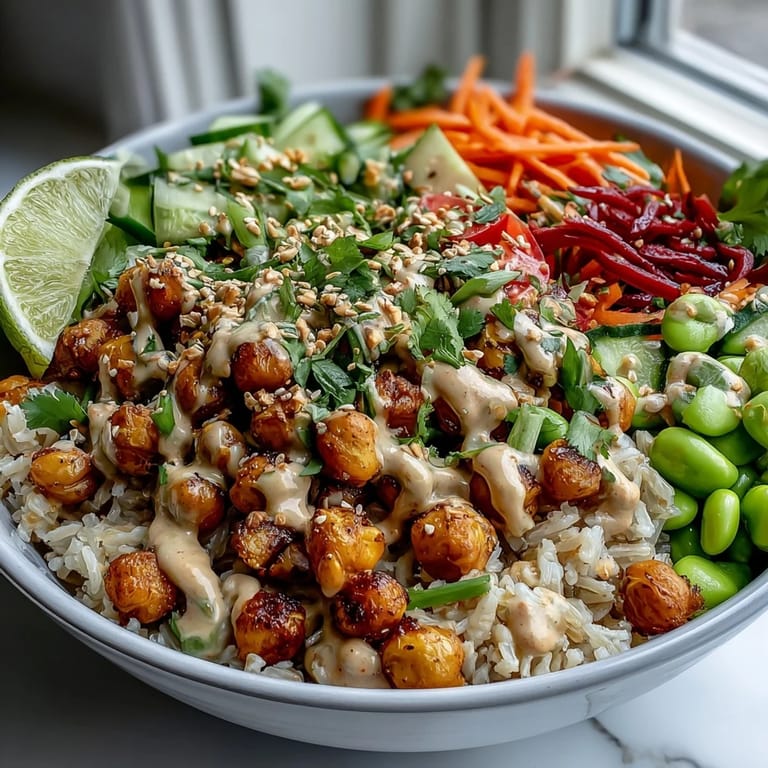
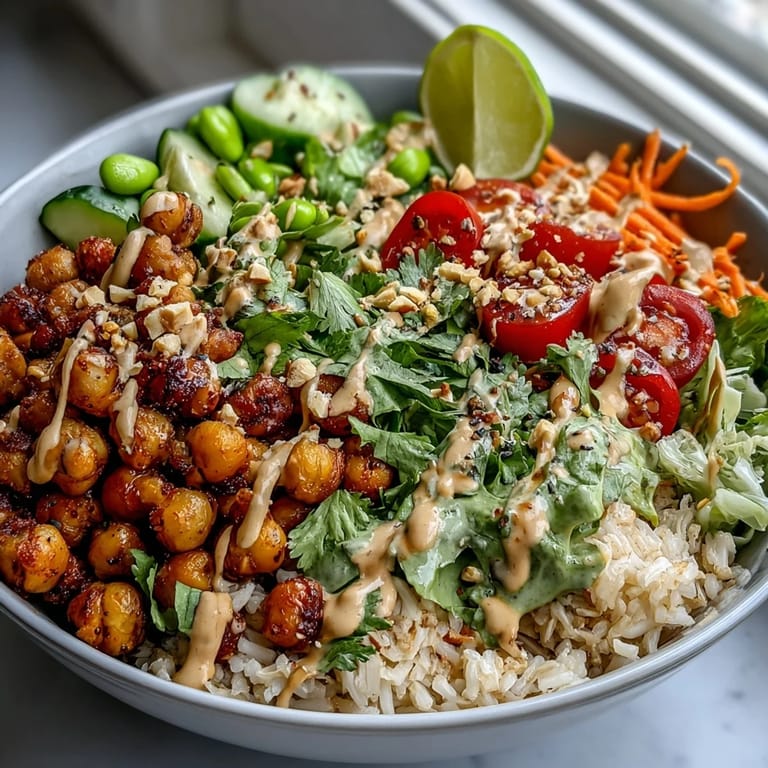
- Divide the cooked grains among four bowls, then arrange the roasted chickpeas and all the vegetables on top in sections so each bowl looks like an edible rainbow. This is where you can get creative with the layout or just pile everything in if you are hungry and impatient.
- Finish and serve:
- Drizzle the peanut sauce generously over each bowl, then sprinkle with chopped peanuts and sesame seeds if using. Serve with lime wedges on the side so everyone can squeeze fresh juice over their bowl right before digging in.
 Save
Save The first time I brought these bowls to a potluck, someone asked if I had ordered them from that trendy place downtown. When I admitted I made them in my tiny apartment kitchen, three people immediately asked for the recipe. It felt good to share something that looked impressive but was honestly just organized chopping and a forgiving sauce. Now these bowls are my go-to when I want to feel like I have my life together, even when I absolutely do not.
Make It Your Own
The beauty of these bowls is that they are more of a formula than a rigid recipe. I have swapped in roasted sweet potato when I had no chickpeas, used snap peas instead of edamame, and once made the sauce with almond butter when my roommate ate all the peanut butter. Throw in whatever vegetables are crisp in your fridge drawer, and as long as you have that sauce, everything just works. The one time I tried it with ranch dressing instead was a mistake I will not repeat, but almost every other substitution has turned out great.
Storing and Meal Prep
These bowls are meal prep gold if you keep the components separate. I roast a double batch of chickpeas on Sunday, store the sauce in a jar, and keep the raw vegetables in containers so they stay crunchy. The grains keep for four days in the fridge, and I like them cold or at room temperature, which means no reheating required when I am rushing out the door. Assemble each bowl right before eating, and you will have something that tastes freshly made even on day four.
Serving Suggestions
I love these bowls for lunch because they are filling without making me want to nap at my desk. They are also great for casual dinners when friends come over and you want something that feels special but does not require much active cooking. Serve them with lime wedges, extra sauce on the side, and maybe some cold beer or iced green tea.
- Add a handful of baby spinach or massaged kale for extra greens without changing the flavor profile.
- Try cauliflower rice instead of grains if you want a lighter, lower-carb version that still satisfies.
- A fried egg on top turns this into a next-level brunch situation with a runny yolk mingling into the sauce.
 Save
Save This bowl has become my answer to the question of what to make when nothing sounds good but I know I need real food. It is colorful enough to lift my mood, satisfying enough to keep me full, and flexible enough that I never get bored of it.
Recipe FAQ
- → Can I make this bowl ahead of time?
Yes. Prepare roasted chickpeas, grains, and vegetables up to 3 days in advance. Store separately in airtight containers. Make the peanut sauce fresh or store it refrigerated for up to a week—thin with water before serving.
- → What other grains work well?
Brown rice and quinoa are excellent choices. For lighter options, try cauliflower rice, couscous, or farro. For gluten-free, stick with quinoa, rice, or millet.
- → How do I store leftovers?
Keep components separate in the refrigerator for 3-4 days. The chickpeas stay crispy when stored without sauce. Add fresh toppings and dressing just before serving.
- → Can I make it nut-free?
Substitute sunflower seed butter or tahini for peanut butter. Use pumpkin seeds instead of peanuts for topping. The flavor profile changes but remains delicious.
- → How can I add more protein?
Add grilled tofu, tempeh, or hard-boiled eggs. Extra edamame or hemp seeds sprinkled on top also boost protein content naturally.