 Save
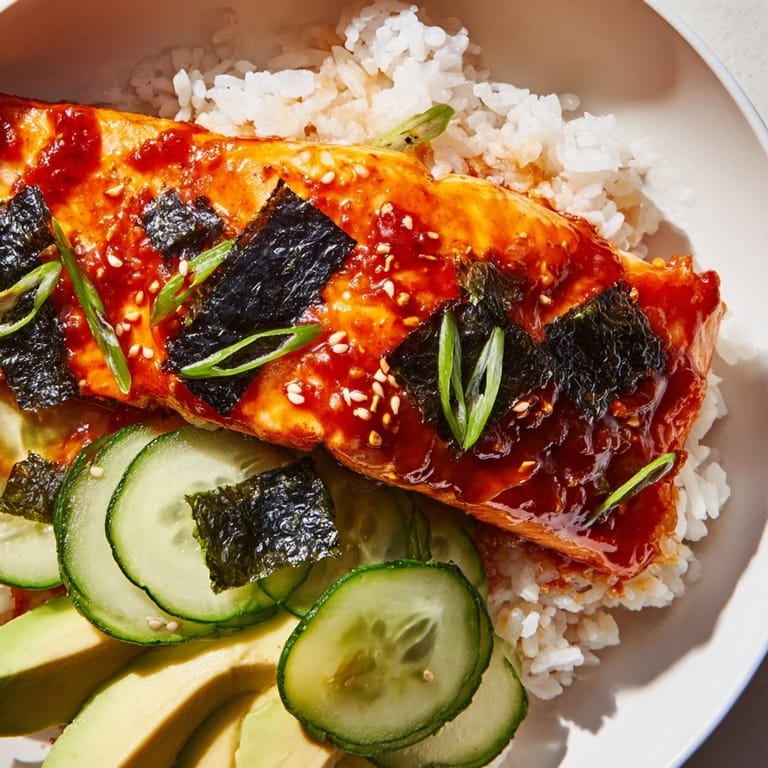
Save There's something about the way orange and gochujang play together that stopped me mid-meal the first time I made this. I was standing in my kitchen on a quiet Tuesday, pan sizzling, and the aroma that rose up was this perfect balance of citrus brightness and deep, spicy warmth. It felt like discovering a secret shortcut to something that should have taken hours, not minutes. Now this bowl has become my go-to when I want something that feels special but doesn't demand much fussing around.
I made this for a friend who'd been having a rough week, and watching their face when they took that first bite was worth more than any compliment. They went quiet for a second, then asked what was in the glaze like they might want to remember this moment. That's when I realized this wasn't just dinner—it was the kind of meal that lands differently when someone needs it.
Ingredients
- Salmon fillets (about 150g each), skin removed: Look for fillets that feel firm and smell clean; the best ones have a slight shine and give just a little when you press gently.
- Salt and black pepper: Season generously before the glaze goes on—this is your foundation, and it matters.
- Gochujang (Korean chili paste): The heart of everything; choose a good quality jar and store it in the fridge because it keeps for ages and you'll find excuses to use it.
- Freshly squeezed orange juice: Don't use bottled if you can help it; fresh juice brings a brightness that bottled versions miss by miles.
- Soy sauce: Reach for a standard variety here; fancy soy sauce is wasted on the heat of the oven.
- Honey: This rounds out the spice and adds that sticky gloss at the end; use whatever you have.
- Rice vinegar: A touch of acidity keeps the sauce from being one-note and makes the flavors snap into focus.
- Toasted sesame oil: A small amount goes a long way; this is where the nutty, warm depth comes from.
- Fresh ginger and garlic: Grate the ginger finely so it distributes evenly; mince the garlic small so there are no harsh bites.
- Short-grain cooked rice: Warm rice is crucial—it soaks up the glaze that drips from the salmon.
- Cucumber, avocado, nori, sesame seeds, and scallions: These are your textural contrast; they keep the bowl interesting and bright.
Tired of Takeout? 🥡
Get 10 meals you can make faster than delivery arrives. Seriously.
One email. No spam. Unsubscribe anytime.
Instructions
- Get your oven ready and season the salmon:
- Preheat to 200°C (400°F) and line a tray with parchment paper. Pat the salmon fillets dry with a paper towel, then season both sides with a pinch of salt and pepper—don't be shy.
- Make the glaze:
- Whisk together the gochujang, orange juice, soy sauce, honey, rice vinegar, sesame oil, ginger, and garlic in a bowl until everything is smooth and there are no lumps of paste hiding in the corners. Taste it here; this is your chance to adjust if you want it more tart or more spicy.
- First brush and bake:
- Place the salmon on the prepared tray and brush half the glaze over the top, letting it pool slightly. Bake for 12–14 minutes until the flesh just flakes when you press it gently with a fork.
- Get the bowl components ready:
- While the salmon bakes, have your rice warm, cucumber sliced thin, avocado sliced, nori cut into strips, and scallions ready to go. This is when things move quickly, so prep matters.
- Sticky finish (optional but worth it):
- When the salmon is cooked through, brush it with the remaining glaze and slide it under the broiler for 1–2 minutes. You'll see the sauce bubble and caramelize slightly, and that's when you know it's right.
- Assemble and serve:
- Divide the warm rice between two bowls, lay a salmon fillet on top, then scatter the cucumber, avocado, nori, sesame seeds, and scallions around it. Serve right away while everything is still warm and the contrast is real.
 Save
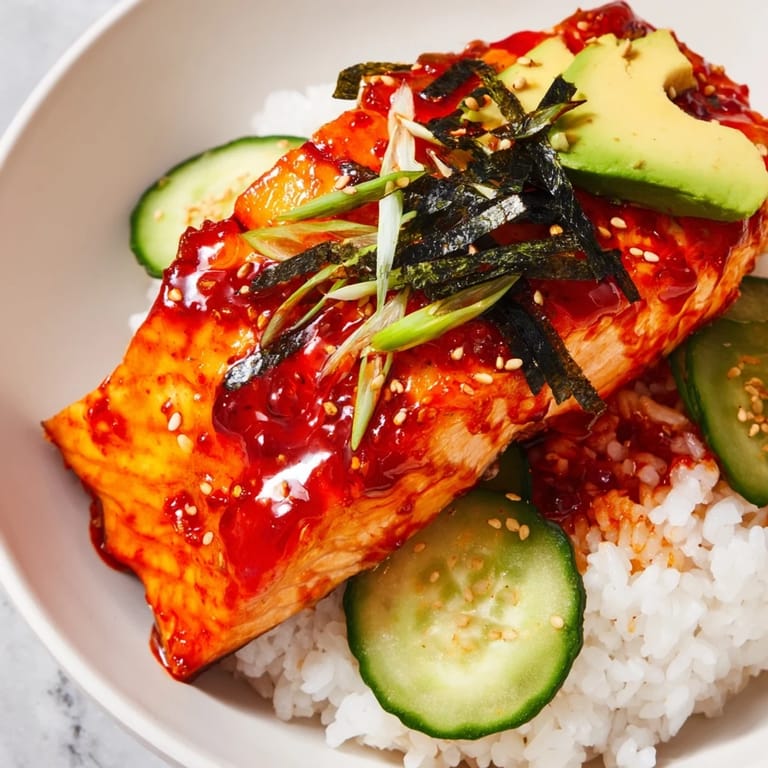
Save There was a moment when I served this to someone and they asked if I'd been cooking all day. I laughed because the whole thing was under 40 minutes, but that question told me something had landed right. The rice was warm, the salmon was glossy, and somehow it all felt considered and intentional even though it wasn't complicated at all.
Balancing the Flavors
This bowl works because nothing overpowers anything else. The spice from the gochujang gets softened by the honey and lifted by the orange. The acid from the vinegar and juice cuts through the richness of the salmon and sesame oil. If you find yourself wanting to adjust the glaze, go ahead—more honey if you want it sweeter, more gochujang if you want more heat, more vinegar if you want bright and tart. The beauty is that it bends to what you're craving on any given day.
Why This Works as a Weeknight Dinner
Most of the time you spend on this is passive—the oven does the actual cooking while you're arranging toppings or thinking about something else entirely. There's no fussy sauce reduction, no babysitting, no waiting around feeling like you're in a restaurant. It comes together in the time it takes to eat a snack and check your phone, but it tastes like you planned something.
Making It Your Own
This is where the recipe becomes yours. Some days I add pickled ginger for a sharper edge, other times shredded carrots for sweetness and color. I've made it with tofu instead of salmon when I wanted to stretch it further or for friends who don't eat fish. The sauce is flexible enough to carry whatever vegetables you have on hand, and the rice is a blank canvas that's happy to soak up any extra glaze that drips down.
- Swap in tofu, halibut, or mackerel if you want to experiment with different proteins.
- Add pickled ginger, shredded carrots, edamame, or thinly sliced radish for more crunch and color.
- If you're feeling lazy, skip the broiler step and the glaze is still delicious; the extra step just makes it feel more special.
 Save
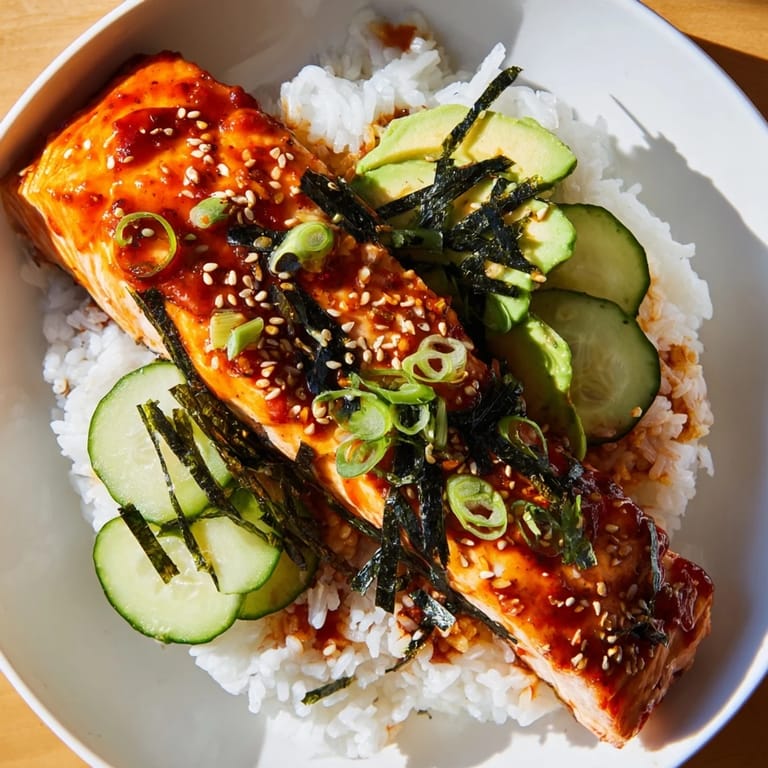
Save This bowl has become one of those recipes I turn to when I want to feel like I did something right in the kitchen without the stress. It's simple enough to make on a Tuesday and special enough to serve when it matters.
Recipe FAQ
- → What is gochujang and how does it influence the dish?
Gochujang is a Korean fermented chili paste that adds a rich, spicy, and slightly sweet depth to the orange glaze, balancing heat and sweetness perfectly.
- → Can I use another type of fish instead of salmon?
Yes, firm white fish like cod or halibut can work well, but cooking times may vary to ensure proper doneness and flakiness.
- → How do I get the glaze sticky and flavorful?
Brushing the glaze on before baking and again briefly broiling at the end creates a sticky, caramelized coating that enhances flavor and texture.
- → What are good side options to serve with this dish?
Light vegetable sides like pickled ginger, shredded carrots, or edamame complement the bowl’s flavors and add crunch and color.
- → Is this dish suitable for dairy-free diets?
Yes, all ingredients used here are naturally dairy-free, making it suitable for those avoiding dairy products.