 Save
Save There's something about the sound of zucchini ribbons hitting hot oil that makes me think of summer weeknights when I was trying to eat lighter but refused to sacrifice comfort. I'd watch them soften and curl slightly at the edges while the kitchen filled with this savory, garlicky warmth. One evening, I layered them over seasoned ground beef on a whim—no fancy techniques, just desperation mixed with curiosity—and something clicked. That skillet became my go-to when I wanted lasagna without the heaviness, and honestly, it tasted like I'd finally figured something out.
I made this for my sister when she was experimenting with cutting carbs, and I remember her surprise when she took that first bite—the way her face softened and she said, 'This is actually incredible.' She went back for seconds, then asked for the recipe. Watching someone discover that healthy eating doesn't mean punishment was the real win that night.
Ingredients
- Zucchini (2 medium, sliced into ribbons): The heart of this dish—slice them lengthwise and thin enough that they soften in minutes without becoming translucent mush. A mandoline makes this effortless and keeps thickness consistent, which matters more than you'd think.
- Ground beef (450 g or 1 lb, lean): You want enough fat for flavor but not so much that grease pools on top. Lean beef gives you that richness without the mess.
- Onion and garlic (1 small onion, 2 cloves garlic): These create the flavor base everything else builds on—don't skip the mincing step; tiny pieces distribute better and cook faster.
- Ricotta cheese (250 g or 1 cup): This is your creamy layer, the soul of the sandwich between zucchini and cheese. Room temperature ricotta spreads easier and blends smoother.
- Mozzarella and Parmesan (100 g mozzarella, 30 g Parmesan, shredded): Mozzarella melts into those gooey pulls, while Parmesan adds a sharp, salty bite that keeps everything from tasting one-note.
- Crushed tomatoes and tomato paste (400 g can crushed tomatoes, 2 tbsp paste): The paste concentrates flavor and adds depth—never skip it, even though it seems redundant with the crushed tomatoes.
- Dried oregano and basil (1 tsp each): Italian seasoning is the quiet hand that makes this taste like home, not a sad low-carb knockoff.
- Red pepper flakes, salt, and black pepper: Optional heat and seasoning to taste—adjust fearlessly based on your mood and how much spice you enjoy.
- Olive oil (2 tbsp): Just enough to coat the pan and carry flavors; the dairy and meat provide richness, so you don't need a pool of it.
Tired of Takeout? 🥡
Get 10 meals you can make faster than delivery arrives. Seriously.
One email. No spam. Unsubscribe anytime.
Instructions
- Build the flavor base:
- Heat olive oil in your oven-safe skillet over medium heat until it shimmers slightly. Add the chopped onion and let it soften for about 3 minutes, stirring occasionally—you want it translucent and sweet, not browned. Stir in the minced garlic and cook for just 1 minute until fragrant; garlic burns fast, so don't wander away.
- Brown the beef:
- Crumble the ground beef into the skillet, breaking it apart with a spatula as it cooks. You're looking for no pink—about 5-7 minutes total. If it throws off a lot of grease, drain it into a small bowl rather than letting it pool; you want richness, not a slick.
- Season and simmer:
- Stir in the crushed tomatoes, tomato paste, oregano, basil, red pepper flakes, salt, and pepper. Let this bubble gently for 5 minutes so the flavors marry and the paste dissolves completely into the sauce. Taste it and adjust seasoning here—this is your last chance before the layers go down.
- Layer like you mean it:
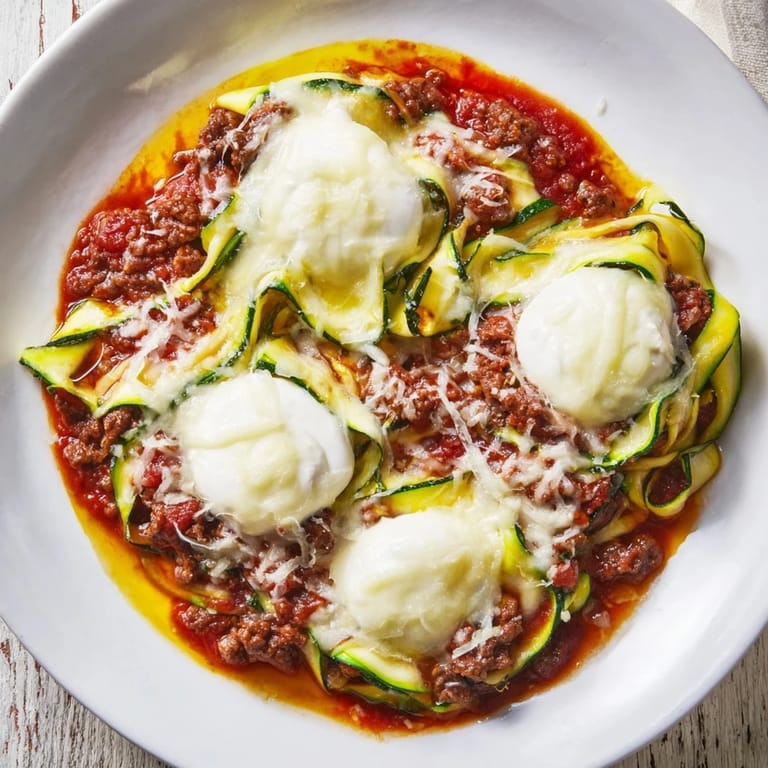
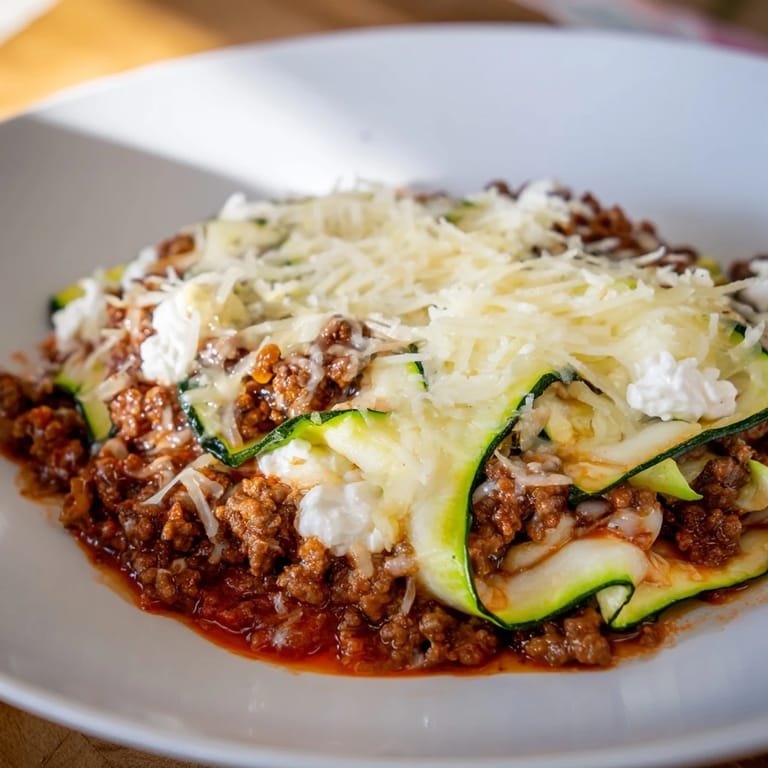
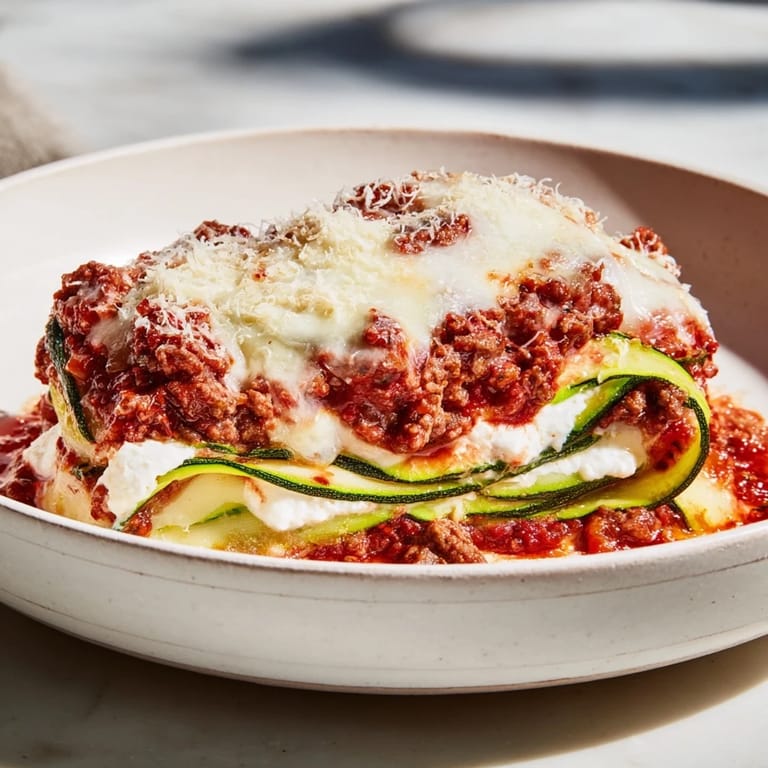
- Arrange half your zucchini ribbons over the beef, overlapping them slightly to cover as much surface as possible. Dollop half the ricotta over the zucchini and use a spatula or the back of a spoon to spread it gently into an even layer. Sprinkle a third of the mozzarella and some Parmesan over the ricotta, then repeat the entire layer—zucchini, ricotta, mozzarella, Parmesan. Top everything with the last of the mozzarella and Parmesan for a golden finish.
- Cook low and slow:
- Cover the skillet and lower the heat to medium-low. You're not trying to sear anything now; you're steaming the zucchini until it's tender and letting everything bind together. Check after 8 minutes—the zucchini should give easily when pierced with a fork after 10 minutes total, but don't let it turn to mush.
- Optional broil for crunch:
- If you want that golden, blistered cheese top, carefully place the uncovered skillet under the broiler for 2-3 minutes. Watch it constantly—broilers are moody and fast, and you want bubbling cheese, not burnt edges.
 Save
Save The moment I understood why this dish works is when I tasted it slightly warm rather than piping hot—the flavors became rounder, less sharp, and I realized the layers had actually fused into something whole rather than just sitting on top of each other. That's when it stopped feeling like a diet meal and started feeling like something I genuinely wanted to eat.
Why This Works as a Low-Carb Swap
Zucchini ribbons mimic pasta's texture surprisingly well—they're soft enough to be comforting but structured enough to hold sauce and cheese without falling apart. Traditional lasagna gets its heft from layers of noodles and béchamel; this gets it from the combination of meat, ricotta, and cheese, which means every single bite has substance and flavor. You're not just eating vegetables with cheese on top; you're eating a complete, satisfying dish that happens to skip the carbs entirely.
The Secret to Tender Zucchini
The key is slicing consistently and keeping them thin—thicker ribbons take longer to cook and are more likely to stay watery. A mandoline slicer is genuinely worth breaking out here because uneven thickness means some pieces soften while others stay tough. I've watched people use a knife and end up with half the ribbons perfect and half still crunchy, which isn't terrible but misses the point. When the zucchini is uniformly tender, it becomes almost silky and absorbs the tomato and cheese flavors like it was meant to be part of the dish all along.
Making It Your Own
This recipe is flexible enough to bend without breaking. Some nights I swap ground turkey for the beef, which makes it lighter and saves a step on draining fat. Other times I layer in fresh spinach between the ricotta and zucchini for an extra vegetable boost—just make sure it's squeezed dry first or you'll add unwanted moisture. The beauty of a one-pan skillet is that small tweaks feel like invention rather than substitution.
- Fresh basil torn over the top right before serving adds a bright finish that canned herbs can never match.
- If your skillet isn't oven-safe, transfer everything to a baking dish after the beef and sauce are ready, then layer and finish there.
- This tastes even better the next day when flavors have settled and mingled, so don't hesitate to make it ahead.
 Save
Save This skillet has become my answer to 'I want something hearty and special but I don't have energy for complicated.' It's proof that constraints—cutting carbs, using one pan—sometimes lead to something better than the original.
Recipe FAQ
- → Can I substitute the ground beef with other meats?
Yes, ground turkey or chicken can be used as alternatives to ground beef for a lighter variation.
- → What is the best way to slice zucchini for this dish?
Using a mandoline slicer helps create thin, even ribbons of zucchini that layer well and cook evenly.
- → Is it necessary to broil the skillet after cooking?
Broiling for 2–3 minutes browns the cheese topping for an appealing finish but can be skipped if preferred.
- → Can fresh herbs enhance the flavor?
Adding fresh basil before serving adds a bright, aromatic touch that complements the dish’s rich flavors.
- → What side dishes pair well with this meal?
A crisp green salad or steamed vegetables balance the rich layers and round out the meal nicely.
- → How do I ensure the zucchini is tender but not mushy?
Cooking covered on low heat for about 10 minutes allows zucchini ribbons to soften while maintaining structure.